
Peru Sweet Onions Provide Boost in the Fall and Winter
September 21, 2026 | 8 min to read
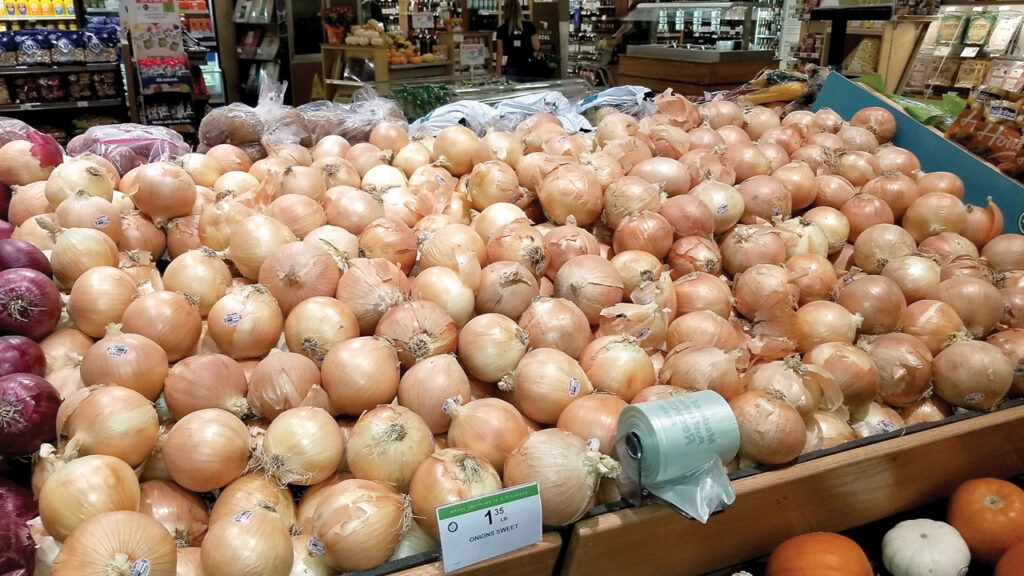
Retailers can continue strong sweet onion sales long after the summer season.
Consumers can extend their enjoyment of sweet onions through the fall and winter, now that Peru sweet onions allow retailers to continue additional sales after the big summer push ends.
Peru sweet onions, which are a cousin to Vidalia and Texas sweet onions, offer supermarkets a less pungent onion contender that provides sales continuity, bridging summer and fall promotions.
“Peruvian sweet onions create consistency at the shelf, providing a similar look and flavor to the world-famous, highly versatile Vidalia sweet onion,” says John Shuman, president and chief executive officer of Shuman Farms, Reidsville, GA. “This consistency helps to build consumer recognition and brand loyalty, driving sales year-round.”
Sweet onions from Peru typically begin shipping in early September and continue through February, before Mexico and Texas production commences in the spring.
“As we move away from the domestic crops, Peru onions help us really give the customer what they’re looking for.”
— Eric Mawer, Morton Williams, Bronx, NY
“As we move away from the domestic crops, Peru onions help us really give the customer what they’re looking for,” says Eric Mawer, produce director of Bronx, NY’s Morton Williams. “When we pivot from the sweet onions that we grow domestically to the imports, it gives us flexibility all of the year for the consumer to have a mild sweet onion, and I feel the quality is there.”
CONSISTENT MOVER
Peru keeps sweet onion sales moving.
“Peru is a big part of how we deliver year-round,” says Troy Bland, owner of Bland Farms LLC, Glennville, GA. “Bite into a Peru onion and a Vidalia, and you can hardly tell the difference. They’re two of the sweetest onions produced anywhere, and that consistency is what lets us get the same onion to our retailers every day of the year.”
“Bite into a Peru onion and a Vidalia, and you can hardly tell the difference. They’re two of the sweetest onions produced anywhere, and that consistency is what lets us get the same onion to our retailers every day of the year.”
— Troy Bland, Bland Farms LLC, Glennville, GA
Peru provides retailers a reliable sweet onion offering that can bring high flavor to everyday meals, tailgate spreads, holiday gatherings and other social dining occasions.
“Onions are used to make every cuisine in the world,” says Matthew Gideon, director of sales at Keystone Fruit Marketing, Greencastle, PA. “Our Peruvian Mayan Sweets are delicious raw, and fantastic when lightly cooked, grilled, or caramelized. They enhance the flavors of salsas, sandwiches, burgers, kabobs, relishes, and toppings. Their unique taste profile and versatility make them an ideal ingredient in various culinary creations. As long as people continue to eat, consumption will be strong.”
“You go into Labor Day, and you kick off the tailgates and college football, then, the holidays of Thanksgiving and Christmas right through Easter. There are opportunities for each retailer to get creative.”
— Jeff Brechler, Little Bear Produce, Edinburg, TX
Creative retailers can build recipes and assemble a combination of produce items for a promotion, advises Jeff Brechler, chief of sales and marketing for Little Bear Produce, Edinburg, TX.
“You go into Labor Day, and you kick off the tailgates and college football, then, the holidays of Thanksgiving and Christmas right through Easter. There are opportunities for each retailer to get creative.”
MAINTAINING SALES
While it varies by retailer and region, Bland Farms has seen accounts where Peru sweets maintain 70% to 80% of the volume stores were doing during Vidalia season, says Sloan Lott, director of sales.
“Spring Vidalia season gets the headlines, but fall and winter are where you find out how strong your sweet onion program really is,” he says. “The retailers who commit to it year-round outperform the ones who treat it as seasonal. That’s not a placeholder; that’s a real category contributor.”
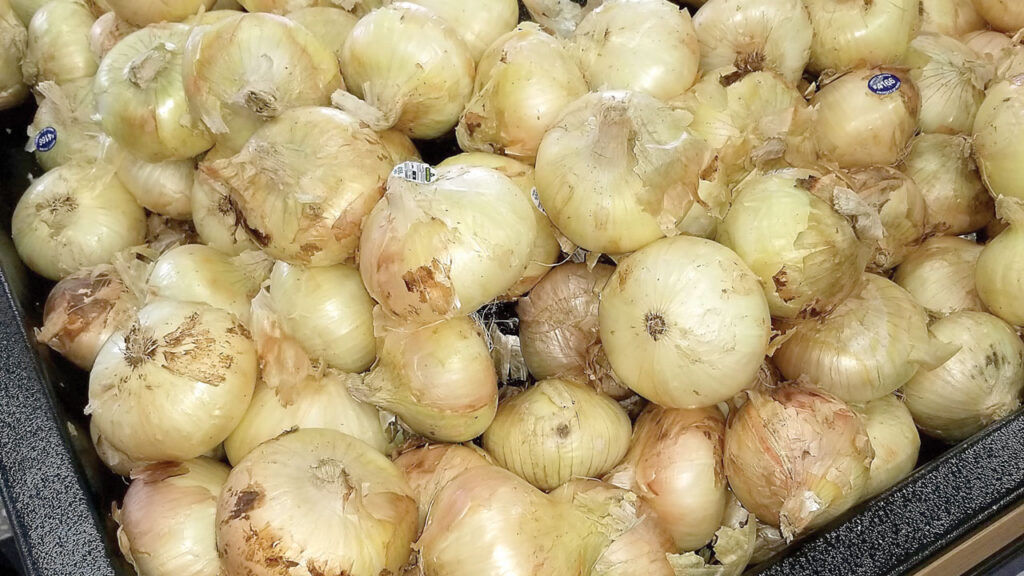
Peru sweet onions do well for Charlie’s Produce, a Seattle, WA, wholesale produce company distributing to major retailers throughout the western U.S.
“Once the Walla Wallas are gone, the Mayan Sweets are the next best onion that comes in,” says Jason Kazmirski, retail specialist. “When these come in, they really drive sales. They are a home run up here in Seattle.”
Morton Williams displays Peruvian onions in a variety of methods, including slant bins, Euro tables and power endcaps. Its large potato displays are complemented by sweet onions displayed in endcaps. The chain includes Peruvian sweet onions in weekly promotional displays.
“If we’re promoting hothouse peppers, for example, how do we get another item in the basket?” asks Mawer. “We will complement them with a Peruvian sweet onion. We tend to tie in sweet onions, whether they’re imported or domestic, with the tomato commodities. We always feel like the customers gravitate toward the onions, so we do that often. For us, sweet onions could be a staple.”
CONSISTENT MERCHANDISING
Merchandising Peru sweet onions during the fall and winter doesn’t need to vary from promoting summer sweet onions.
“The approach shouldn’t change much, and that’s intentional,” advises Lott. “Consistency in placement and signage reinforces to the shopper that high-quality sweet onions are always available. Change the source, not the experience.”
He recommends retailers add secondary displays or use seasonal display bins to draw attention to premium sweet onions. Bland Farms also has a retail tool kit that lets retailers educate shoppers and also share elements across social media and in ads.
Like other sweet onions, Peruvian sweet onions can be sold in bulk or in bags.
Keystone’s Gideon says customers have success in offering both bulk and consumer bags of sweet onions. “The usual promotional periods are around the winter holidays, but we have found that our retail partners also have success in promoting sweet onions around holidays all year long.”
WINTER ANCHOR
Sweet onions’ versatility gives retailers an anchor for produce department displays throughout the fall and winter, “whether it’s with avocados and tomatoes for tailgating or alongside potatoes and carrots to inspire comforting meal solutions,” says Shuman Farms’ Shuman.
While most consumers prefer sweet onions over traditional yellow onions, Gideon recommends all onions, whether sweet, yellow, red and white, should be merchandised together, offering a choice for the shopper.
“During certain times of the year, secondary displays of sweet onions (loose and/or bags) are a great way to generate some additional impulse sales,” he says. “Another thing is to be flexible on the onion size and bagged onion volume amount. Being flexible could provide spot opportunities for margin gains at the consumer level.”
Peru sweet onions work well in retail promotions, says Charlie’s Produce’s Kazmirski.
“You can make a really nice display, and it will really pop for your customers as something new,” he says. “The Mayans really stand out as a flat sweet onion. They are drivers. Peru really does a good job. They do incremental sales. When we’re getting them in the wintertime, and they’re hitting summer, it’s fun.”
NUMEROUS PAIRINGS
“From a merchandising standpoint, an onion is never going to be center plate,” says Little Bear’s Brechler. “It’s always going to be complementary. So, its versatility lends itself to a lot of different things.
“The beauty of a wild onion is it still has an onion flavor, It just doesn’t have the bite,” Brechler adds, which makes them ideal for burgers, salads, stir-fries, sautés, or caramelized dips. “You can use them in a lot of things.”
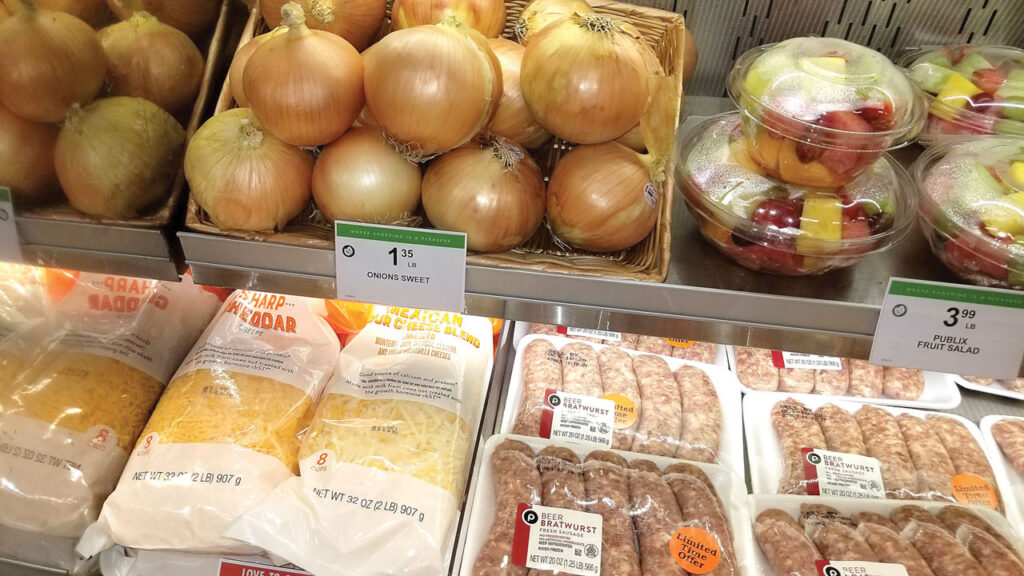
Morton Williams’ Mawer likes to merchandise Peruvian sweet onions with meat. “We do a bunch with sweet onions any time of the year, but even with the Peruvians, we’re slicing them, over-wrapping them and putting them near the steaks, even sausage in the winter,” he says. “That’s another item in the basket.”
Gideon agrees cross-merchandising with meat products, such as burgers, sausages and steaks, creates enticing opportunities for consumers. “Similarly, cross-merchandising with tomatoes, peppers, salads, and squash in the produce department generates additional sales. With onions enjoying a high household penetration, consumers are constantly seeking new and creative ways to savor sweet onions.”
While the tariffs imposed by the Trump Administration in 2025 haven’t disrupted Peru onion supplies, they triggered headaches for handlers.
“Who’s going to swallow the pill? Is it going to be solely square on our shoulders or will it be split?” says Brechler. “It’s not our doing, and it’s not the customers’ doing. We need to figure out the best way to get through it and know it will change again. The biggest disruption was figuring out how to deal with something somebody else put in motion.”
11 of 19 article in Produce Business September 2026
Have a story to share?
Take a place at Produce Business