
Rocky Start to Sweet Corn Season
May 26, 2026 | 5 min to read
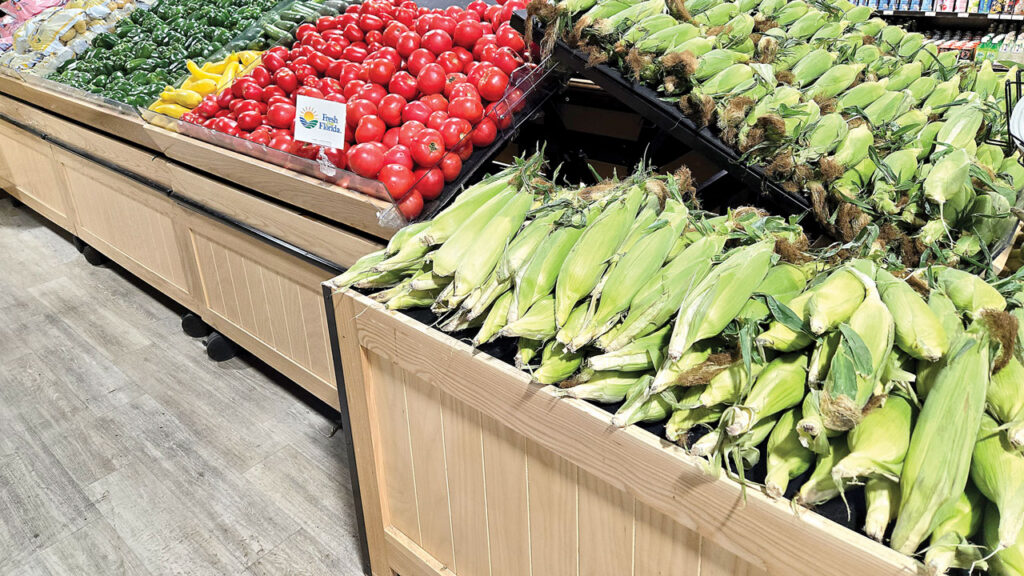
Weather disruptions tighten early supplies and drive record pricing.
Sweet corn is likely to have an interesting year, as extreme weather conditions in Florida led to short supplies in early spring, with heat in the West also proving disruptive. But the outlook as the year progresses suggests improving availability and prices.
In 2024, according to the U.S. Department of Agriculture (USDA), U.S. sweet corn plantings fell to 343,000 acres from 384,000 acres in 2023. The top five states in acres planted were Minnesota, Washington, Wisconsin, Florida and California. In terms of utilization, Florida was top for the fresh market, followed by California, Georgia, Wisconsin and New York.
Fresh sweet corn production slipped only slightly from 2022 to 2024. The decline in processed utilization was much steeper than it was for fresh, which suggests that demand for fresh sweet corn has remained relatively strong.
WEATHER ISSUES
The 2026 season started out rough, as a February freeze badly hurt the early crop in much of Florida.
Five Crowns Marketing, a Brawley, CA-based grower and shipper with operations from northern California to Mexico, saw early demand for sweet corn swing West, given the lack of Florida product. As March ended, Five Crowns was selling open market corn at $46 to $48.95 a box, according to Daren Van Dyke, director of marketing.
“That is unheard of,” he says. “Before that, the highest I’ve ever personally sold corn for was $32.95 during COVID.”
While the East Coast supply dried up, Mexico had heat issues that cut sweet corn production. Then, weather forced an early season in California. So, even as the high spring temperatures hit Mexican sweet corn, Brawley was two weeks early, and much of what Five Crowns grew up to April went to the company’s extensive processing business.
“It’s really thrown a monkey wrench into this whole thing,” says Van Dyke. “What is Memorial Day going to look like, since our planting schedules have all moved up? Northern California is going to move up; everybody is going to move up. But that changes your complete structure for your season, because, obviously, you plant for triple for the Memorial Day pull. You plant because everybody goes on ad, then nobody goes on ad.”
Bill Nardelli Jr., vice president of sales, Nardelli Bros.-Lake View Farms, Cedarville, NJ, says despite the small early harvest in Florida, things began to look up as mid-April approached, with good volume in view, and improvement extending into promotable volumes into May.
“From late May through the end of June, harvest will transition into Georgia,” says Nardelli. “In late June, early July, we will begin corn harvest in New Jersey and continue through October.”

He says supply availability grew through April, in part due to sweet corn replanted after the frosts in Florida. “We’re going to be in Florida all the way through Memorial Day,” Nardelli explains. “There will be a little overlap between Georgia and Florida, since Georgia corn will start in late May, and the Georgia harvest on corn will run all the way through the end of June. Then we’ll transition into New Jersey right around the end of June, early part of July.”
Chris Rawl, co-owner of Clayton Rawl Farms, Lexington, SC, says prospects for sweet corn are still good, which should keep prices reasonable. Although the Florida freeze tightened the market, prices were moderating as the warmer days arrived.
“My guess is if farmers continue to have good weather, then there is going to be plenty of volume until the Fourth of July, until Georgia winds down, so prices will stay low to normal,” he says. “Weather has been dry for the most part, so getting in the field to plant and tend corn hasn’t been a problem from South Florida to South Carolina and Georgia.”
Rawl notes, however, increasing input costs will hit grower profits. “The biggest cost challenge this year is the increase in fertilizer cost due to Hormuz Strait being shut down because of the war,” he says, noting fertilizer prices have increased as much as 50%. Additional fuel costs add to the pinch.
LINGERING EFFECTS
Five Crowns’ Van Dyke says West Coast growers are facing another weather-related challenge: worm pressure. “It’s all the heat units,” he explains. “First of all, there was no killing freeze in the winter, so those bugs survived out in the desert.”
In a normal season, Five Crowns wouldn’t be fighting worm pressure until May. This year, the fight started in March.
“Once it starts, it doesn’t stop. Of course, in the state of California, they’ve removed so many of our good pesticides that we can’t use any more. It’s a nightmare. We’re limited in what we can apply,” he says. “So, bottom line is, there is going to be an issue. You’re just going to see it.”
GETTING INTO SPRING
Although it promotes core products year-round, with prime season coming on, Duda Farm Fresh Foods, Oviedo, FL, has its particular approach to spring and sweet corn.
Although Memorial Day is a focus, occasions throughout spring represent good chances to move commodities such as sweet corn.
“Spring holidays and events such as Easter, Mother’s Day, and graduations play a critical role in driving both demand and promotional activity for spring products,” says Nichole Towell, senior director of marketing and innovation at Duda. “These occasions create natural spikes in consumer interest.”
As spring gives way to summer, retailers can transition messaging and merchandising from holiday-centric presentations to themes, such as summer snacking, healthy eating and outdoor gatherings.
“Highlight produce as essential for picnics, barbecues and everyday meals,” says Towell.
Consumer demand for convenience may have resulted in more tray-pack corn appearing in many produce departments, Nardelli says, but demand for bulk corn in parts of the northern U.S. where sweet corn traditionally grows is likely to keep demand for bulk, unhusked product strong.
“Through the summer months, demand trends toward bulk corn,” he says.
CONSIDERING THE CONSUMER
Retailers should be ready to create conspicuous displays of sweet corn, both in bulk for traditionalists and tray wrapped for the convenience shopper.
“As we begin warmer spring temperatures around the country, particularly the Northeast and Midwest consumers begin to shift their focus to spending more time outdoors,” Nardelli says. “With this, we see an increase in corn demand, especially in areas of the country that have had harsh winters.”

Have a story to share?
Take a place at Produce Business