
Idaho Potatoes: A Recipe for Retail Growth
September 21, 2026 | 8 min to read
Strong brand recognition gives retailers opportunities to build potato sales.
Say “Idaho” in the produce department, and potatoes immediately come to mind. That kind of built-in brand recognition is a powerful sales tool, especially when shoppers are demanding more from every grocery dollar.
Nearly three-quarters of consumers say minimizing food waste (73%), shelf life (72%) and nutritional value for the money (71%) are important when grocery shopping, according to the Aug. 6, 2026, report, Grocery Budgets are Reshaping America’s Dinner Plates, a survey of 2,000 U.S. adults conducted by Talker Research and commissioned by the Idaho Potato Commission (IPC), in Eagle, ID.
The survey also showed just how highly potato buyers value the ingredient. Eight in 10 rated potatoes as good or excellent for versatility across meal types (82%), helping feed a household on a budget (82%) and nutritional value (75%).
For retailers, the opportunity is to turn Idaho’s name recognition into more rings at the register. Russets remain the cornerstone, but reds, yellows, petites, fingerlings, organics, and value-added packs broaden the assortment. Add strong retailer merchandising and promotion, supported by the IPC, and there are even more reasons for shoppers to put Idaho potatoes in the cart.
WHY IDAHO
Idaho is synonymous with potatoes, supplying nearly one-third of the nation’s production and reaching markets across the country. According to U.S. Department of Agriculture’s (USDA) National Agricultural Statistics Service (NASS), Idaho growers produced 138.4 million hundredweight of potatoes in 2025, valued at nearly $1.1 billion. Approximately 40% of Idaho-grown potatoes were sold on the fresh market in 2025.
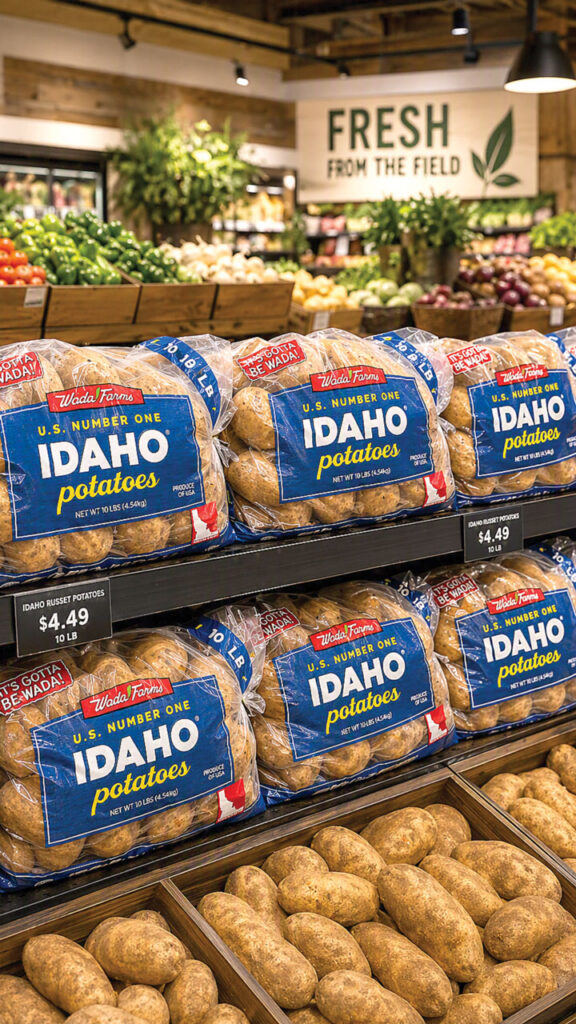
Idaho benefits from a unique combination of factors that are difficult to replicate elsewhere, says Eric Beck, director of marketing for Wada Farms Marketing Group LLC, in Idaho Falls, ID. For example, the state’s volcanic soils, clean mountain water, warm summer days, and cool nights create an ideal environment for producing high-quality potatoes.
“The result is a potato that retailers and consumers recognize for its appearance, versatility, and eating quality.”
Because of these natural attributes, “Idaho grows the best-tasting and most versatile potato, the famous Russet Burbank,” says Ryan Bybee, sales manager at GPOD of Idaho, Shelley, ID.
SEASONAL FORECAST
The 2026 Idaho potato crop is shaping up differently than the past few seasons, says Ross Johnson, IPC’s vice president of retail and international. He cites USDA acreage estimates that show Idaho growers planted approximately 300,000 acres, a 5% reduction from 315,000 acres in 2025, representing the largest acreage reduction of any potato-producing state.
“National potato acreage also declined this year, reflecting the challenging economics facing growers across the industry.”
However, this decrease in planted acreage in Idaho, compared to last season, “should lead to a better market and better demand,” says Bybee.
Beck expects Idaho’s crop will be capable of meeting fresh, foodservice, and processing demand. “Idaho’s combination of scale, infrastructure, grower expertise, and storage capability provides a unique ability to supply customers consistently throughout the year.”
“Idaho potatoes have built tremendous consumer trust over many decades. That brand recognition remains an important advantage at retail.”
— Eric Beck, Wada Farms Marketing Group LLC, Idaho Falls, ID
The reduction in Idaho acreage is largely a response to historically low farm returns, says Johnson. “While consumer demand for Idaho potatoes remains strong, many growers have experienced returns well below their cost of production for multiple seasons.”
Maintaining high-quality standards is at the core of Potandon Produce’s August announcement of its Potandon Grower Alliance. This initiative, led by Des Hague, chief executive officer and president of the Idaho Falls, ID-headquartered exclusive marketer of Green Giant Fresh potatoes and onions, establishes an alliance of grower partners united by a shared commitment to quality, innovation and long-term growth. Idaho is a major source of the company’s potatoes.
LOADS OF VARIETY
Idaho is best known for russets, but the state also continues to grow a broader portfolio, including reds, yellows, petites, fingerlings, organics and value-added packs.]
“More retailers are recognizing that Idaho can support a full potato category, not just the traditional baker program,” says Johnson.
Beck says he’s also seeing increased demand for a broader mix of package sizes. “While traditional bags remain important, consumers are increasingly looking for options that fit varying household sizes and consumption patterns.”
Value-added products continue to be an important growth area within the potato category because they align with consumers’ desire for convenience, Beck adds.
“Products that reduce preparation time, simplify meal planning, or provide ready-to-cook solutions can help attract younger shoppers and busy families without replacing traditional potato offerings,” he says.
“That said, we view value-added as a complement to — not a replacement for — the core potato category. Traditional potatoes remain a staple item for many households and continue to drive significant volume.”
SELL MORE
The most successful potato departments begin with understanding what consumers are looking for, according to Johnson. Innovation and product diversification have an important place in the category, and some retailers place significant emphasis on smaller gourmet and specialty pack sizes, including 24-ounce offerings. These products certainly appeal to specific shoppers, but they shouldn’t replace or overshadow the core russet business.
“Idaho russet potatoes remain the cornerstone of the potato category and continue to be the variety most consumers associate with quality, versatility and value. The highest-performing categories strike the right balance by offering innovation, while ensuring the foundational items that consumers come in expecting are well-merchandised, well-stocked and prominently displayed,” he says.
“Idaho russet potatoes remain the cornerstone of the potato category and continue to be the variety most consumers associate with quality, versatility and value.”
— Ross Johnson, Idaho Potato Commission, Eagle, ID
One of the biggest opportunities is continuing to position potatoes as an affordable, nutritious, and highly versatile meal solution, adds Wada Farms’ Beck.
“The challenge is that today’s shopper has more meal choices than ever before,” Beck says. “Potatoes must compete not only within produce, but across the entire store for consumer attention. We believe retailers can turn that challenge into an opportunity by merchandising potatoes as part of complete meal solutions.”
Cross-merchandising with proteins, vegetables, seasonings, and convenience-oriented products helps inspire purchases and increase basket size, Beck adds. Digital engagement, recipe content, and targeted promotions can also help retailers connect with consumers looking for affordable meal inspiration.
The most successful promotions focus on driving category growth rather than simply lowering price. Holiday periods, such as Thanksgiving, Christmas, Easter, and grilling season, continue to provide excellent opportunities to feature potatoes. However, retailers often achieve stronger long-term results when promotions are tied to meal solutions, seasonal themes, or complementary products rather than relying solely on aggressive price reductions.
“We encourage retailers to merchandise potatoes prominently, support promotions with recipe ideas and digital content, and leverage secondary displays where appropriate. These strategies help drive volume while preserving category value throughout the supply chain,” says Beck.
IPC’s Johnson says retailers will be most successful by focusing less on simply expanding assortment and more on communicating value. “Consumers don’t just want more choices; they want confidence that they’re bringing home a product that delivers exceptional value, lasts longer in the pantry, and can be enjoyed in dozens of different ways.”
• • •
Idaho Potato Contest: Participation Equals Double-Digit Sales
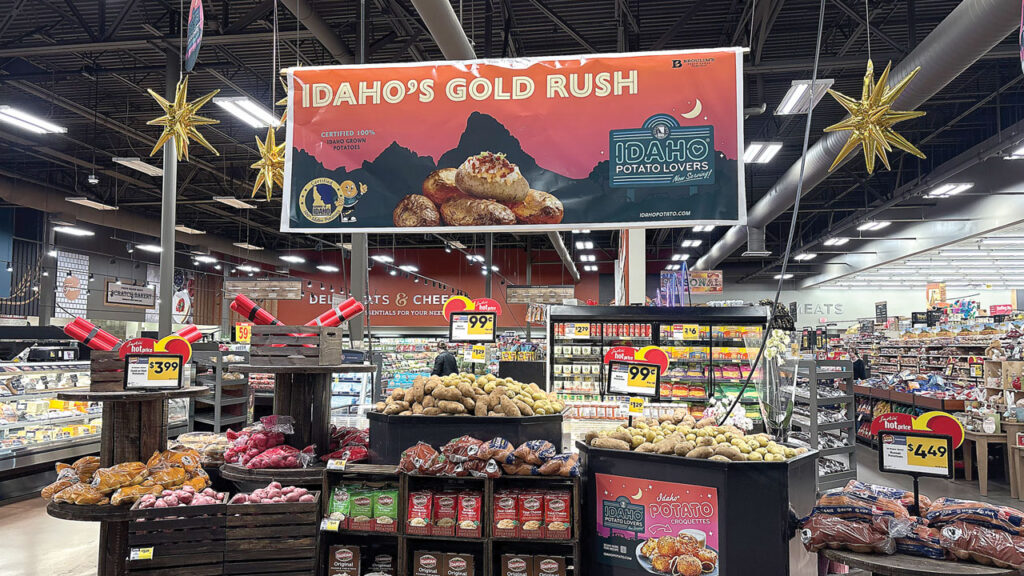
Shoppers walking into Broulim’s Fresh Foods in Rigby, ID, in February struck “Idaho’s Gold Rush.”
New to her position and eager to show what she could do with a high-impact, shoppable presentation, Produce Manager Heather Hosey built one of the winning displays for the Idaho Potato Commission’s (IPC) Idaho Potato Lovers Month Display Contest.
Positioned in the store’s front entryway for a month, Hosey’s display put Idaho potatoes directly in shoppers’ path. Bins of russets anchored on each side, while yellow “gold” potatoes streamed down the center in a waterfall effect. Large wooden spools held 5-pound bags of red and yellow potatoes, with 5-pound bags of russets and boxes of Idahoan instant potatoes displayed up front. Bundles of faux dynamite and gold stars suspended overhead completed the Gold Rush theme.
“I learned that creative, shoppable displays are wonderful, but most importantly, fresh product and constant attention help with daily merchandising,” says Hosey, who earned fifth place in the Large Store 10-plus register category.
That mix of creativity and attention to merchandising is what the Eagle, ID-headquartered IPC’s annual contest encourages. More than 2,100 retailers across North America participated in the 2026 promotion. Every qualifying entrant received a prize, with three regional grand-prize winners selected at random. IPC awarded more than $150,000 in cash and prizes through the program annually.
There’s a measurable sales lift, too. IPC research shows participating retailers average a 22% increase in potato sales. The increase comes from secondary displays without taking sales away from potatoes in their regular location.
These added potato purchases can mean a bigger basket overall as well.
“Our research shows the average potato shopper spends approximately $99 per shopping trip, meaning every additional potato shopper represents increased sales opportunities throughout the store,” says Ross Johnson, the IPC’s vice president of retail and international.
12 of 19 article in Produce Business September 2026
Have a story to share?
Take a place at Produce Business