Global Avocado Market Update
August 26, 2026 | 11 min to read
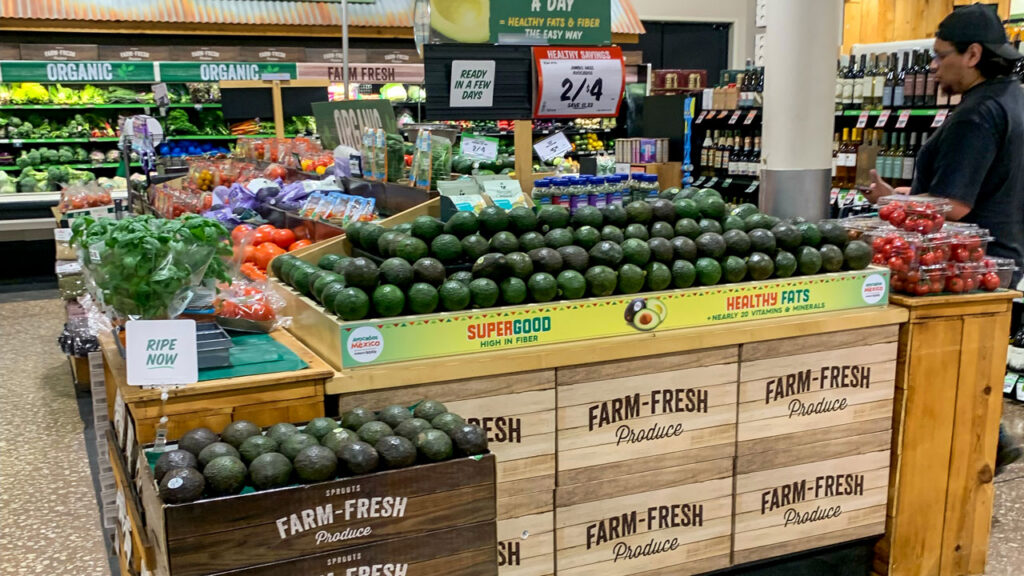
From California to Colombia, sourcing and innovative marketing ensure fresh avocados year-round.
ONLINE EXCLUSIVE
It takes a global village to keep American retailers’ avocado bins full and consumers coming back for more. With supplies flowing year-round from seven major worldwide growing regions, total U.S. avocado supply tipped the scales at a record-setting 3.098 billion pounds in 2025, according to U.S. Avocado Supply Statistics, as provided by the Hass Avocado Board (HAB), Mission Viejo, CA.
This represents a dollar value of $7.78 billion, based on HAB’s estimate, which applies the average retail selling price of $2.51 per pound to reported volume figures.
About 70% of U.S. avocado volume is sold through retail channels and 30% through foodservice, based on HAB data, with the vast majority of avocados consumed fresh rather than processed.
“Avocados aren’t just another item in the produce department for us; they are a core staple of our customers’ daily lives and a top sales driver for our stores year-round,” says Jeff Salchenberg, produce program and category manager for New Seasons Market, a 22-store chain headquartered in Portland, OR.
“Avocados aren’t just another item in the produce department for us; they are a core staple of our customers’ daily lives and a top sales driver for our stores year-round.”
— Jeff Salchenberg, New Seasons Market, Portland, OR
“Avocados are a ‘basket-builder,’ an item that is almost always on the shopping list. When customers know they can rely on us for perfectly ripe avocados, they plan their entire meals and grocery trips around our stores.”
SOURCE-BY-SOURCE SUPPLY
California is the major domestic source of avocados, supplying slightly more than 10% of U.S. volume, with imports accounting for the balance. According to HAB, the countries currently authorized to export avocados to the U.S. are Mexico, Peru, Colombia, Chile, the Dominican Republic and New Zealand. Guatemala is the most recent country to request market access, however there is no publicly available timeline for approval.
“We are leading the development of Guatemala for global avocado production,” says Keith Barnard, senior vice president of global sourcing for Mission Produce, in Oxnard, CA, which acquired Calavo Growers in May.
“With two crops annually, Guatemala bridges supply gaps during key periods throughout the year. Last year, we inaugurated a strategically located packinghouse adjacent to our vertically integrated farms in the region.”
Mike Roberts, vice president of produce operations for Harps Food Stores, a 178-store chain headquartered in Springdale, AR, says retailers don’t see as many supply gaps in avocados as they once did. “Between California fruit, the tremendous volume from Mexico, and Colombia’s emergence as a major avocado supplier, the supply picture has improved significantly. With the growth expected out of Colombia over the next several years, there may eventually be very few true gaps at all.”
“Between California fruit, the tremendous volume from Mexico, and Colombia’s emergence as a major avocado supplier, the supply picture has improved significantly. With the growth expected out of Colombia over the next several years, there may eventually be very few true gaps at all.”
— Mike Roberts, Harps Food Stores, Springdale, AR
“Our multi-country sourcing strategy ensures a consistent, year-round supply and helps us manage risks related to weather, tariffs, and shifting global demand,” says Kellen Stailey Martin, vice president of marketing for Index Fresh, in Corona, CA.
“For retail buyers, we recommend maintaining a diversified procurement program across origins to minimize disruptions and to capitalize on promotional opportunities as new regions come online.”
CALIFORNIA
California’s 2026 crop is estimated at 330 million pounds, marking the third consecutive year California crops have exceeded 300 million pounds, according to Martin. “Favorable weather is supporting excellent sizing and quality across the size curve. Harvesting is expected to continue until midOctober, with promotable volumes through September.”
This season, non-Hass varieties — including GEM and Lamb Hass — are expected to account for about 20 million pounds of the state’s crop.
Ken Melban, president of the California Avocado Commission (CAC) in Irvine, CA, says retailers can count on California avocados “to remain a premium spring and summer offering that complements year-round supplies from other origins.”
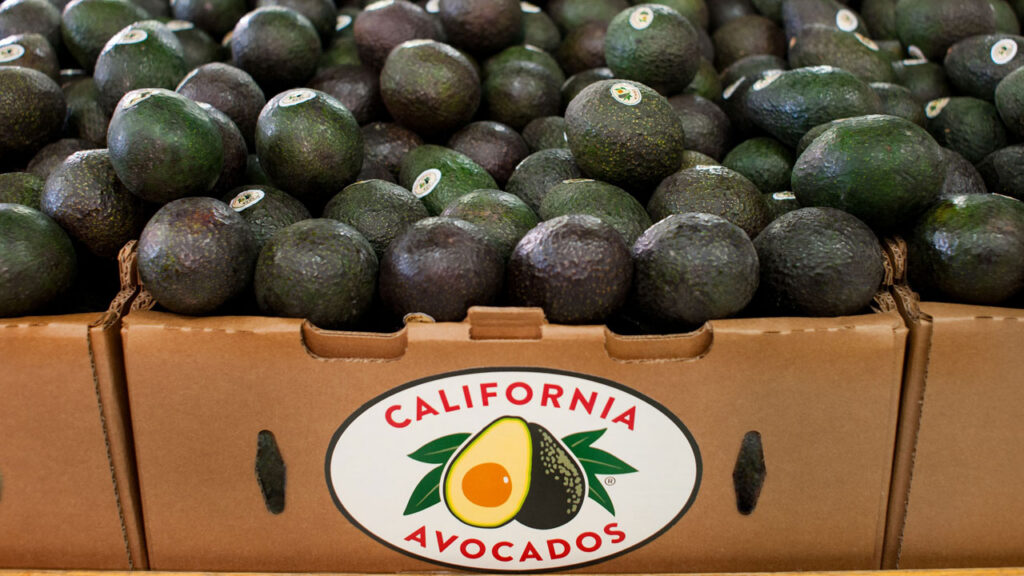
California’s avocado industry continues to invest in orchard redevelopment and new plantings within established growing regions to improve productivity.
“I foresee California reaching the 400-million-pound mark within the next five years,” says Dave Billings, vice president and general manager of Stonehill Produce, in Dana Point, CA, a wholesale importer and distributor of Mexican Hass avocados.
MEXICO
Mexico supplies avocados to the U.S. year-round, with peak volume, quality and oil content from January through March, and a second surge in exports from September through January. The 2025-2026 season ended with the U.S. importing a record of 2.7 billion pounds of Mexican avocados, according to data supplied by Avocados From Mexico (AFM), in Irving, TX.
AFM also reported record imports of over 300 million pounds of avocados for Super Bowl promotions in February, up from an average of 250 million pounds, and 265 million pounds for Cinco de Mayo in May, an increase from an average of 220 million pounds.
“Jalisco is key in making Mexico a more complete year-round supplier,” says Giovanni Cavaletto, president of GLC Cerritos, in Oxnard, CA, a vertically integrated Mexican company that grows about half its volume on 3,000 acres of company-owned, Global G.A.P.- and Rainforest Alliance-certified farms in Jalisco. “During July through September, Jalisco fruit makes up as much as 30-40% of the avocados available from Mexico.”
A large Mexican crop is projected for the July 1, 2026-June 30, 2027 season.
“It’s not unfathomable to see us reach 3 billion pounds from Mexico alone in the near future,” says Stephanie Bazan, AFM’s senior vice president, communications strategy and execution. “There is still a lot of room for growth in demand in both retail and foodservice.”
PERU
While Naturipe Avocado Farms primarily sources its avocados from Mexico, Andy Bruno, president of the Estero, FL-based avocado-growing and marketing division of Naturipe Farms, says it also sources from Peru and Colombia, “so there’s a reliable year-round supply.
Peru exports avocados to the U.S. from May to November, with roughly three-fourths of the crop arriving between June and August. The Peruvian Avocado Commission (PAC), Washington, D.C., conducted an integrated marketing program this summer designed to support the approximately 200 million pounds of Peruvian avocados exported to the U.S. this season.
COLOMBIA
Colombia’s overall Hass avocado exports to the U.S. are expected to be lower than last season, primarily due to lighter production during the Traviesa season, however, growers remain optimistic about the upcoming main harvest, which is expected to begin as early as August, according to Manuel Michel, managing director of the Colombia Avocado Board (CAB), in Orlando, FL.
“While the expansion of Hass avocado production into new growing regions has moderated in recent years, the Colombian industry has shifted its focus from rapid acreage expansion to improving productivity, quality, and export readiness of existing orchards,” Michel says.
Over the past two years, the number of certified export orchards has increased by approximately 45% to more than 600 orchards, while certified acreage has grown by more than 60% to over 47,500 acres, he adds.
CHILE
Chile exports avocados to the U.S. from September through March, with peak shipment volumes arriving between October and December.
The U.S. is expected to account for 3 to 8% of the country’s total exports during the 2026-2027 season, according to data from the Chilean Avocado Importers Association, in San Carlos, CA.
DOMINICAN REPUBLIC
In 2025, the Dominican Republic exported 40 to 45 million pounds of fresh avocados to the U.S., or roughly 1.5% of the total U.S. avocado market.
While the Caribbean country primarily supplies green-skinned avocado varieties, Hass plantings have been growing between 15% and 18% annually in acreage, according to ProDominicana, the Export and Investment Center of the Dominican Republic, in Santo Domingo.
NEW ZEALAND
New Zealand’s exports of Hass avocados to the U.S. represent less than a fraction of 1%, based on data from New Zealand Avocado, in Tauranga. This is not expected to change soon.
YEAR-ROUND MARKETING
Marketing and promotion are what’s needed to grow continued demand and sell through an increasing supply of avocados.
“The future of the category is really a partnership story,” says Brooke Becker, senior vice president of sales and marketing at Mission Produce. “We work closely with our retail partners to align on merchandising strategies for key sales periods that drive the biggest lifts — the Big Game, Cinco de Mayo, summer grilling, and the holidays — and we lean on our AvoIntel platform to guide decisions on assortment, pricing, and promotions.
“Helping retailers create a seamless in-store experience during those high-traffic moments is what keeps shoppers coming back and what continues to fuel long-term growth.”
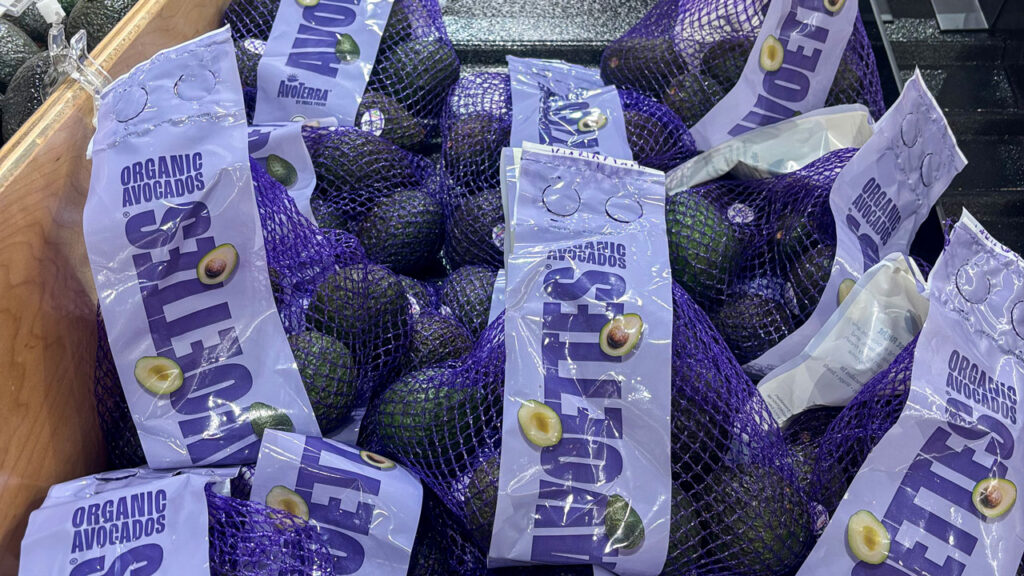
HAB’s 2025 Path-to-Purchase study revealed the most effective ways to drive avocado sales are maintaining fresh-looking displays, ensuring abundant supply, improving merchandising visibility, providing educational signage, and merchandising both bulk and bagged avocados effectively.
Regarding the latter, 52% of heavier avocado buyers and 37% of lighter buyers now purchase both bulk and bagged avocados during the year.
However, many shoppers report difficulty locating bagged avocados in stores, according to the report. Consistent placement and visibility of both bulk and bagged offerings can help maximize sales.
“On average, we focus on three main avocado SKUs,” says Harp’s Roberts. “We carry a 70-count avocado, which gives us a strong price-point item for customers. We also carry a larger 32/36-count avocado, which I think appeals to the true avocado lover. Those customers prefer larger fruit and see the value in buying a larger avocado. We also carry bagged avocados, which are usually smaller fruit.”
He says the bags are still the lower-volume item of the three. “We sell more 70-count avocados by volume, but our dollar sales are stronger on the larger fruit. Each SKU serves a different customer need, and having those options helps us stay relevant for both value-focused shoppers and customers who really love avocados.”
Country-of-origin marketing and promotion organizations play a huge role in selling their crops each year.
For example, the CAC’s Melban says an evolution of their marketing campaign “features actual California avocado growers sharing what makes their fruit so special, in their own words, strengthening the connection between shoppers and the people who grow their food.”
Avocados From Peru’s 2026 summer campaign combined national retail promotions, sports partnerships, consumer activations and America’s 250th celebrations to drive peak-season sales. “We are creating meaningful consumer experiences that connect our brand with sports, healthy living, community engagement and major summer events,” says Xavier Equihua, the PAC’s president and chief executive officer.
The CAB’s newest marketing initiative is the “Raised by Colombia” campaign, which highlights the people, passion and growing conditions behind Colombian Hass avocados. To support this campaign, the CAB launched a new Brand Resource Hub, expanded point-of-sale merchandising materials, and increased retailer promotional funding.
“Our goal is to work collaboratively with retailers to develop promotions that complement their merchandising strategy,” says Michel.
AFM kicks off its fall and winter promotions with an expanded College Football Playoff campaign, using football-themed displays, omnichannel marketing and retailer programs to drive weekly avocado purchases through tailgating and homegating. The program provides an early-season sales boost that helps build momentum through the crop before transitioning into its signature big game promotions.
“Last year, the first year of this campaign, avocado volume for college football was up over 14% in pounds and 11% in units versus the year before. That’s a really strong story for us and one of the reasons we’ll be repeating it,” says Bazan.
• • •
Organic Avocado Demand Flat
Overall, organic avocado supply appears mature and relatively stable rather than expanding.
Case in point, organic avocados have maintained a consistent share of total U.S. avocado volume in recent years: 2022 (3.5% organic share), 2023 (4.8% organic share), 2024 (4.7% organic share) and 2025 (4.1% organic share), according to data from the Hass Avocado Board (HAB), Mission Viejo, CA.
“Significant growth in organic avocado imports would likely require both expanded organic-certified acreage and stronger consumer demand,” says Emiliano Escobedo, HAB executive director.
According to the Hass Avocado Board, 52% of heavier avocado buyers and 37% of lighter buyers now purchase both bulk and bagged avocados during the year.
6 of 15 article in Produce Business August 2026
Have a story to share?
Take a place at Produce Business