
WHERE DO WE GO FROM HERE? A Smarter Path Forward for Produce Safety
October 8, 2026 | 20 min to read
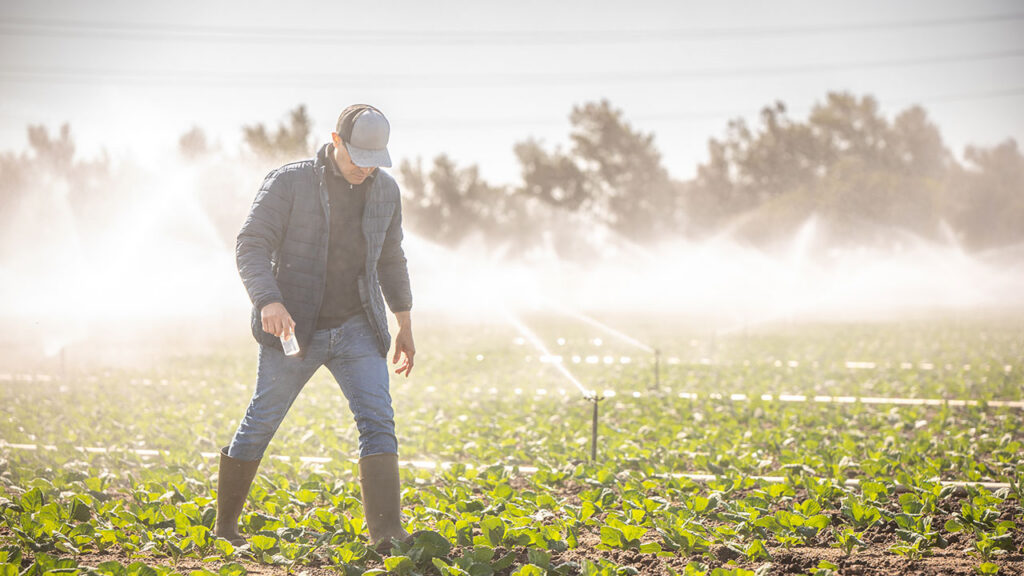
The future of food safety lies in predicting risk before outbreaks occur.
The fresh produce industry has spent decades getting better at preventing food safety problems. Yet outbreaks still happen. The next step is getting better at seeing them coming.
New science, technology and data make it possible to spot potential problems sooner, target preventive measures more precisely and make better use of information already collected from field to fork. The opportunity isn’t simply to collect more data or conduct more tests. It is to use the tools the industry already uses to recognize when risk is changing, and act before an outbreak starts.
Produce Business asked industry experts across the supply chain to look beyond established food safety practices and consider what could make a difference. Their answers point not to one new test, technology or regulation, but to knowing where to look harder, intervening earlier, and ultimately building a system that can better anticipate risk.
MANAGING A MOVING TARGET
“Fresh produce is grown in an open, dynamic environment,” says Laura Strawn, Ph.D., professor and extension specialist in the Department of Food Science and Technology at Virginia Tech, in Blacksburg, VA. “Weather, water, wildlife, adjacent land use, workers and production practices all interact, and risk can change quickly.”
The challenge is recognizing when those conditions have changed enough to warrant a closer look.
For example, agricultural water is a known risk that is influenced by many factors beyond the grower, says Joelle Mosso, associate vice president, science programs for Western Growers Association (WGA), in Irvine, CA. “Trying to understand [the contaminants in] hundreds of thousands of gallons of water [sampled] in 100 milliliters or less than half of a cup of water is unlikely to be productive.”
And people add another variable.
“Human behavior can be more difficult to control than equipment or infrastructure, making worker health, hygiene and sanitation programs essential,” says Lloyd Gabay, director of food safety and quality assurance at Wish Farms, in Plant City, FL.
“Effective food safety depends on continuous training, education, and reinforcement so employees understand how their actions directly impact product safety.”
Controls extend throughout the operation. Brendan Niemira, Ph.D., chief science and technology officer, Institute of Food Technologists (IFT), Chicago, IL, names supplier GAP (Good Agricultural Practices) compliance, sanitation of facilities and equipment, cross-contamination controls and a documented cold chain as part of an overall traceability program.
The number of control points to manage increases as produce moves through the supply chain.
“Today, compared to 30 or 40 years ago, more fresh fruits and vegetables are coming into the U.S. from more and more places in the world,” says Jeff Hall, senior director of food safety and innovation at the Canadian Produce Marketing Association (CPMA), in Ottawa, Ontario.
“Today, compared to 30 or 40 years ago, more fresh fruits and vegetables are coming into the U.S. from more and more places in the world. Every time you add another node to the supply chain, you add another spot where an issue can occur.”
— Jeff Hall, Canadian Produce Marketing Association, Ottawa, Ontario
“Every time you add another node to the supply chain, you add another spot where an issue can occur.”
Unlike foods that undergo pasteurization or another final pathogen-elimination treatment, most fresh produce reaches consumers without a kill step.
“Fresh produce is valued for being fresh,” says Gabay of Wish Farms. “That means the industry must manage food safety risks throughout the growing, harvesting and packing process rather than relying on a final intervention.”
The job, then, is to recognize when risk changes and act early enough to keep hazards from reaching consumers.
GET AHEAD OF THE RISK
Some of this shift is already underway. The FSMA (Food Safety Modernization Act) Produce Safety Rule’s revised agricultural water provisions, for example, emphasize comprehensive agricultural water assessments and inspections, says Gretchen Wall, M.S., senior director of food safety for Food Safety Strategy LLC, in Frederick, MD.
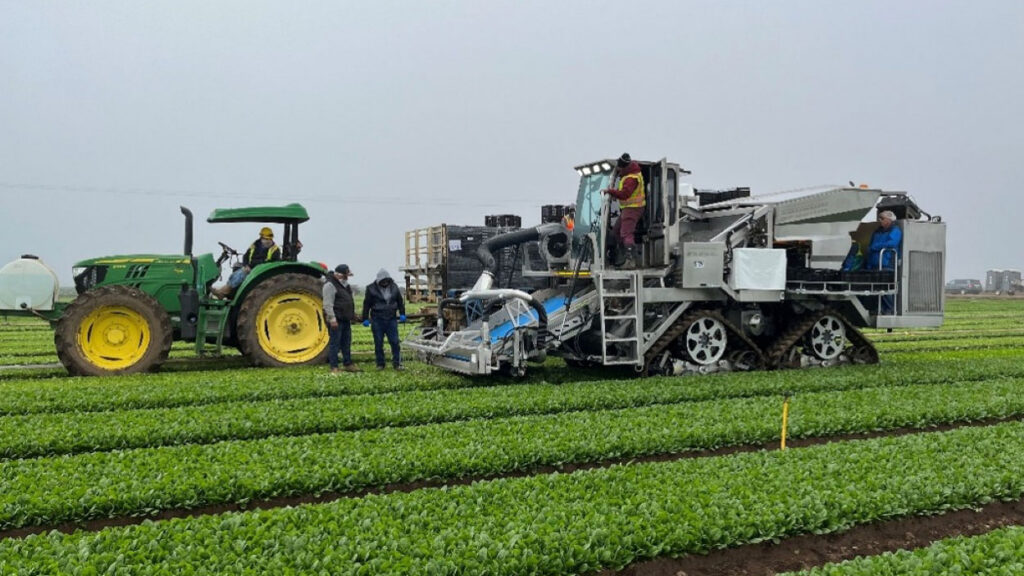
“This requires growers to understand and think critically about what hazards and risks might be present within their production system, rather than responding reactively to positive test results.”
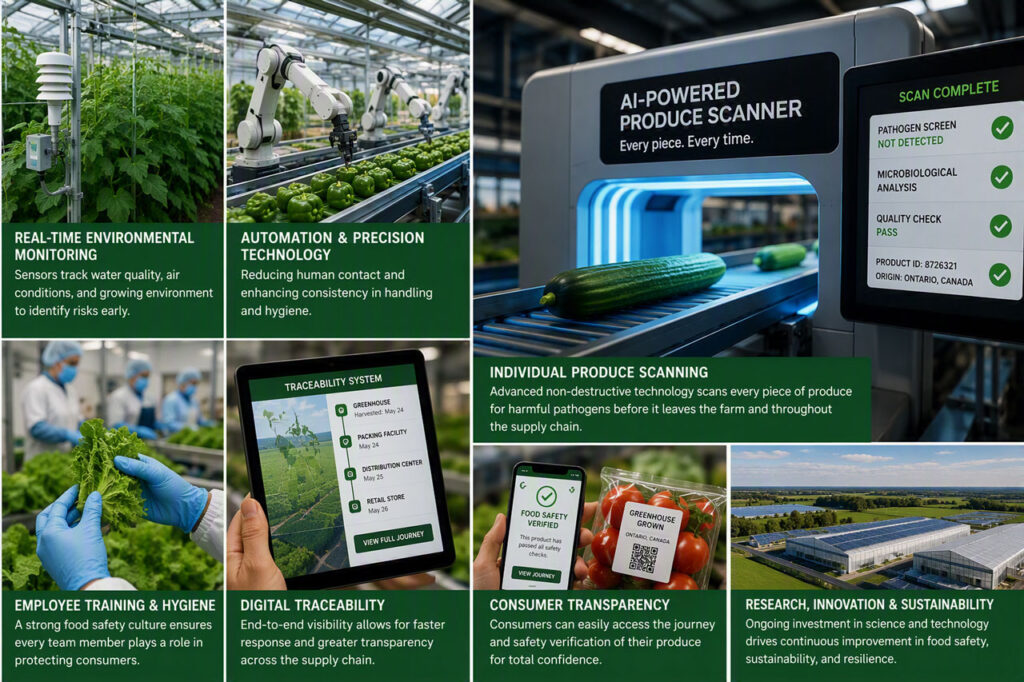
Risk-based models take that further, letting growers run “what-if” scenarios to gauge different controls. Advanced sensors can continuously monitor water quality, environmental conditions and sanitation.
“By leveraging data-driven decision-making, growers can move beyond periodic testing toward continuous risk management,” says Richard Lee, executive director of the Ontario Greenhouse Vegetable Growers (OGVG), in Leamington, Ontario.
Virginia Tech’s Strawn sees potential in putting even more information together. “I think one of the most exciting directions is predictive produce safety, combining environmental, microbial and operational data to identify when conditions associated with increased risk are occurring.”
That includes the “tails” of data, meaning rare occurrences that can disappear in averages, but offer clues to problems.
“The goal isn’t necessarily to label a field ‘safe’ or ‘unsafe,’” says Strawn. “It is to recognize when conditions have changed enough that we should look harder, verify, or intervene.”
Shared infrastructure among government, universities, extension agents, commodity groups, laboratories and industry could make that approach scalable. Artificial intelligence could also help find patterns within the information.
“I think using artificial intelligence to begin to analyze and identify patterns that maybe aren’t obvious to humans, or that we don’t have the bandwidth for, could be a valuable tool,” says Mark Munger, vice president of marketing and business development at IPR Fresh, in Nogales, AZ. “We have to move away from reactive science and get more into predictive science.”
One example is already taking shape. Western Growers’ GreenLink data-sharing and AI platform brings growers together to contribute time and data, build shared learnings, and develop predictive models and proactive tools to better understand and manage risk. It offers a glimpse of how information generated across multiple operations could become more valuable when analyzed collectively.
“It’s important for everyone, at store level and across the entire supply chain, to understand our role in food safety and make sure we do all the checks and balances and execute them consistently.”
— Jeff Cady, Northeast Shared Services, Inc., Schenectady, NY
However, technology doesn’t replace consistent execution of the food safety practices already in place.
“It is important for everyone, at store level and across the entire supply chain, to understand our role in food safety and make sure we do all the checks and balances and execute them consistently,” says Jeff Cady, vice president of produce and floral at Northeast Shared Services Inc., the Schenectady, NY-headquartered parent company of Market 32, Price Chopper, and Tops Friendly Markets.
REMOVING RISK
Prevention also means designing platforms and technologies to reduce risk in the production system.
“One of the promising shifts in produce food safety is moving away from relying solely on testing and instead designing risk out of the production system wherever possible,” says Wish Farms’ Gabay.
Drip irrigation, for example, can reduce contact with the edible portion of a crop. Gabay also points to protective structures around irrigation ponds and reservoirs in Mexico and Guatemala to reduce animal intrusion, while robotic harvesting platforms can reduce human handling.
IFT’s Niemira highlights emerging post-harvest interventions ranging from ozone and cold plasma to electrolyzed water, high-pressure processing and ultraviolet and pulsed light. “The challenge is making them work at commercial volumes and acceptable costs without compromising quality.”
Matthew Taylor, Ph.D., head of the Department of Food Science and Technology in Virginia Tech’s College of Agricultural and Life Sciences, sees potential in plant extracts, particularly essential-oil components applied to produce surfaces.
“In many cases, the plant extracts work as well, if not better than, those more conventional treatments,” says Taylor. “If cost was not the problem, I think we’d see more.”
Maglio Companies is adding an intervention after packaging with ReadySafe, its electronic cold pasteurization technology for fresh-cut produce.
“Food safety is not a one-time achievement; it’s an ongoing commitment,” says Jim Rieck, director of sales and marketing for the Glendale, WI-headquartered company, which also operates a repack and fresh-cut facility in McAllen, TX.
“Every additional validated intervention strengthens the food safety system. ReadySafe can achieve up to a 99.999 percent reduction in pathogens such as E. coli, listeria, and salmonella, with published research demonstrating complete cyclospora inactivation under validated conditions. It can also extend shelf life up to 32 days without harsh chemicals or altering taste, texture or aroma.”
Beyond prevention, better detection, traceability and traceback can help the industry learn from what does get through.
CPMA’s Hall cites whole genome sequencing, which can genetically connect illnesses and potential sources. “Over time, those findings can help show whether the same strain has appeared before and reveal geographic or seasonal patterns.”
TRACING THE RISK
Traceability adds another piece, says Gabay. “The goal is to achieve true field-to-fork visibility, allowing growers and marketers to quickly identify the specific harvest crew, field block and production lot associated with a product.”
Wish Farms has piloted an internal traceability system using unique 16-digit QR codes, starting with machine-packed blueberries and exploring its use with field-packed strawberries, raspberries and blackberries.
The International Fresh Produce Association (IFPA) is looking further down the supply chain, particularly after produce passes through the first distribution center and may be repacked, transformed or combined with other ingredients.
“When FSMA (Food Safety Modernization Act) was written a decade and a half ago, and 70 percent of Americans were still using flip phones, we didn’t have access to the portable technologies that we have today,” says Max Teplitski, chief science officer of the Washington, D.C.-headquartered international trade association.
“The Warehouse Management System (WMS) approach that we are advocating for fully leverages modern technology and algorithms to get the entire supply chain to compliance, end-to-end, and to minimize labor costs and maximize accuracy of traceability records. When it works the way it should, a recall that used to take days can be executed in hours, which means contaminated product comes off the shelf faster and fewer people get sick.”
The Warehouse Management System approach fully leverages modern technology and algorithms to get the entire supply chain to compliance, end-to-end, and to minimize labor costs and maximize accuracy of traceability records. When it works the way it should, a recall that used to take days can be executed in hours, which means contaminated product comes off the shelf faster and fewer people get sick.”
— Max Teplitski, International Fresh Produce Association, Washington, D.C.
This approach is designed to scale, Teplitski adds. “By anchoring it in the digital infrastructure that warehouses and distribution centers already rely on, and by making it interoperable across the supply chain, we can extend the same level of traceability to operations of every size, here in the U.S. and in the growing regions we depend on around the world.”
Faster traceback is only part of the payoff.
“The greatest value of traceability is not simply responding faster to an outbreak,” says Aimee McDonald, director of food safety for the Markon Cooperative, in Salinas, CA. “Its greatest value is helping us learn from what happened so we can prevent similar events in the future.”
LEARNING FROM THE PAST
Every outbreak investigation provides lessons that can be applied more broadly, adds Adriana Alfaro, manager, food safety and technical services at FMI — The Food Industry Association, Arlington, VA.
“Applying those lessons across commodities, regions, and supply chain partners is one of the most effective ways to strengthen prevention efforts.”
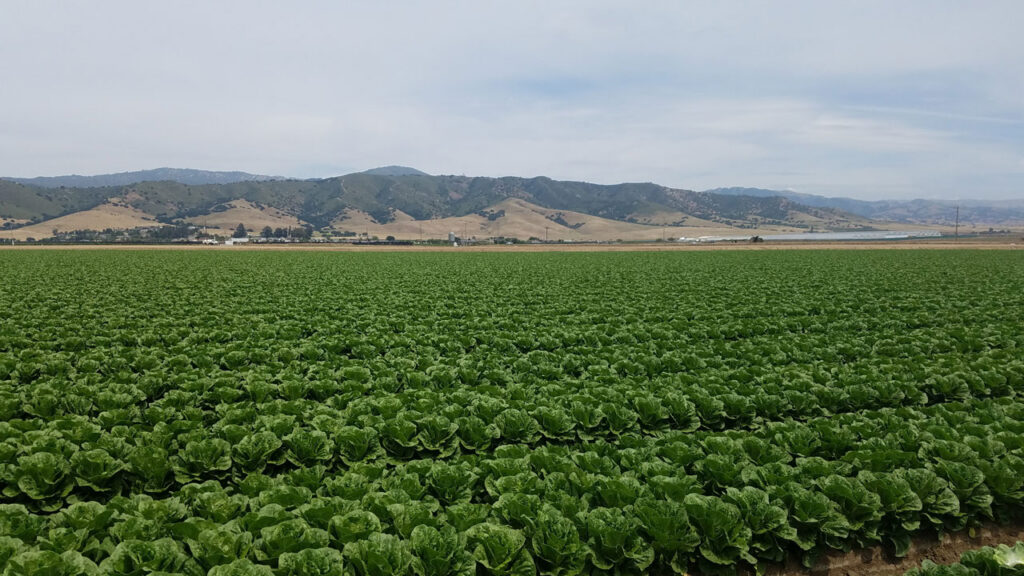
The Leafy Greens Marketing Agreement (LGMA) is putting that learning into practice by bringing together growers and food safety professionals in the field, along with academic researchers equipped with science-based data.
“Bringing those perspectives together allows us to develop better-targeted standards based on risk, evidence and effectiveness,” says Tim York, chief executive officer of the Salinas, CA-based organization. “It also helps ensure that standards are scientifically sound while remaining practical and implementable in real-world agricultural operations.”
SEE IT COMING
Consider a grower getting ready to harvest. Information collected over time and across the growing area comes together. The pattern changes, signaling it is time to look closer.
“If I had unlimited resources, I would redesign produce food safety around prediction rather than reaction,” says John Paap, supply chain security specialist at Jac Vandenberg, in Tarrytown, NY.
“I’d build a shared, real-time surveillance system that combines environmental testing with data on irrigation water, weather, flooding, wildlife, nearby livestock operations, and pathogen genomics. I would pair that with truly end-to-end digital traceability. We should be able to identify affected product quickly and precisely, rather than implicating an entire commodity or growing region.”
“If I had unlimited resources, I would redesign produce food safety around prediction rather than reaction.”
— John Paap, Jac Vandenberg, Tarrytown, NY
Wish Farms’ Gabay sees similar potential in a microbial risk map.
“A grower could enter a field location and receive a real-time risk score identifying potential food safety concerns before planting, harvesting, or making management decisions,” he says.
In effect, Virginia Tech’s Strawn adds, “We should use data to know when and where we need to look harder, instead of testing everything all the time.”
Much of the information needed is already being collected. The problem is that it often resides in different places.
“If I had unlimited resources, I would connect us better because I think we’re stronger when we are connected,” says IPR Fresh’s Munger. “If we were sharing all that, then we would have much stronger ability to identify patterns that signal emerging risks.”
But greater sharing raises a critical question: What happens to companies that voluntarily generate and share information identifying potential risk?
WGA’s Mosso says microbial test results, indicators and other data collected proactively to characterize risk need some form of safe harbor. “We cannot expect the food industry to build the information we need to manage risk efficiently if we use that same information as evidence that they are ‘risky’ when something goes wrong.”
Food Safety Strategy’s Wall similarly envisions “a network that allows transparent sharing of data with no punitive actions.”
The information could identify trends, direct research dollars toward real-world problems and help regulators focus on the most critical needs. More unified food safety standards could also help producers direct resources toward their greatest risks rather than meeting multiple buyer and regulatory requirements.
“Most importantly, I’d create a system where discovering and reporting a food safety risk is rewarded, not punished,” says Paap.
“Technology can give us better sensors and better data, but prevention only works if growers, workers and companies have every incentive to surface problems early.”
The economics must work, too.
“We need to find mechanisms to ensure that those who invest in food safety and manage risk are not overlooked if their price is higher due to more rigorous programs and/or infrastructure updates that are capital-intensive,” says Mosso.
That puts buyers squarely in the equation. Water treatment, monitoring, automation and traceability cost money. If purchasing decisions recognize those investments, buyers can help make stronger preventive systems economically sustainable rather than treating food safety improvements solely as another cost growers must absorb.
Responsibility also extends beyond the farm. WGA calls for operations that can affect produce risk, including animal operations, landfills and compost facilities, to share responsibility.
Research could open other possibilities. Virginia Tech’s Taylor suggests winged insects moving between livestock operations and nearby row crops could potentially be used to monitor pathogen movement.
Whatever develops has to work for growers. Predictive models, AI, pathogen scanning and connected traceability only move food safety forward if operations can practically and affordably use the information to make decisions.
“We have to continue to do the science, communicate, and then we have to figure out a way to make it practical, efficient and cost-efficient for the producers,” says CPMA’s Hall.
OGVG’s Lee envisions high-speed, non-destructive pathogen scanning using imaging, spectroscopy, molecular detection and AI to analyze individual pieces of produce. Couple that with a national digital traceability platform connecting growers, packers, retailers, regulators, laboratories and public health agencies with potential risks could be tracked across the supply chain.
FMI’s Alfaro sees the long-term goal as “a farm-to-fork food safety system powered by real-time data, predictive science and unprecedented collaboration.”
Jac Vandenberg’s Paap takes it one step further.
“The goal shouldn’t just be getting better at solving outbreaks or ensuring zero pathogens; that is practically impossible,” he says. “It should be building a system capable of seeing them coming.”
• • •
Breeding Food Safety Into Lettuce
Growers choose lettuce varieties for traits such as disease resistance and quality. In the future, food safety could be part of that seed decision, too.
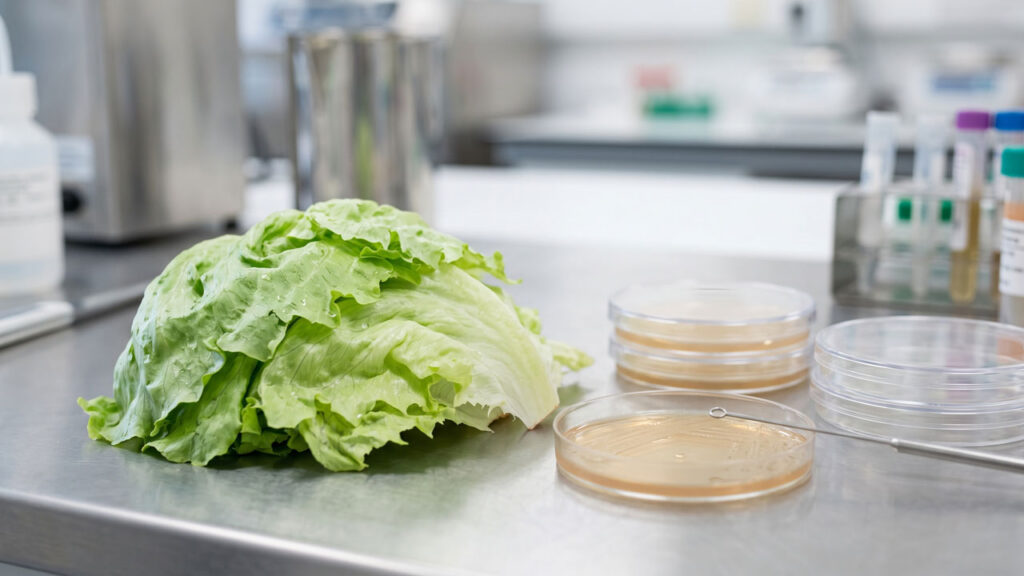
Research by Maeli Melotto, Ph.D., professor and vice chair of plant sciences at the University of California, Davis, has shown lettuce varieties don’t all respond the same way to E. coli and salmonella. Those with stronger immune responses tend to harbor lower pathogen populations. On lettuce with weaker responses, the bacteria can multiply.
Melotto is using CRISPR-Cas gene editing to target susceptibility genes and make lettuce less conducive to bacterial growth. The approach is faster and more precise than traditional breeding, she says, and her method does not produce GMO plants. Quality and nutrition remain unchanged.
Proof-of-concept work on two cultivars is complete. Melotto has iceberg ready and is working with romaine and leaf lettuce. She’s now looking for industry buy-in to move the research toward application.
Melotto works with seed companies, which could eventually add reduced susceptibility to human pathogens to the trait package growers already consider when selecting varieties.
“I cannot promise 100% immunity,” says Melotto.
“What I can promise is reduced risk.”
• • •
Knowing Where to Look
Food safety risk can shift with the field, season, weather, and pathogen. Laura Strawn, Ph.D., professor and extension specialist in the Department of Food Science and Technology at Virginia Tech in Blacksburg, VA, sees an opportunity to use those changes to get ahead of problems through what she calls predictive produce safety.
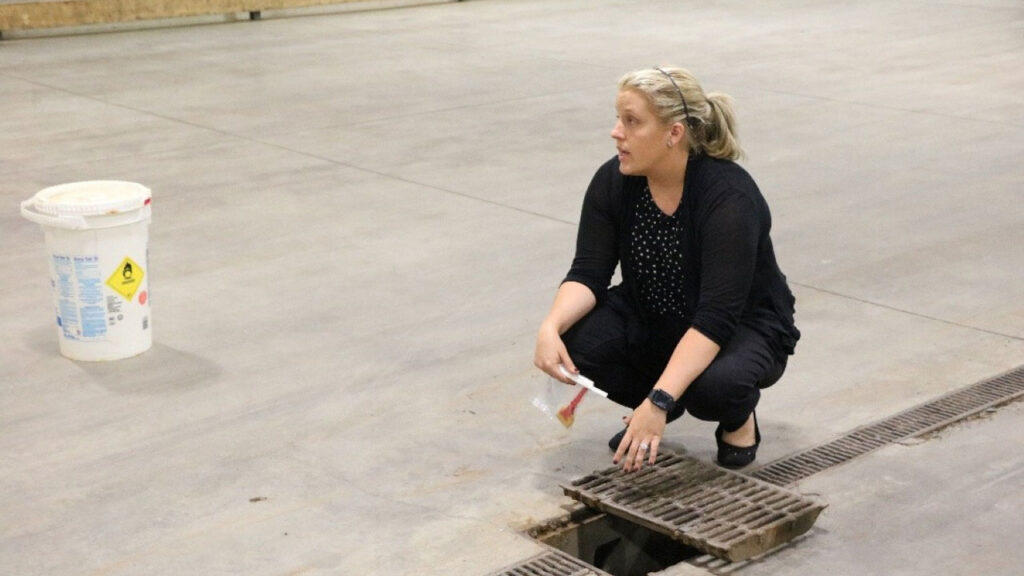
A 2023 study co-authored by Strawn shows how different those risk patterns can be. Researchers collected 920 samples from 10 Virginia produce farms across all four seasons. Overall, 5.3 percent tested positive for salmonella and 2.3 percent for listeria monocytogenes.
A deeper dig unearths striking differences. Salmonella was about 18 times more likely to be detected on Virginia’s Eastern Shore than on the mainland. Of 21 listeria monocyto-genes-positive samples, 17, or 81 percent, were collected in winter. Irrigation water stood out, too: 21.7 percent of samples were positive for salmonella, compared with 4 percent of field drag swabs and 1.8 percent of soil samples.
Strawn says averages are useful, but the “tails” of the data, i.e., the rare occurrences, can reveal when problems may be developing.
Predictive produce safety would combine microbial findings with factors, such as weather, rainfall, flooding, hydrology, agricultural water quality, adjacent land use and historical data.
The idea isn’t to label a field “safe” or “unsafe,” she says. It’s to recognize when conditions have changed enough to warrant more sampling, verification or controls.
“Instead of testing everything all the time, we should use data to know when and where we need to look harder,” says Strawn.
• • •
Putting Dollars Where it Counts
Growers have no shortage of ways to spend money on food safety. Research by Martin Wiedmann, Ph.D., Gellert Family Professor in Food Safety in the Department of Food Science at Cornell University, in Ithaca, NY, is helping show where those dollars could make the biggest difference.
Specifically, Wiedmann’s 2025 Cornell-led study modeled E. coli O157 risk from field to fork in fresh-cut romaine. Untreated surface water applied by overhead spray accounted for 52 percent of predicted illnesses. Treating that water cut predicted illnesses by 90.5 percent with chlorine, 91.1 percent with UV, and 96.8 percent with peracetic acid.
Switching overhead-irrigated acreage to furrow irrigation reduced predicted illnesses by 96.3 percent, and moving overhead and furrow irrigation to drip performed better than chlorine or UV treatment.
The model also tested the California and Arizona LGMAs’ (Leafy Greens Marketing Agreement) tighter 2023 standard for surface water used in overhead irrigation, 235 versus 576 MPN (most probable number) generic E. coli per 100 mL, and predicted a 31.1 percent reduction in illness risk.
Wiedmann sees the next step as putting this type of analysis directly in growers’ hands. Within about three years, he envisions interactive, AI-powered tools that could factor in a field’s characteristics, water source, and other conditions to help rank potential interventions.
“If I have an extra $10, $100, or $1,000, where do I invest it to get the biggest return on my investment, the biggest reduction of foodborne risk?” he says.
“Growers are willing to put money into food safety, but they want to make sure they put it in the right place, in the right practices. Those are the types of decisions we’re trying to help growers make.”
• • •
Putting Outbreak Response on Fast-Forward
Speed matters when fresh produce is involved in a food safety investigation.
Xiangyu Deng, Ph.D., professor at the University of Georgia’s Center for Food Safety in Griffin, GA, says many of the tools needed to find answers faster already exist. The challenge is putting them to work.
Whole-genome sequencing (WGS) has transformed public health surveillance, yet industry adoption remains “strikingly low,” says Deng. Liability concerns and technical barriers help explain why. Another is the lack of models showing companies how WGS can reduce risk or deliver value.
Traceability presents a similar gap, he adds. FDA has deferred enforcement of enhanced FSMA food traceability requirements until July 2028. Until then, companies aren’t required to provide the standardized, lot-level, supply-chain data envisioned under the rule, information that could speed traceback and help narrow recalls to affected lots.
Deng would take that further with a live national traceability system capturing food transactions in near real time. Each lot could be linked digitally from farm to processor, distributor, retailer and restaurant. Pair those records with genomics, and investigators could follow both the product and pathogen toward the source.
AI could add another layer, but only with good data behind it.
“As for AI, I believe garbage in, garbage out,” says Deng. “If we still lack high-quality datasets to train or feed the models, the practical applications of AI in food safety will remain limited, despite all the hype.”
1 of 4 article in Produce Business October 2026
Have a story to share?
Take a place at Produce Business