
QSR Becoming ‘Growth Engine’ For Produce
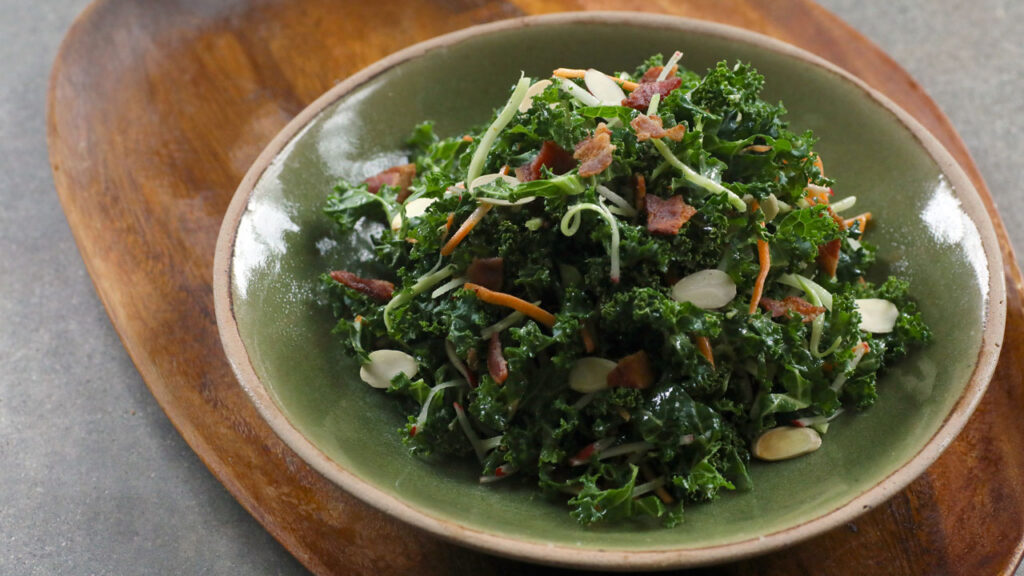
Healthier menus drive a new era of quick service dining.
To most North American consumers, the concept of Quick Service Restaurants (QSR) within the foodservice segment signifies burgers, chicken or other hot protein foods bought at drive-throughs or ordered online. For an increasing number of people, however, this concept increasingly incorporates healthy-eating options, including those featuring fresh fruits and vegetables.
For retailers and producers alike, this phenomenon represents an opportunity to offer an alternative to ultra-processed products that are now associated with a growing number of health concerns.
Maeve Webster, president of Arlington, VT-based food industry consultancy Menu Matters, believes there are limitless possibilities to introduce new varieties of familiar produce to the QSR segment, with consumers continuing to show an appetite for new colors, flavors and textures.
“I think this is particularly true with new varieties that enhance or expand on functional benefits or improved taste, texture, visual appeal,” she says. “QSRs can then leverage these unique new varietals in their innovation and messaging.”
However, given mounting concern surrounding ultra-processed foods, seed oils, and unfamiliar ingredients, Menu Matters’ vice president, Mike Kostyo, argues that what consumers seek most of all right now are options they can trust.
“Regardless of your own positions or feelings, at the end of the day, consumers just want food they can feel good about and trust, which is obviously an opportunity for produce,” he says. “These are simple ingredients that consumers feel good about eating.”
Kostyo believes there is a real opportunity for produce companies to work with QSRs to replace non-fresh ingredients and dishes with a trusted, fresh option. By carrying that messaging through to product launch, showcasing videos of farmers, and chefs preparing fresh fruits and vegetables, he says this option can really resonate with consumers.
A SEGMENT TO WATCH
According to Stephanie Bazan, senior vice president for commercial strategy & execution at Irving, TX-based Avocados From Mexico, Fast Casual is a segment to watch, with avocado penetration at 64%, equivalent to a 12% growth over the past 12 years.
Despite the upward trend, Bazan believes there is still room for further growth, highlighting the potential of products such as guacamole and avocado toast. “Datassential projects a 42% increase in menu penetration for avocado toast over the next four years, proving just how much potential is out there,” she says.
To help operators explore these opportunities and overcome barriers — like the perception that avocados don’t belong on certain menus — the organization offers hands-on training and education through its free Avocado University program.
According to Terry Splane, vice president of marketing at the Irvine, CA-based California Avocado Commission (CAC), fast-casual and quick-serve restaurants are an essential growth engine for the California avocado category.
“They introduce millions of guests to avocado applications beyond guacamole and keep avocados top-of-mind with limited-time offers (LTOs) and menu rotations,” he says. “CAC’s marketing mix has long included customized foodservice programs alongside retail, reflecting the segment’s strategic importance, especially during spring–summer peak season when promotable volumes are highest.”
With a strong 2025 seasonal yield of approximately 325 million pounds, Splane says engagement with national and regional chains expanded this year in step with the larger crop and extended promotable windows. A similar forecast of around 320 million pounds for 2026 is expected to continue the trend.
The CAC supports foodservice partners during the California avocado peak season (spring-summer) with targeted advertising, PR and in-store/menu activation, with a focus on local and sustainable practices in California across fast-casual/QSR digital channels.
In a similar vein, Jamie Quinno Bowen, director of marketing for the Eagle, ID-headquartered Idaho Potato Commission, says QSR remains an important channel for Idaho potatoes, both fresh and processed. “Operators appreciate the quality, consistency, and performance that Idaho potatoes deliver across a range of menu applications,” she says.
“We’re seeing continued interest in innovation within the QSR segment. Operators are looking for ways to elevate traditional favorites with unique seasonings, formats, and loaded or shareable potato dishes. There’s also growing momentum around menu storytelling, where highlighting Idaho potatoes helps operators emphasize quality and origin, something guests increasingly respond to.”
“We’re seeing continued interest in innovation within the QSR segment. Operators are looking for ways to elevate traditional favorites with unique seasonings, formats, and loaded or shareable potato dishes.”
—Jamie Quinno Bowen, Idaho Potato Commission, Eagle, IDAnother category experiencing growth within QSR is watermelons, according to Megan McKenna, senior director of marketing and foodservice at the National Watermelon Board in Winter Springs, FL.
McKenna says foodservice not only moves product but positively influences retail purchase, quoting new menu research showing that 16.3% of operators feature watermelon on menus, up 30% from 2021. Specifically, within the QSR segment, McKenna says market penetration has risen from 8% in 2021 to 12% this year. Much of that growth, she says, is happening in beverage and appetizer/salads, which she identifies as “a great opportunity for QSR to incorporate more watermelon.”
The benefits of the growth of produce in QSR are being reflected across the country. Susie McKinley, director of marketing and development at the Florida Department of Agriculture and Consumer Services (FDACS) in Tallahassee, FL, says the foodservice industry as a whole recorded an estimated $602 million in cash receipts in 2024, with key products from the state including tomatoes, cucumbers and cabbage.
Over recent years, McKinley says, FDACS has responded to emerging opportunities for Florida growers to supply locally grown fresh produce to the food service industry by developing new initiatives and partnerships focused on driving sales of “Fresh From Florida” produce.
For the QSR segment in particular, these have included supporting producers at major foodservice shows, as well as launching a distributor pilot program promoting “Fresh From Florida” fruits and vegetables to major distributors, including Gordon Food Service, What Chefs Want and Performance Foodservice. Products to have benefited include strawberries, bell peppers, sweet corn, watermelon, squash and leafy greens, as well as tomatoes and cabbage.
Mushrooms are another item that has experienced considerable success in the segment, and indeed has become a focal point on many QSR menus. Citing the 2024 Slice of the Union report on the pizza industry, Cristie Mather, vice president of marketing at the Lee’s Summit, MO-headquartered Mushroom Council, says mushrooms are not only the most popular veggie pizza topping, but are second only to pepperoni as the most popular topping.
“Fresh mushrooms give pizza a premium, healthy boost along with their delicious umami flavor,” she says.
“Mushrooms have die-hard fans that enjoy them on menus ranging from quick service to fine dining, and that means that there are limitless opportunities to delight diners with mushrooms on the core menu or as LTOs to generate seasonal enthusiasm.”
As well as their widespread use by burger chains, which dominate QSR, Mather says mushrooms are a perfect fit for global cuisines, while they can also take center stage in plant-forward dishes.
“We are increasingly hearing from QSR R&D chefs who are exploring ways to bring mushrooms, and more varieties of mushrooms, to their menus,” she adds. “We are excited about the innovation we’re seeing in QSR and look forward to seeing some new and innovative mushroom menu offerings in the future.”
FOCUS ON QUALITY TO WIN
“For QSRs, it’s all about economics right now,” says Webster. “Consumers are hurting, particularly consumers at the lower end of the income scale. These are the consumers who make up the bulk of many QSR operators’ patron base.”
However, this challenge, she continues, is driving many QSRs to adopt price-based promotions which are only digging that hole deeper for them. “When these operators have no choice but to raise prices, which is coming sooner rather than later, they are going to find it will be even harder than it was a couple of years ago,” Webster adds.
Kostyo believes that in order to identify a “relentlessly consumer-focused value proposition” amid such challenges, operators need to be thinking beyond price and instead focus on simple, quality-driven menus.
He argues that operators need to work a little harder to ensure a restaurant doesn’t resemble a giant vending machine. “Right now, you have customers coming in, ordering from a kiosk, picking up food from a cubby, and sitting and watching TikTok on their phone while they eat,” Kostyo says. “The food becomes almost secondary.”
“Right now, you have customers coming in, ordering from a kiosk, picking up food from a cubby, and sitting and watching TikTok on their phone while they eat. The food becomes almost secondary.”
—Mike Kostyo, Menu Matters, Arlington, VT
To place more emphasis on ingredients, he recommends showcasing any prep work done in an open kitchen environment, highlighting fresh ingredients prominently, and using them in signage and marketing. Such practices, Kostyo adds, will improve customer trust in what is going into the food.