
Grow Peach Sales During Peak Season
July 21, 2026 | 8 min to read
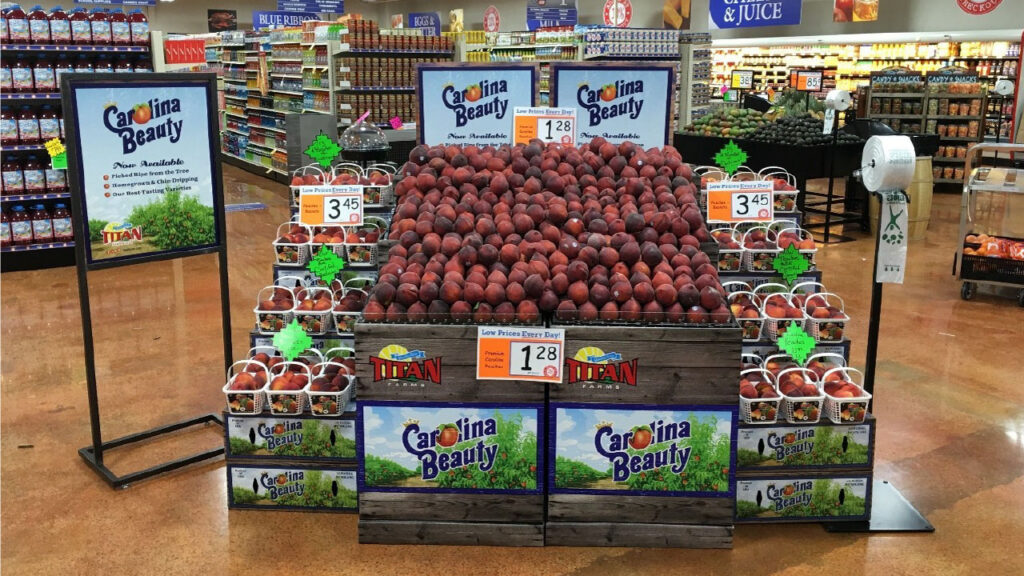
Aroma and large displays help boost sales of this summer fruit category favorite.
Peaches are one of the key drivers of summer produce sales. The fragrant and vibrant-colored fruit attracts impulse purchases and helps retailers create excitement in produce departments during peak season.
Now a nearly year-round category, retailers are finding success merchandising peaches. The availability of Southern, California, Chilean and Mexican fruit leaves only a limited number of weeks when peaches aren’t available in large supplies.
“Peaches are extremely important to the produce department,” says Mike Roberts, vice president of produce operations for Harps Food Stores Inc., based in Springdale, AR. “They are a true showstopper. A good peach display can set the tone for the customer’s entire shopping trip.”
“Peaches create excitement, build impulse sales, and make the department feel alive. They are one of those items customers look forward to every year, especially during the Southern peach season.”
— Mike Roberts, Harps Food Stores Inc., Springdale, AR
The category builds momentum during the summer when the South and California produce high volumes of fruit.
SIGNATURE CATEGORY
“Peaches are one of the signature categories of summer produce and play an important role in driving seasonal excitement throughout the department,” says Krista Beckstead, director of marketing for Mountain View Fruit Sales, Reedley, CA.
“When quality and flavor are strong, peaches create impulse purchases, increase basket size, and encourage repeat visits. They also help retailers reinforce a fresh, premium image during peak summer shopping periods.”
Peaches are a critical summer item for Market Basket’s 90 retail stores in the Boston, MA, area.
“Peaches are a big draw for our customers every summer,” says Tim Shea, buyer/merchandiser for the Tewksbury, MA-based chain. “Once Eastern peaches and California peaches hit the shelves, there’s some excitement in the area. Summer’s coming. It’s just a big part of our summer program.”
Georgia and South Carolina peach production typically begins in May and can harvest through August and early September. Responsible for approximately 70% of U.S. peach production, California peaches ship late April through October. Other regions, including New Jersey and Pennsylvania, usually begin in early July and ship through late September.
Chilean fruit ships to the U.S. from November through March, with Florida peaches harvested from March through mid-May.
“People associate peaches with summertime, kids out of school, vacation and time to grill,” says Will McGehee, a partner with Genuine Georgia Group LLC, Fort Valley, GA, “We get a lot of our flavor from where we’re growing them. We have a wonderful soil and climate for sweet peaches. We get searing heat during the day, which develops sugar pretty quickly.”
SUMMER TREAT
For many consumers, the California stone fruit harvest season — which also includes apricots, nectarines and plums — signals the start of the summer, when the produce aisle is filled with fresh, locally grown fruits and vegetables, says Courtney Razor, director of member services and communications for the California Fresh Fruit Association (CFFA), Fresno, CA.
“California peaches are a versatile product known for their freshness, sweetness and flavor,” she says. “They are a true summer staple, and can be enjoyed on their own as the perfect seasonal snack or incorporated into signature summer dishes, such as cobblers, ice cream, jams and spreads. Throughout the season, shoppers will have access to a wide range of peach varieties, including both yellow- and white-flesh peaches, as well as unique offerings like flat or donut peaches.”
An item that shoppers naturally associate with summer, peaches are a highly anticipated seasonal item that encourages impulse purchases. Strong peach programs help retailers create fresh, colorful and abundant produce departments that attract shoppers.
“Peaches are a major summer sales driver for retailers, as they bring strong seasonal excitement to the produce department,” says Ross Williams, president of Titan Farms, Ridge Spring, SC. “Peaches bring energy and excitement to the produce department during the summer season. Their vibrant color and seasonal appeal naturally draw shoppers in. Promotional activity drives sales growth.”
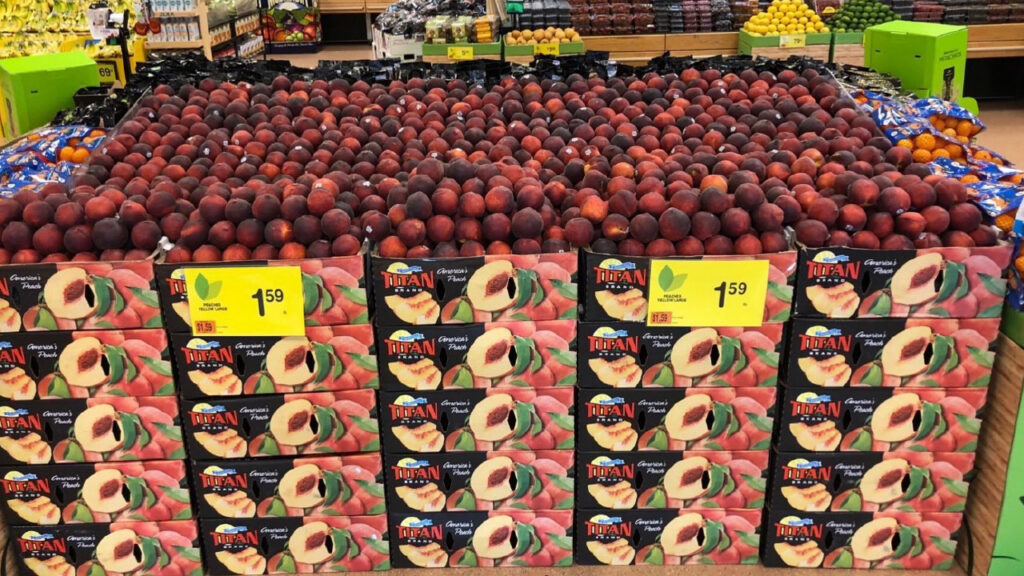
In the past, retailers sold either Southern or California peaches. Today, they sell both.
“Southern peaches have tremendous flavor,” says Benjie Richter, partner with Charlotte, NC’s Richter & Co. “They have humidity, and they have a very good acid-to-sugar ratio that gives you that delicious peach flavor when you get them from Georgia and South Carolina. They sell themselves. Once somebody picks one up, the flavor and the smell brings them back for repeat sales. It’s kind of a sexy fruit. Everyone likes peaches.”
TRAFFIC BOOSTER
Whether from the South or California, peaches are a popular produce item.
“Peaches help drive overall produce sales by increasing traffic and creating larger seasonal displays that encourage shoppers to purchase multiple summer fruits together,” says Angela Hernandez, vice president of marketing for Trinity Fruit Co., Inc., Fresno, CA. “Peaches are an important seasonal category because they create energy and excitement in the produce department while offering strong movement during the summer months.
“Their strong aroma, vibrant color, and flavor make them an easy grab-and-go item for shoppers looking for healthy summer snacks.”
“Being one of the most recognizable summer fruits, peaches help create eye-catching displays, encourage impulse purchases, and give shoppers a reason to engage with fresh produce.”
— Ross Williams, Titan Farms, Ridge Spring, SC
From large, loose bulk displays to tote bags and pouch bags, a variety of merchandising approaches works well with peaches, depending on the fruit’s sizing and supply region, according to suppliers and retailers.
“When horizontal space is restricted, building vertically can be just as impactful. Stacked displays create height, draw the eye, and help communicate volume and freshness even within a smaller footprint,” says Williams of Titan Farms.
Ideally, peaches should be given ample space during peak season to showcase their abundance and visual appeal.
DISPLAY VARIATIONS
Peaches can be displayed in many produce aisle locations. “The retailers call them front page, back page, side cap, endcap, those different words that I’ve heard used,” says Genuine Georgia’s McGehee. “And so, they always have them on display in some form or fashion. Certain weeks are big up front, but even when those large displays are shrunk back down, they’re still sizable and findable.”
At Harps, tote bag displays drive volume for Southern peaches, while loose bulk displays remain best for larger-sized California peaches.
“Retailers should treat peaches like a seasonal destination, not just another item on the rack,” advises Roberts. “Build displays that are full, seasonal, fresh, placed in a high-traffic area, and easy to shop. Make sure the fruit is ripe enough to create aroma and excitement. Carry multiple varieties when possible, including yellow flesh, white flesh, and Saturn or donut peaches.
“The best displays are big, full, seasonal, and placed in a high-traffic area. Peaches should be treated as a feature item when they are at their peak.”
Market Basket’s summer fruit display includes Eastern peaches on one side, California peaches on the other side with white peaches in the middle, and they build extra endcap displays.
“We promote as often as possible, several times every season, be it Eastern peaches, California peaches,” says Shea. “I would say peaches are a staple for the summer and very important for us to have them and have different varieties of peaches for our customers. We’re in the peach business for sure.”
Richter says stores do well when they merchandise peaches in large, waterfall-like displays where retailers erect displays from shipper boxes.
AROMA POWER
“When you go into a store and you see a big display of Southern peaches, you can smell them and they look good,” says Richter. “The fruit comes out and is a volume-fill abundance, where shoppers can go in there and get a bag and pick as they wish. Those displays yell and speak to you that it’s regional, a Southern peach that didn’t have to travel that far from the farm. We get tremendous resale.”
Peaches are associated with summer eating occasions, grilling, entertaining and healthy snacking, says Mountain View’s Beckstead.
“High visibility locations near department entrances or alongside other summer fruit categories perform especially well,” she says. “Their vibrant color, aroma and flavor naturally attract shoppers and create a strong visual impact in-store. Large peach displays can increase overall traffic to the produce department and help drive complementary purchases across berries, cherries, melons and other seasonal fruit categories.”
“Displaying peaches front and center with strong signage and summer-themed messaging helps capture shopper attention,” says Trinity Fruit’s Hernandez. “Color blocking peaches alongside complementary summer fruit creates visual impact and helps shoppers easily shop the category. Secondary displays near high-traffic areas, sampling during peak flavor windows, and messaging around ’snacking the sweet side of healthy’ are all great ways to increase shopper engagement.”
OTHER STORE PLACEMENTS
Cross-merchandising is a key piece of successful merchandising of peaches. Peaches work well with fresh cherries and other dessert items. If retailers can involve ice cream, the dessert can significantly boost sales, although that can be challenging operationally depending on the store layout, explains Harps’ Roberts.
“Peaches are important because they drive both planned and impulse purchases,” he says. “Customers come in looking for them during peak season, but a great display can also stop shoppers in their tracks. Once a customer buys peaches, it can lead to additional purchases across the store — shortcakes, pie shells, cobbler mix, ice cream, whipped topping, or other dessert items. That is what makes peaches so powerful.”
Titan Farms’ Williams recommends retailers consider displaying peaches in other store locations.
“Think beyond a standard produce display,” he advises. “Secondary displays, front-of-store placement, seasonal bins, and cross-merchandising with bakery, dairy, breakfast, salad, and grilling items can help peaches stand out and encourage larger basket rings.”
As with most tree fruit categories, weather continues to play a major role in crop sizing, timing and overall supply, says Beckstead.
“The industry remains optimistic about consumer demand for peaches, particularly when quality and flavor align,” she says. “Retailers should stay closely connected with suppliers throughout the season to manage promotional planning and transitions effectively. As these are a seasonal fruit, they are highly sought after during the peak summer season since consumers can’t get them year-round.”
10 of 17 article in Produce Business July 2026
Have a story to share?
Take a place at Produce Business