
State Agriculture Programs Drive Produce Sales
May 26, 2026 | 11 min to read
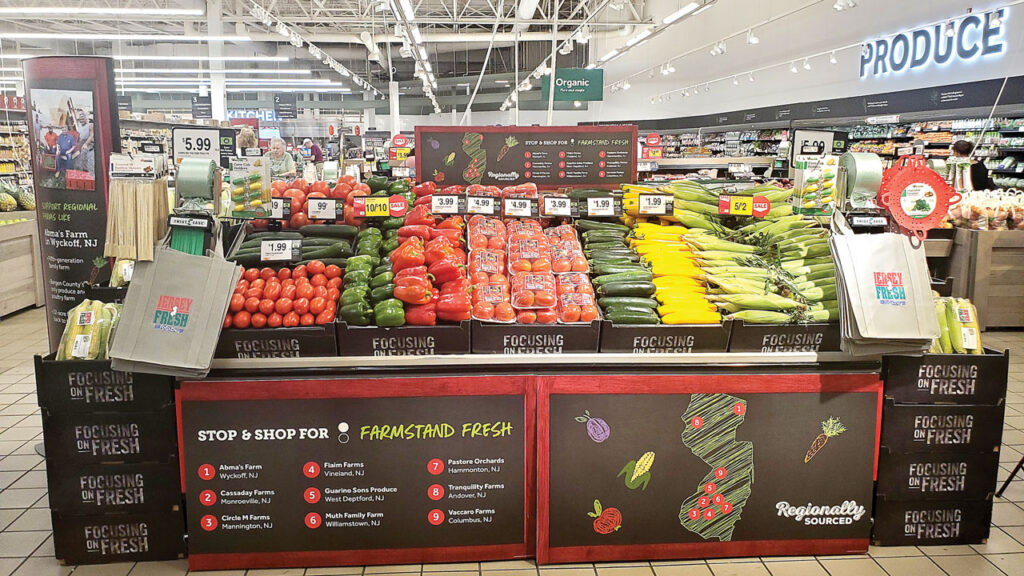
State-backed branding is transforming local produce.
State department of agriculture produce branding programs, often termed “state-branded,” “locally grown,” or “buy local” initiatives, can measurably drive demand and sales of fresh fruits and vegetables at retail.
At the same time, local purchasing tied to these campaigns generates a retail multiplier effect of $1.32 to $1.90 for every dollar spent, according to the August 2023 report Local Food Systems: Clarifying Current Research by the North Carolina State Extension Service, based in Raleigh, NC.
“The demand for local remains incredibly strong for all food categories,” says Brian Baldridge, director of the Ohio Department of Agriculture (ODA), in Reynoldsburg, OH, which runs Ohio Proud. This initiative promotes products that are at least 50% grown, raised, or processed in the state, through its marketing department.
“The demand for local remains incredibly strong for all food categories. We see this at every level, from retailers looking for local produce and other products, to more schools adopting farm-to-school projects, and restaurants and chefs working with us to identify growers in their area.”
Brian Baldridge, Ohio Department of Agriculture, Reynoldsburg, OH
“We see this at every level, from retailers looking for local produce and other products, to more schools adopting farm-to-school projects, and restaurants and chefs working with us to identify growers in their area,” Baldridge says. “We’ve heard anecdotally from grocers that when they bring out local growers and processors to sample during events, their overall sales increase anywhere from 2-4% during that event.”
Starting with Jersey Fresh, the nation’s first state-run agricultural branding and quality-grading program founded by the New Jersey Department of Agriculture in 1984, demand for locally grown foods has kick-started similar projects nationwide. The big benefits lie in the strength of branding, the ability to link growers and sellers, and successful marketing and promotion programs that span from in-store to virtual.
THE HEAVY LIFTING POWER OF STATE BRANDS
State branding programs, while trailing major national brands with much higher budgets, do enjoy widespread logo recognition.
For example, Fresh From Florida, the marketing and branding program developed by the Florida Department of Agriculture and Consumer Services (FDACS), boasts a 91% logo awareness among Florida consumers surveyed. Recognition of the sunny logo is also strong across key markets outside of Florida, too — 81% in Atlanta, 73% in New York, and 77% in Montreal.
The Fresh From Florida Logo Incentive Program reimburses growers for 50% of printing costs (up to $5,000) when they add the Fresh From Florida logo to product packaging.
“Though results vary by retailer, strong logo recognition and prominent in-store identification reliably influence buying decisions,” says Susie McKinley, director, Division of Marketing and Development for the Tallahassee, FL-based FDACS. “Integrating the logo into weekly ads, online shopping platforms, and in-store displays reinforces quality, freshness, and consumer confidence.”
As of 2024, 79% of South Carolinians are aware of the Certified SC Grown (CSCG) program, a branding and marketing initiative started in 2006 by the South Carolina Department of Agriculture (SCDA).
“Well over 80% of South Carolinians between the ages of 18 and 44 are aware of CSCG,” says Chris Whitmire, director of the Columbia, SC-based SCDA’s marketing department. “Further, 88% say they would be more likely to buy an item labeled Certified SC Grown over one that was not labeled CSCG.”
Regardless of whether shoppers know of the Colorado Proud brand, the presence of the label significantly increased “intent to buy,” according to Danielle Trotta, senior marketing specialist and program manager for Colorado Proud, a free marketing program run by the Colorado Department of Agriculture, Broomfield, CO.
“Even for those seeing the logo for the first time, over 60% say it would make them choose that product more frequently.”
Even more impressive, 96% of New York residents surveyed said they favored food bearing the New York State Grown & Certified label, versus food without this designation. Founded in 2015 by the New York State Department of Agriculture and Markets, this label signifies that agricultural products are state-grown and meet standards for food safety and environmental stewardship.
“Seventy-four percent said they would buy more, and 49% said they’d pay more for New York produce with this label,” says Richard A. Ball, commissioner, New York State Department of Agriculture and Markets, Albany. NY.
MAKING CONNECTIONS: WHAT’S IN SEASON, FROM WHERE & WHEN
Retailers most often ask about seasonal availability, sourcing contacts, and optimal ways to promote Florida-grown commodities, according to the FDACS’ McKinley, so the program provides seasonal availability calendars and introductions to Florida shippers and distributors. It also offers guidance on using the Fresh From Florida logo in signage, circulars, digital ads, and recipe content to boost product visibility.
Ohio Proud regularly works with retailers to identify new products and farms offering fresh, local produce, adds Baldridge. “We hold a food show twice a year and invite retailers, chefs and foodservice directors from around the state to come, meet our members, and sample their products.”
Midwest retailers also look to Indiana Grown, a branding and marketing initiative administered by the Indiana State Department of Agriculture (ISDA) in Indianapolis.
“We serve as a one-stop connector, matching buyers with Indiana Grown businesses that fit their needs,” says Caroline Patrick, program director. “We also host an annual showcase to connect retail and wholesale buyers with participating producers. It’s an effort that resulted in more than 20 new Indiana businesses landing on one retailer’s shelves following the 2025 event.”
PROMOTIONAL PARTNER
The FDACS partners with more than 100 domestic and international retailers across 33 states and Washington, D.C. to promote Florida produce in circular ads, digital and social media ads, sampling events, in-store displays, and more, says McKinley. “Fresh From Florida also utilizes grocery cart advertising, floor talk, coupon apps, shoppable digital ads, and online shopping platforms to drive sales of Florida produce.”
Sprouts, Walmart, and Publix are among the retailers where C&B Farms sells, with its produce packaging carrying the Fresh From Florida logo. “Publix alone carries 18 conventional and 18 organic items and does a great job of letting customers know the product was grown in Florida,” says Chuck Obern, owner of C&B Farms, in Clewiston, FL, which grows 94 crops, including vegetables, leafy greens and herbs.
Noble Citrus has partnered with Sprouts on large displays of the grower’s craft-cultivated Juicy Crunch and Autumn Honey tangerines, with Fresh From Florida logos prominently displayed on the point-of-sale materials.
Currently, the four-generation Winter Haven, FL-based citrus grower is working with the Fresh From Florida program and retailers to promote demand for its tangerines and oranges via its Noble Citrus Fresh Juicing Program. This is a specialized retail partnership where Noble provides premium, fresh-picked fruit to grocery stores for on-site squeezing.
“Florida has long been known for the great flavor, brix and yield of citrus,” says Quentin Roe, president at Wm. G. Roe & Sons, Inc., with its Noble Citrus brand. “This program is designed to deliver just-picked, fresh-squeezed flavor with all its nutrients and no preservatives or added sugars. There is great value in having the Fresh From Florida logo on in-store marketing materials.”
Retail merchandising materials are a major component of the CSCG program.
“We visit approximately 500 retail locations each year to ensure all grocers have our standard point-of-purchase signage and materials,” says Whitmire. ”We also work to further engage retailers on collaborative, store-specific efforts, for example, cobranding with Certified SC. Our goal is to work with the grocer to make our brand fit within what they are trying to accomplish with their local produce efforts.”
This summer, Ohio Proud is working with Kroger on a series to feature Ohio Proud member companies and have them sample in-store.
“The Ohio Proud program experienced funding cuts in 2025, which have limited our ability to run in-store promotions,” says Baldridge. “However, we’re using this as an opportunity to retool the program and look for grant funding that will allow us to do more with retailers to promote fruits and vegetables.”
• • •
New Jersey Leveraging Local to Drive Loyalty
At Inserra Supermarkets Inc., a 23-store chain headquartered in Mahwah, NJ, stocking and spotlighting Jersey Fresh produce is more than merchandising — it’s a strategy to build shopper trust and repeat sales.
The chain, a member of the Wakefern retailers’ cooperative doing business as ShopRite and PriceRite, has worked with Abma’s Farm since 2008. The fourth-generation family-run farm, with locations in Hillsborough and Wyckoff, is well known for its sweet corn, tomatoes, peppers, cucumbers, eggplant, squash and berries.
Inserra has developed a consistent in-store program that puts the grower’s local produce front and center in season.
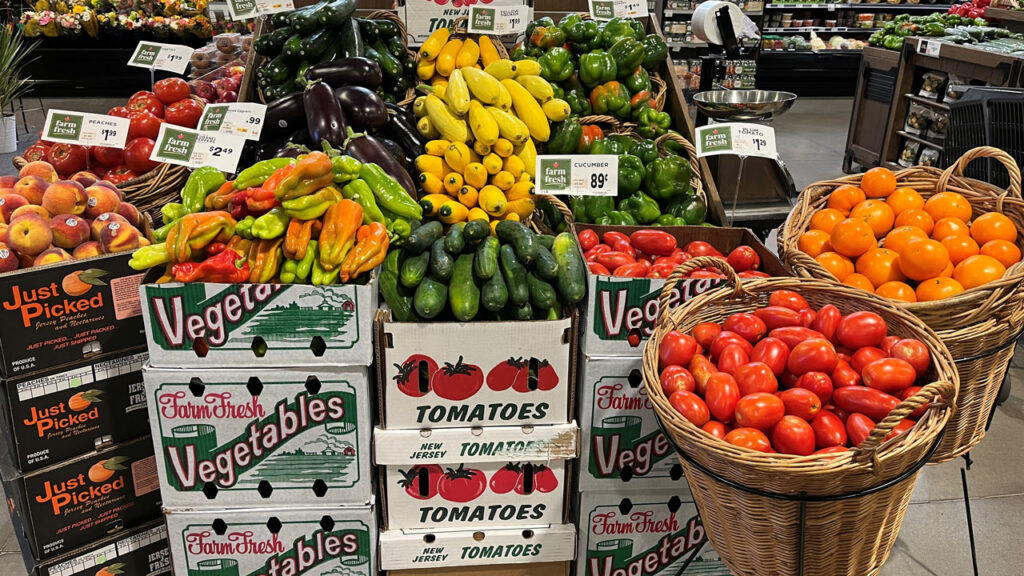
“Highlighting Jersey Fresh produce is a major priority, and we take a very intentional approach in-store,” says Thomas Minardi, produce supervisor.
One of the retailers’ most effective strategies is creating a dedicated “Local Abma’s Farm” display, supported by clear signage, such as “Local” and “Fresh,” Abma’s branding, and digital content on its streaming boards.
“This program allows us to tell a story, connecting customers to the farm, the people behind the product, and the journey from field to shelf. That storytelling creates a more meaningful shopping experience and reinforces the value of buying local,” says Minardi.
This narration aligns with broader consumer trends, contributing to Jersey Fresh’s success. Launched in 1984 by the New Jersey Department of Agriculture (NJDA), Jersey Fresh is a quality grading and marketing program that promotes locally grown produce. An October 2025 survey by the New Jersey Department of Agriculture found that more than half of consumers associate the Jersey Fresh brand with locally grown produce, as well as freshness and quality.
“Our annual consumer awareness survey indicates that people recognize the quality of Jersey Fresh and are willing to pay a premium,” says Joe Atchison III, New Jersey secretary of agriculture.
• • •
Boost Baskets With Branded Bins California
Customized retail execution is emerging as a key lever for state-backed branding programs. California Grown (CA Grown), managed by the Buy California Marketing Agreement (BCMA) and representing more than 400 specialty crops, is applying this strategy at the store level by developing targeted merchandising resources with growers.
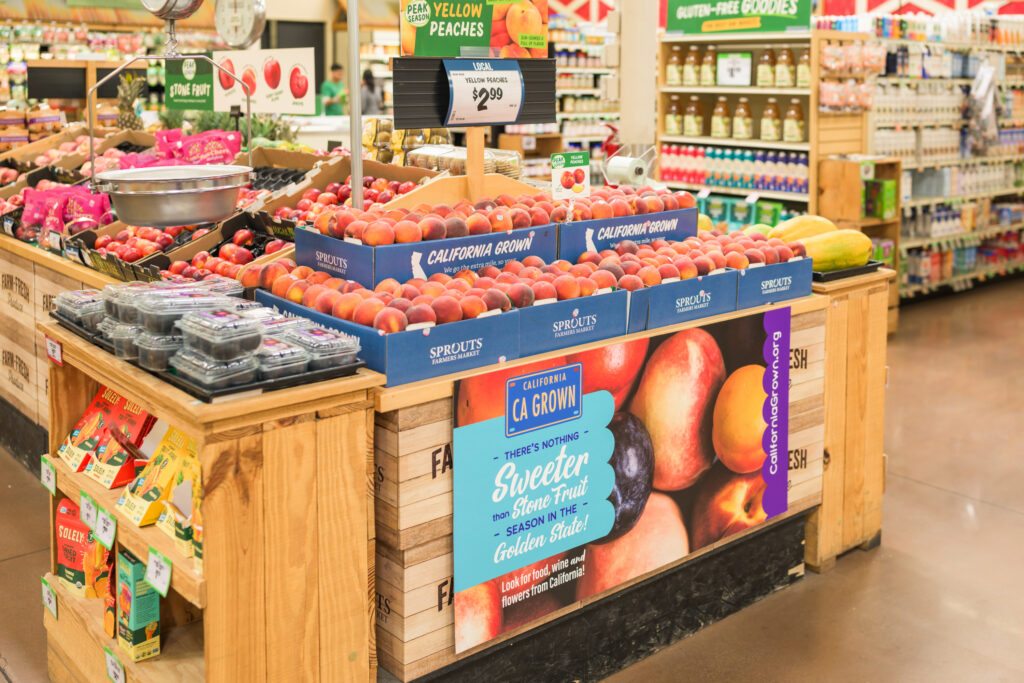
One example is a purpose-built potato bin created with Cal-Ore Produce for Walmart. CA Grown partnered with Cal-Ore Produce — members of Farm Fresh Direct, which markets potatoes for family farms and holds Walmart contracts — to develop the program. The bin features the California Grown license plate logo, bold graphics and more.
“When you see the bins in stores, they really catch your eye,” says Ryan Finney, general manager for Cal-Ore Produce, in Tulelake, CA. “There are a couple of QR codes printed directly on the bin. One scans to recipes that CA Grown has developed, another is a link to the CA Grown website, and yet another takes shoppers to a story about Cal-Ore Produce and one of our family farms, Staunton Farms.”
The display bin supports existing on-pack branding, including the CA Grown license plate logo on 5-pound bags of conventionally grown russets.
“Walmart is proud to partner with California Grown participant, Cal-Ore Produce of Tulelake, CA, and Farm Fresh Direct, to supply California-grown potatoes to all Walmart stores across the state for 10 months each year,” says Wynn Peterson, senior managing buyer, Walmart. “Partnerships like this strengthen local communities, support sustainable agriculture, and reinforce our dedication to sourcing high-quality food closer to home.”
• • •
Connecting Crops To Carts: ‘Got To Be NC’ & Food Lion
Retailers looking to expand local assortments are increasingly relying on state-backed programs to streamline sourcing. Got to Be NC, the official marketing initiative of the North Carolina Department of Agriculture & Consumer Services (NCDA&CS), in Raleigh, NC, is designed to do just that: connect growers with retail partners, while ensuring consistency and scale.
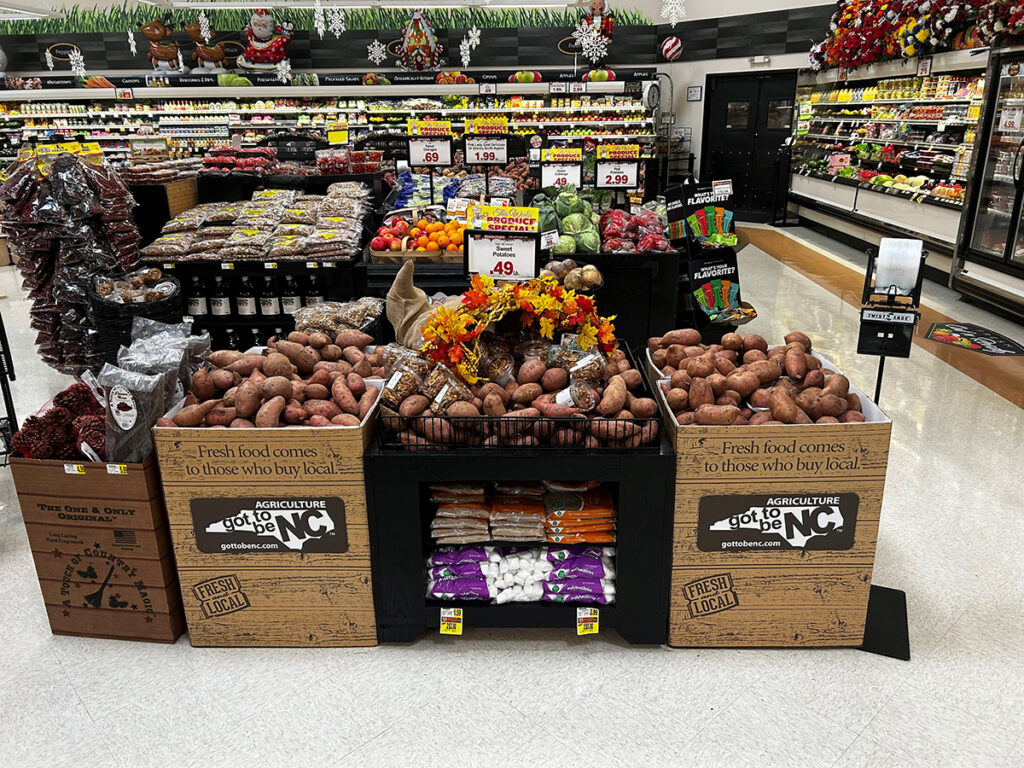
At Food Lion, local sourcing is visible on the shelf, according to Chris Dove, vice president of produce category management for the Salisbury, NC-headquartered retailer, an Ahold Delhaize company with 1,100-plus stores. “Our customers resonate with and recognize these items through our Local Goodness Produce Program, which allows them to identify local produce grown in North Carolina, and even further, throughout our 10-state footprint.”
That connection starts upstream. “Through our partnership with Got to Be NC, we have a unique opportunity to create personal relationships with the farmers, growers, and suppliers who provide fresh, local produce in our towns and cities, right in our home state of North Carolina,” Dove adds.
On the program side, Got to Be NC works to facilitate sourcing. “Our role is really to connect the dots,” says Brenna Favara, domestic marketing manager. “We help retailers identify North Carolina growers and shippers who are retail-ready and able to meet their specifications, while also setting realistic expectations around seasonality. One of our biggest connection points is our annual Flavors of Carolina show. It allows retailers to meet growers face-to-face, sample products, and have real conversations that often turn into lasting business relationships.”
Got to Be NC also prepares growers for retail demands. “We spend a lot of time walking through what ‘re tail-ready’ really means. That’s consistent volume, reliable supply, proper packaging, and meeting food safety requirements,” says Favara.
To support execution at the store level, the NCDA&CS partners on promotions and education.
Have a story to share?
Take a place at Produce Business