SOUTH CAROLINA PEACHES: THE TASTIER PEACH
July 21, 2026 | 15 min to read
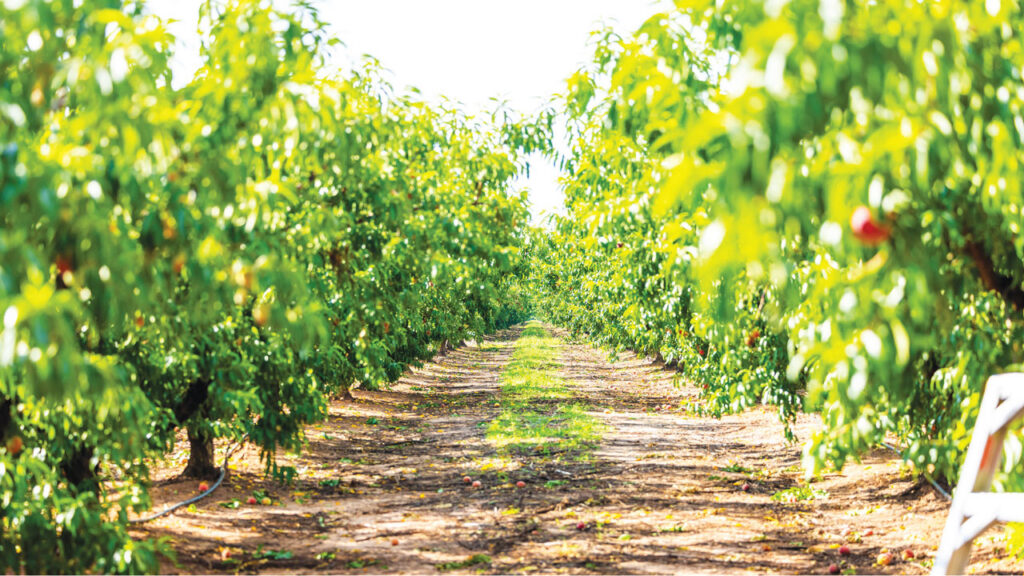
South Carolina’s deep-rooted peach industry continues to offer a superior eating fruit
South Carolina produces the most peaches east of the Mississippi River, grosses approximately $80 million annually to the state, and employs over a thousand people according to the SC Peach Council in Columbia, SC. South Carolina typically produces around 78 tons per season shares Jeff Hopkins, Musser fruit research center farm manager at the College of Agriculture, Clemson University in Clemson, SC.
South Carolina peaches are a staple and grown in every region, explains Beth Black White, co-owner at Black’s Peaches in York, SC. “The South Carolina Department of Agriculture has done a fantastic job with the SC Certified program,” she says.
Peach season typically runs from May to September. “Weather permitting, we see clingstone peaches in early May and sometimes late April,” says Gary Prince, co-owner of Senn Brothers in West Columbia, SC. “The freestone comes in around mid-June or early July. The season starts winding down in September.”
South Carolina’s commercial production is concentrated in three main zones: the Piedmont/Upstate, The Ridge, and the Coastal Plains. “The diversity of growing regions allows our state to grow a wide variety and provides us an abundant cross-section of product to offer buyers,” says Spencer McLeod, owner-operator of McLeod Farms in McBee, SC.
“To have consistent product from May to September, it takes 50 varieties to fill gaps.”
South Carolina offers a superior peach due to a variety of factors, including climate, proximity to market, and hands-on family businesses. “Our conditions are conducive for a flavorful peach and product is from farm to store in a short time frame,” says Chris Yonce, co-owner of J.W. Yonce & Sons Farms/ Big Smile Peaches in Johnston, SC.
PERFECT PROPORTION
Industry and consumers alike can count on South Carolina peaches for a superior sweet eating quality. “Our peaches are sweeter and juicier because we have the perfect weather and soil for peaches,” says White. “The trees get the perfect amount of cold weather and correct acidity in the soil to be scrumptious.”
According to McLeod, South Carolina has a unique terroir — how a specific region’s climate, soil, and terrain give a product its unique character. “Our location, climate, soils and other factors all play a part in our ability to produce outstanding peaches for customers,” he says.
Hopkins notes typical Brix for South Carolina peaches is higher verses California and Georgia. “What makes South Carolina good for peach growing is overall climate, high humidity and acidity within the soil,” he says.
Ross Williams, president of Titan Farms in Ridge Spring, SC, and vice president of the South Carolina Peach Council, stresses the importance of the Brix-to acid ratio in flavor. “This is where South Carolina peaches really shine because our climate results in a perfect ratio yielding a flavorful, juicy peach,” he says.
Benjie Richter, president and co-owner of Richter and Company, headquartered in Charlotte, NC, explains South Carolina, in particular, has perfect humidity, good sunlight and the right temperature for peaches. “Due to the combination of humidity and soil type we have, we grow a peach with an excellent acid-to-sugar ratio,” he says. “The result is the flavor everyone remembers from childhood.”
Hot summer days and humid nights also affect flavor conveys Williams. “The humidity at night helps prevent moisture loss in the fruit and makes sure the fruit maintains the juiciness,” he says.
Because South Caroline peaches are a great eating quality peach, they make an enticing retail display, states Richter. “When a retail store has a big display of South Carolina peaches, and shoppers walk by, they can smell the aroma,” he says.
The perfect environment for growing sweet peaches means no need for artificial ripening rooms relates Jim Forrest, founder of Dixie Belle Peaches in Ridge Spring, SC. “Consumers taste the difference,” he says.
REALLY RIPE
Growers carefully monitor maturity to pick as close to ripe as possible. “South Carolina product is for all practical purposes tree-ripe,” says Prince. “The closer you get to a true tree-ripe peach, there’s nothing better.”
Peaches picked close to peak ripeness have better color and flavor, explains Justin Ness, owner of Sunny Slope Farms in Cherokee County, SC. “What we pick that day, we want to get to the consumer or at least to the retailer within 24 hours,” he says.
Farms then ensure harvested maturity via the cold chain. “We hydro-cool our peaches immediately after harvest and work to get them to our customers as quickly as possible,” says Tommy Chappell, partner at Chappell Farms in Kline, SC. “The less time between the tree and the consumer, the better the eating experience.”
Quality control for freshness at the farm level is crucial. “We take pride at Titan Farms to ensure all product leaves our facility within four days off the tree and mostly sooner,” says Williams. “It’s absolutely critical for the consumer to have as consistent of an eating experience as possible.”
EXPERT HANDLING
South Carolina growers actively invest and manage inputs to ensure the highest quality of their orchards. “The soil just seems made for peaches here but we do add extra phosphorus, potassium and nitrogen to the soil for the tree’s health,” says Arthur Q. Black, co-owner at Black’s Peaches in York SC. “The peach trees thrive better in a manicured orchard, so we try to keep the grass cut as much as possible around the trees.”
Quality control is twofold for peach growers: field operations and pack house operations. “Growing peaches in South Carolina, we must be diligent in our harvest,” says McLeod of McLeod Farms. “Due to variability in weather, we may need to pick more frequently to stay ahead of the variety and get a peach that is shippable but still with the maturity we want.”
Growers also harness technology. “We use the machine sorter to help sort out the big, obvious quality issues,” says McLeod. “Then our hand graders will fine-tune grade.The machine sorter helps allow our people to finish the box and focus on the minuscule details of the pack.”
Chappell Farms’ quality-control process is built around consistency and accountability, relates Chappell. “Every shipment is carefully inspected to ensure it meets our standards for freshness, appearance and food safety,” he says.
At J.W. Yonce & Sons, the family has a hand at every juncture from planning and growing to harvesting and shipping. “Every aspect of the farm is handled by a family member to ensure the highest quality and accountability,” says Yonce.
CLOSE TO MARKET
Proximity to market has multiple advantages for South Carolina. Closer to home means riper fruit from the tree and more sustainable benefits. “Location provides a logistical advantage for both wholesale distribution and direct-to-consumer sales,” says Chappell. “With transportation costs continuing to rise, it’s a real benefit. We’re within reach of major population centers from Canada to Florida, allowing us to deliver fresh peaches efficiently and cost-effectively.”
Close to 65 percent of the population in the U.S. can be reached within a two-day trip from our farm to the retailer’s distribution center, explains Williams. “A piece of fruit can be from tree to shelf within four to five days depending on how long the retailer takes to put it through their system after it’s delivered,” he says. Location is a significant advantage, agrees Richter of Richter and Company. “We have a tremendous time and freight advantage,” he says. “South Carolina peaches are often at a competitive price point because we are closer to final market.”
Though much of South Carolina’s traditional market is the heavy population of the East Coast, distribution is expanding. “Some of the newer markets we’re beginning to see heavier volume in include the Deep South, mainly Texas, and as far west as Oklahoma,” says Williams. “Titan Farms is also exporting into Mexico, including Monterrey and Guadalajara.”
ALWAYS ADVANCING
New presentations offer opportunity for sales. “Dixie Belle packs in trays, clamshells, pouch bags, handle baskets and volume-fill boxes,” says Forrest.
Titan looks to premium packaging as a sales driver. “One of the most beneficial presentations has been a three-pound consumer pack as a purveyor of premium fruit,” says Williams. “This tray is perfect for consumers who want premium fruit but in a convenient package. Retail should offer both bulk and packaged. We have seen that packaged fruit doesn’t cannibalize bulk it actually adds purchases.”
Packaging on the farm has also seen changes. Sunny Slope has moved over the years from wooden baskets and crates to corrugated boxes and plastic baskets that are more recyclable. “The plastic is easier to reuse and also to clean,” says Ness. “This helps us with food safety considerations as well.”
• • •
Behind the Peaches
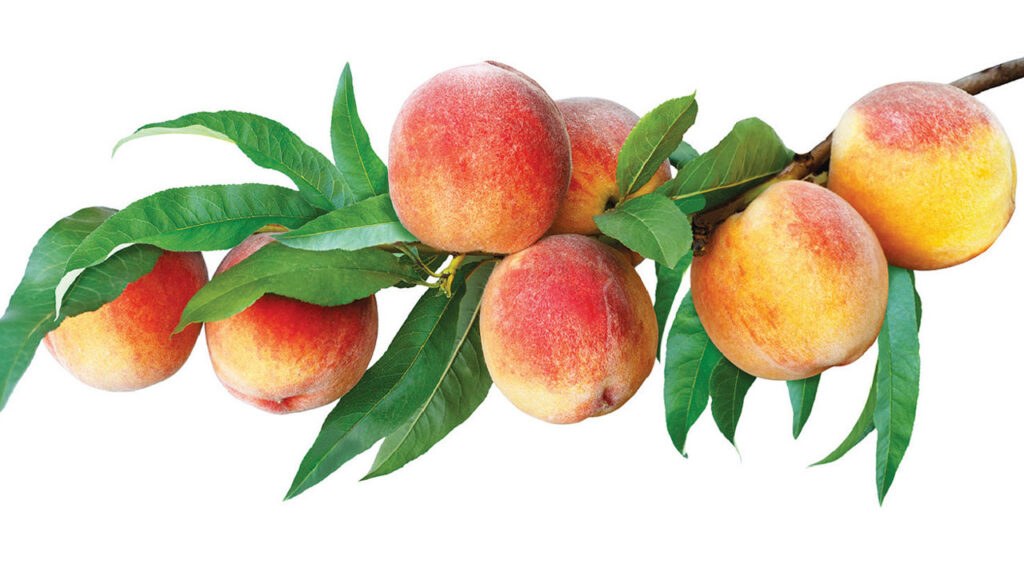
A product is only as good as the hands that produce it. “Growers in South Carolina are family businesses, into multiple generations, and have developed an outstanding degree of consistent farming practices and experience throughout many years,” says Jeff Hopkins, Musser fruit research center farm manager at the College of Agriculture, Clemson University.
Meet some of the hands behind these amazing peaches.

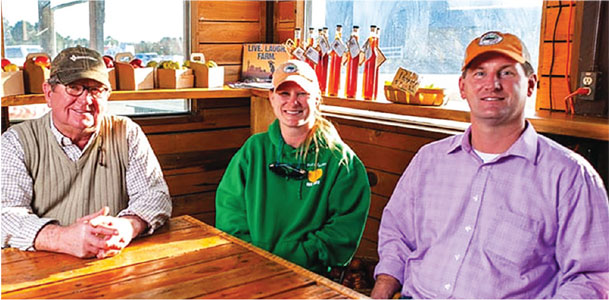

Blacks Peaches
Blacks Peaches has been growing since 1923 and currently has the fourth generation involved. “My great-grandfather, Arthur L. Black, planted the first trees in 1921, and in 1923, we had our first peaches,” says Beth Black White, co-owner. “The farm currently manages 50 acres and has diversified over the last 50 years, incorporating strawberries, tomatoes, veggies, pumpkins and more in addition to peaches.”
Black’s Peaches business model differs from some of the other growers because it only direct-retails its peaches. The farm still grows some o f the “old school” varieties, including Red Haven, Monroe, Loring, Jefferson, Contender and Winblo. “Some of the newer varieties we grow include Caroking, Bounty, Victoria and Flame Prince,” says Black White. “These are giving the old ones a run for their money in texture and sweetness.”
Chappell Farms
Chappell Farms, with 800 acres of peaches, is a family-owned and operated farm. While deeply rooted in agricultural tradition, the farm continues to evolve to meet the needs of today’s customers. “We’re proud of our history, but we’re equally focused on the future,” says Tommy Chappell, partner. “In 1927, my great-grandfather began farming in North Carolina, and in the 1950s, my grandfather established operations in South Carolina with my father and uncle. The logo on our peach boxes is Pat’s Pride, named after my father, Pat Chappell. We also market peaches under the Phyllis’ Finest label, named after my mother.” As the southernmost commercial peach grower in South Carolina, the farm benefits from an earlier harvest window than many growers across the state. “That gives us a unique opportunity to provide customers with fresh, locally grown peaches at the beginning of the season,” says Chappell. “And, our traditional roadside stand continues to bring families back year after year, and our two U-pick fields now welcome visitors from all over who want to experience the farm firsthand.”
Dixie Belle
Dixie Belle is a fourth-generation peach farm stretching over the South Carolina counties of Edgefield, Saluda and Orangeburg. “Our family has been growing peaches on The Ridge of South Carolina for four generations,” says Jim Forrest, founder. “Our knowledge comes from many years of growing experience and is accompanied by a passion to provide farm-fresh produce. We take pride in our family farm, and the generations we’ve dedicated to providing quality, homegrown peaches.”
Dixie Belle grows 3,000 acres of sweet, high-quality peaches. Alongside the farm’s signature peach crop, it has also expanded its strawberry acreage and grows other fruits and vegetables in season.
J.W. Yonce & Sons, Inc.
Generation after generation, J.W. Yonce & Sons has grown from a small peach orchard to a thriving commercial organization with more than 4,300 acres. Currently owned and managed by fourth-generation Chris Yonce and his cousin Josh Yonce, the farm has continued to maintain core values over the past 80-plus years.
Chris Yonce explains they consider the farm a true family farm because family members are involved in all operations.
“From planting the trees to growing a quality peach to harvesting to selling them, we have family overseeing and involved in every aspect,” he says. “Consistent quality is a family tradition. Our standards are high, and we continually make sure the bar is raised. Our retail customers have come to rely on our dedication to detail and consistent quality, which is why we have formed retail partnerships that have lasted for over 25 years.”
McLeod Farms
Family-owned and operated since 1916, McLeod Farms has proudly grown fresh produce for over a century. The McLeods operate one of the largest peach orchards in the area, and at the helm are father and son, Kemp and Spencer McLeod, the fourth and fifth generation on the 7500-acre farm. The company sells under the Mac’s Pride brand. “We grow over 50 varieties of peaches on the sandy, loam soils of the Pee Dee area,” says Spencer McLeod. “We are continuing our family’s legacy by incorporating new technologies emphasizing precision ag techniques.”
The farm’s diversity includes peaches, strawberries, blackberries, year-round vegetables, and row crops. The McLeods have also expanded their local roadside market to include not just their homegrown produce, but to bakery, ice cream shop, and event space. “Our roadside market gives us direct insight into what consumers think and want,” says McLeod. “That helps us in all aspects of our business.”
Richter and Company
Richter and Company is a family-owned and family-grown business offering the finest labels in the South. “Our operation is known as a Family of Farms – a trademark that developed through close, personal relationships with grower partners,” says Benjie Richter, president and co-owner. “We are one of the world’s largest distributors of fresh Southern peaches. My grandfather started business in 1926. I’m third generation, and we have fourth generation working here now too.”
Richter and Company partners with three growers to represent their product as an exclusive sales team. “We specialize in selling and distribution,” says Richter. “We are very hands which is important. Peaches are our main commodity, though we do sell other products, including Vidalia onions, strawberries and other berries. We currently represent around 4,600 acres of South Carolina peaches between the three farms.”
Senn Brothers
Senn Brothers is a family-owned business operating since 1944. It is the largest wholesale distributor of fresh fruits and vegetables in South Carolina. “We take great pride in sourcing the finest quality products from growers across the nation, around the globe, and within our local community,” says Gary Prince, co-owner. “We have specialized expertise in local product, school programs and fruit sales.”
With a rich history spanning three generations and founded by E.D. “Jake” Senn, the company has established a strong reputation for excellence in every aspect of its service, but has a particular affinity with its local grower community. “We do all we can to support our local farmers when they have product,” says Prince. “Our goal for the local farmers is to be an on-ramp into the food chain. We help them get into many places they can’t sell direct. For many of our customers and growers, it’s easier for us do the last mile than for them to do it.”
Strawberry Hill USA
In 1946, Perry Cooley offered land from his cotton farm to his son, Frank Eugene “Gene” Cooley, to farm peaches. Since Gene had just returned from World War II, Perry agreed to furnish the land and purchase the trees if Gene would dig the 2,000 holes in the fertile South Carolina soil. “In the mid-1950s, Gene’s brother, Ansel, joined him in the peach business and built a packing shed,” says James Cooley, owner and third generation. “The nearly 400 American flags that fly in the summer wind on our building are a tribute to Gene and Ansel Cooley to commemorate their service in World War II.”
Over the decades, the farm diversified into strawberries as well as peaches. “In 2001, we added a restaurant and ice cream parlor, and in 2007, we put in 36 acres of blackberries,” says Cooley. “A second roadside market was established in Gaffney, SC, in 2008. As of 2021, Strawberry Hill U.S.A. is now the largest strawberry farm in South Carolina with 115 acres. Peaches are still our primary crop with close to 1,000 acres in production.”
Sunny Slope Farms
Multi-generational, family-owned Sunny Slope Farms was founded in 1944 by a New Jersey grower who moved to South Carolina. “It was my grandfather’s farm,” says Justin Ness, owner. “I’m the fourth generation. The farm grows around 60 acres of traditional southern peaches. Our smaller size allows a hyper-personalized attention to product and customers.”
The farm also prides itself on a classic focus. “Some growers are changing varieties but we’re sticking with the traditional ones,” says Ness. “We know they work well here and they’re what our customers expect.We’ve been able to build a good relationship with our customers. In an increasingly competitive environment, our family works hard to keep the farm operational despite difficult seasons. People say the reason I do it is because I have peach fuzz in my blood.”
Titan Farms
Titan Farms is the largest peach grower and shipper on the East Coast. As a first-generation family farming operation, the company manages every step of its vertically integrated supply chain, from growing and harvesting to packing and processing. “We have been growing peaches for the last 27 years,” says Ross Williams, president. “The farm was established by Chalmers and Lori Anne Carr. They were first-generation farmers and have grown the business from just shy of 1,000 acres to 6,500 in peaches and another 1,000 in vegetables.
Over the years the business has grown with family members and long-term employees creating a family atmosphere at the farm. “We look at our business as a family farm,” says Williams. “We are not all family, but we treat each other as family, and that is a high value for us.”
Watsonia Farms
The Watson family passion for farming began over 100 years ago. Today, the third and fourth generations of Watsons own and operate Watsonia Farms, specializing in organic produce. In 1918, Joseph H. Watson Sr. planted the first asparagus in South Carolina. In 1925, Watson and four other growers planted peach orchards, becoming a genesis of commercial peach production in The Ridge growing area of the state. In 1981, the farm began diversifying into other products, and in 2005, became USDA organically certified. “We pride ourselves on local farming since 1918,” shares Jerry Watson Jr. “But we also must be progressive and stay with the times to remain successful in this ever-changing industry. One new development is that we are now working with Titan Farms’ sales team for sale of our organic peaches.”
Land stewardship is a guiding principle at Watsonia. “We continue to give back to the land through procedures such as crop rotation, cover crops, soil amendments and erosion control,” says Joe Watson, co-owner. “Our daddy would always say ‘you need to leave the land better than you found it.’”