
Produce Packaging Innovations Abound
January 19, 2026 | 7 min to read
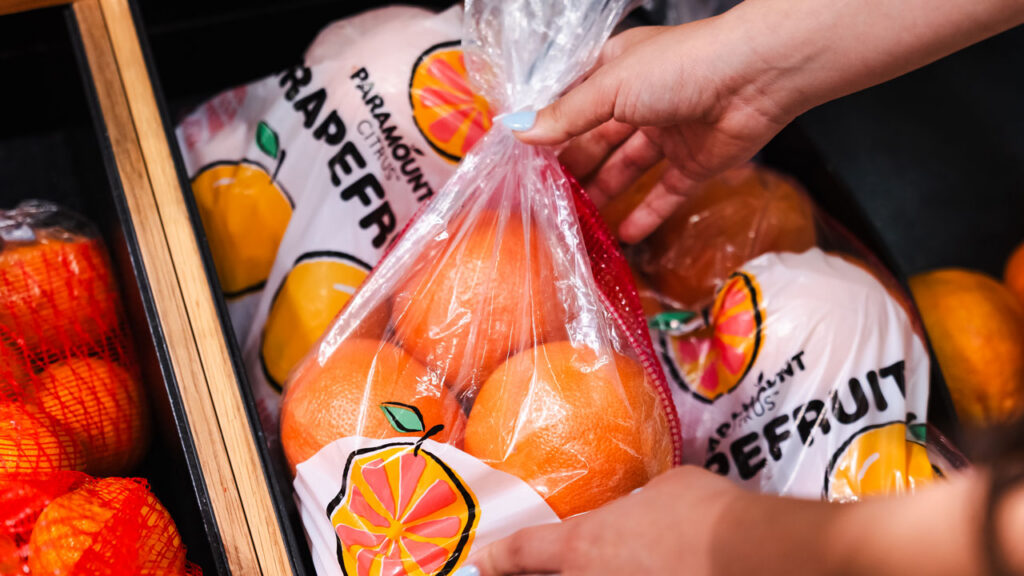
Packaging focuses on sustainability, shelf life and retaining quality.
The fresh produce industry continues to benefit from new packaging developments. From newer sustainable materials to innovations in preserving shelf life and product quality, manufacturers are unveiling improved options. Consumers reap the rewards of this packaging with added convenience, and retailers are seeing less waste and expanded marketability.
AUTOMATING PACKING
Europe tends to be one step ahead of the U.S. when it comes to environmentally friendly packaging, but 4HM Solutions, a produce packaging equipment and materials company based in Yakima, WA, seeks to level the playing field. “One of our big things is finding global solutions that haven’t made it to the U.S. yet, especially on the automation front,” says Brant Carman, West Coast sales manager.
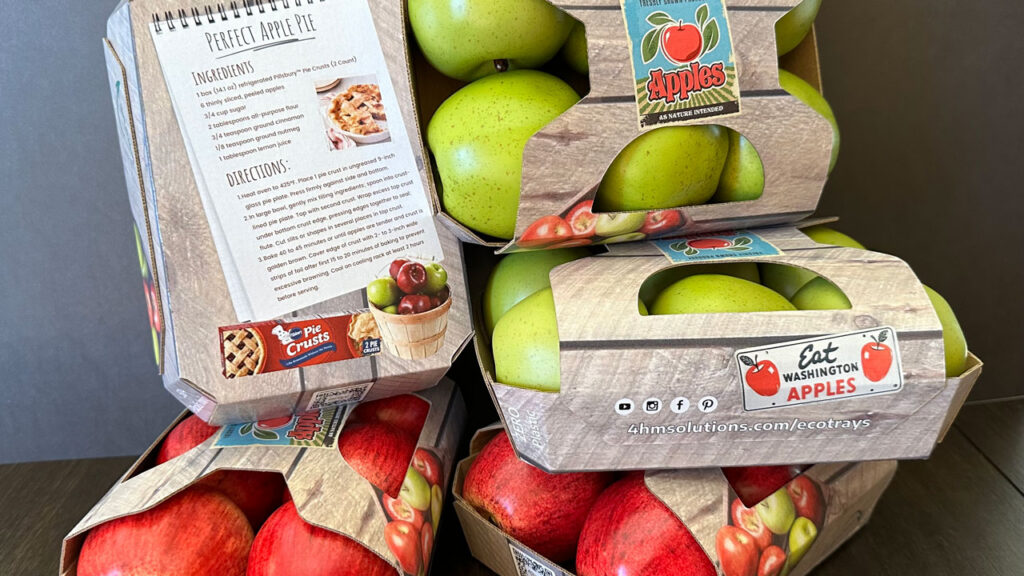
In January 2025, the company brought over the first machine from Italy’s Frutmac, which automates produce packaging into sustainable cardboard. Cardboard trays are pulled, stacked and lidded, then glued onto the side of a tray. The technology can package 54 packs of a four-pack of apples in a minute, compared to pouch bags that run 10 or less per minute.
“We’re focusing on apples, being from Washington, but looking to expand to citrus, avocados and stone fruit,” Carman says.
The company also recently introduced Blue Pearl, a blueberry sorting machine that runs on AI to reduce labor.
For years, Collinsville, IL-based Sev-Rend imported clipping wire cassettes from Europe. But current economic conditions and import tariffs “made it imperative that we invest in the necessary equipment to bring the manufacture of these cassettes in-house,” says Rob Williams, president and chief executive.
The recent addition of hot needle and macro perforating equipment has expanded the company’s product lines to include microwave steamable FFS films and anti-fog, ventilated lidding films for tomatoes, berries, mushrooms and other high moisture content products.
“We are seeing more companies move toward automation to reduce labor costs, especially with stand-up pouches,” says Williams.
“We are seeing more companies move toward automation to reduce labor costs.”
— Rob Williams, Sev-Rend, Collinsville, I
Sev-Rend also has modified its stand-up pouch machines to be capable of manufacturing “pouches on a roll” for those that are looking for a domestic source for this style of pouch.
Also new in Q4 2025 was the addition of extruded mesh equipment, says Williams. “We now have the ability to produce high quality mesh in-house.”
EYE TOWARD SUSTAINABILITY
With a focus on making clamshell packaging more sustainable, Multisteps, an Australian food packaging company with plants in Fresno and Visalia, CA, developed a technology that allows printing directly onto the packaging, with no separate label required. With this process, the surface of the clamshell can be entirely utilized.
“We realized that this brings more sustainability to a clamshell,” says Monica Steinberg, director of business development and growth at Multisteps Industries. “We use food-approved inks that are 100% recyclable, which facilitates the recyclability process of clamshells.”
Multisteps partnered with Oxnard, CA-based Gem-Pack Berries, which will be the first company launching the new clamshells for its berries in the first quarter of 2026.
“This also eliminates another material in the packaging stream,” says Madu Etchandy, senior vice president of operations at Gem-Pack Berries. “And if a brand or label regulation changes, we don’t have to worry about excess inventory of outdated labels.”
Sinclair, a U.K.- and California-based global provider of automated fresh produce labeling solutions, first launched a certified industrial compostable PLU fruit sticker in 2019 and then its first home compostable PLU fruit sticker in 2021. In October, the company marked the anniversary of its second-generation home compostable fruit label.
“The goal is for fresh produce packaging to be 100% compostable, recyclable or reusable.”
— Duncan Jones, Sinclair, U.K.
“We now have 400+ customers using compostable PLU fruit stickers,” says Duncan Jones, Sinclair’s senior marketing manager.
The T55 home/industrial compostable fruit sticker is certified to break down and decompose within 365 days. The non-toxic label also meets food safety compliance requirements.
MULTIVAC Group, based in Kansas City, MO, a global supplier of packaging and processing solutions, also recently unveiled several technologies, including the W 500 Flowpacker, a flow-packing system designed for fruits and vegetables.
“It creates neat pillow packs using minimal material and works perfectly with sustainable films and paper-based options,” says Rachael Novak, marketing director.
The company also introduced PixelHEAT and PixelSEAL Systems, advanced heating and sealing technologies that help cut film usage by up to 50%, boost energy efficiency and support recyclable mono-materials. Another product, MultiSeal, is a resealable system for thermoforming and flow-pack applications.
“It’s great for keeping produce fresh and adding convenience for consumers,” Novak notes, “especially ideal for smaller to mid-size production runs.”
MULTIVAC also recently introduced TopWRAP and TopCLOSE Label Closure, which offers plastic-free or reduced-plastic packaging for items like apples and mushrooms. Its sustainable mono-material films and recyclable film solutions are designed for easier recycling (mono-materials) and fiber-based/low-plastic tray alternatives.
QUALITY AND SHELF-LIFE RETENTION
In addition to sustainability, packaging technology has been developed that retains fresh produce quality and lengthens shelf life.
In 2023, Easypak, a Leominster, MA–based provider of thermoformed packaging solutions, began exploring long-term, sustainable solutions to a persistent challenge in the fresh-cut fruit category: excess purge that affects product appearance, texture and shelf life. It developed Elevate Freshness, a patent-pending packaging innovation designed to reduce or eliminate the need for soaker pads in fresh fruit clamshells and sealed containers.
“Elevate Freshness works by elevating the product above where the juice collects, improving both presentation and shelf life,” explains Troy Hill, director of product development & innovation.
The design features a hexagonal grid base engineered to capture excess moisture, paired with raised islands that hold fruit securely above the liquid. This separation helps maintain color, texture and overall product quality across the full shelf life — performance backed by research conducted in collaboration with Michigan State University.
“This innovation reflects what retailers are looking for: longer-lasting fruit, better presentation, and less material waste,” says Brian Smith, Easypak’s vice president of sales and marketing.
Fox Packaging, a family-owned flexible packaging manufacturer based in McAllen, TX, specializes in produce packaging that protects product quality, says Aaron Fox, vice president.
One of its newest offerings for the produce category is Fox VertiFilm, a laminated film designed for vertical form-fill-seal applications.
This material is not proprietary and is designed to run on most existing bagging equipment. Gauges and substrates are tailored to specific line and commodity needs, helping optimize both product protection and operational performance. The films support bold graphics while still letting shoppers see the product.
The company offers trial rolls so packers can test Fox VertiFilm on their equipment. It is ideal for apples, avocados, grapefruit, lemons, limes, mandarins, onions, navels and sweet potatoes.
Fox Packaging has also introduced flexible structures with up to 30% post-consumer recycled (PCR) content in select poly, combo and stand-up pouch formats.
Although MAP (Modified Atmosphere Packaging) is not a new technology, it recently has been implemented for use with premixed produce and precut fruit. MAP is a packaging method that uses a controlled atmosphere of gases to extend the shelf life of food products.
“We’ve seen big success with MAP packaging use in fresh-cut produce, which offers a longer shelf life and higher quality,” says Maxwell Remington Krieger, chief operating officer at Dark Side Equipment, headquartered in Denver, CO.
StePac PPC, an Israeli company that’s part of Buffalo Grove, IL-based PPC Flexible Packaging, recently introduced the PAZ Stand-up Pouch, the first MAP reclosable pouch that controls excess moisture.
According to the company, this patent-pending solution offers a three-in-one approach in a resealable stand-up pouch: modified atmosphere, modified humidity and condensation control.
At PPC Flexible Packaging, shelf-life extension has always been the focus. “We do a good job in controlling the packaging atmosphere, including the CO2 and O2 rates to accommodate specific respiration rates,” says Joe Bradford, vice president sales, produce.
PRICING, SUPPLY & MARKETING
“Retailers and consumers are finding ways to minimize waste and expenditures,” says Bradford. “We also have to reduce the cost of packaging spend, so we do everything we can to be as efficient and innovative as possible to compete.”
Williams at Sev-Rend expects tariffs to continue to impact supply and cost of imported packaging materials.
“As a company, we have focused on bringing previously imported products in-house to help mitigate this,” he says. “Pending any unforeseen circumstances, we don’t expect any large swings in pricing and availability of domestically produced goods for the foreseeable future.”
According to Fox at Fox Packaging, pricing and supply for flexible packaging continue to be influenced by global resin markets, freight and overall demand. “While there is still some movement in costs, our priority is to provide as much stability and predictability as possible for fresh produce packers.”
11 of 14 article in Produce Business January 2026
Have a story to share?
Take a place at Produce Business