
Making Produce the Easy Choice
August 3, 2026 | 5 min to read
If you are in the produce industry, one of the most enduring goals is to increase consumption. We grow, ship, sell, market, merchandise, cook and advocate for fruits and vegetables because we believe they belong more consistently on the plate.
But not everyone living in America has the same access to fresh produce, and that directly affects their ability to eat the recommended five portions a day.
That is why the opportunity can’t sit in retail alone. Grocery stores matter, but habits are also formed in restaurants, schools, hospitals, universities, workplace dining, hotels, fast casual concepts, prepared foods, convenience channels and community feeding programs.
Foodservice has enormous influence. It introduces people to flavors. It normalizes ingredients. It teaches preparation by example. It turns vegetables from obligation into experience.
If we want produce to become a daily habit, we have to make it easier to choose, easier to trust, easier to prepare, easier to crave, and easier to repeat.
CONVENIENCE
Fresh produce competes in a food environment designed around speed, portability and predictability. Packaged snacks, fast food, prepared meals, and center-of-the-plate proteins are often easier to understand, order, and consume than fruits and vegetables. Produce can compete, but it must be designed into real eating occasions.
At retail, that may mean washed, trimmed, snackable, microwaveable, pre-cut, pre-portioned, and meal-ready formats.
In foodservice, produce can move beyond the passive side dish and become part of the architecture of the menu.
Think about what makes other foods easy to want: crunch, salt, heat, sweetness, creaminess, acidity, aroma, contrast, and a clear reason to take another bite. Produce can deliver all of that when it is handled with culinary intention.
COST
Affordability matters. But value is not only about price. Value is also about yield, versatility, labor, shelf life, menu application, and whether the customer will eat it.
For consumers, the question is often: Will my family use this before it spoils? For operators, the question is similar: Will this product perform consistently, cross-utilize well, support food cost, and deliver enough customer appeal to earn its place on the menu?
The produce industry can help by telling a stronger value story. Cabbage can be slaw, taco garnish, roasted entrée component, soup base, sandwich crunch, dumpling filling or fermented condiment. Apples can be breakfast, snack, salad, sauce or dessert.
CONSISTENCY
Fresh produce will always have natural variation. That is part of its beauty. But too much variation creates risk. A great peach creates loyalty. A mealy peach creates hesitation. Crisp greens build trust. Tired greens undermine it. A flavorful melon brings someone back. A bland one quietly damages the category.
Foodservice operators are especially sensitive to this. They need products that perform under pressure. Quality control, cold chain management, ripeness and seasonality education, handling guidance, packaging, forecasting, and distributor communication all influence whether produce succeeds once it leaves the field.
This is where suppliers and distributors can become better partners. Do not just sell the case. Help the kitchen understand the product.
Fresh produce does not have to be identical every day, but it does have to be dependable enough to trust. Trust builds repeat purchase.
CONFIDENCE
Nutrition may justify produce, but flavor sells it.
For too long, the industry has leaned on health messaging, while underplaying the culinary power of fruits and vegetables. Health matters, of course. But people do not return to a dish because it met a dietary recommendation. They return because it tasted good, satisfied a craving, and gave them a reason to want it again.
Produce is competing with chips, fries, burgers, pizza, sweet drinks, and packaged snacks designed for craveability. If fruits and vegetables are going to win more often, we have to treat flavor, texture, aroma, seasoning, temperature, contrast, and satisfaction as essential parts of the consumption strategy.
This is where foodservice may be the strongest lever we have. Chefs and menu developers can make produce aspirational.
ACCESS
Access is not only a retail issue. It is a food-system issue. Many Americans eat meals prepared by others.
If produce is absent, poorly prepared, under-seasoned, overpriced, or treated as an afterthought in those places, we miss an enormous opportunity.
But access without appeal is not enough. Availability without quality is not enough. Produce has to be present, practical and pleasurable.
THE PATH FORWARD
If we want Americans to eat more fruits and vegetables, we must support the people who put produce on the menu. Retail may drive the shopping cart, but foodservice helps shape appetite.
Make produce easier to buy. Easier to store. Easier to prep. Easier to menu. Easier to cross-utilize. Easier to crave. Easier to trust. If we want produce consumption to grow, we have to make fruits and vegetables feel less like an assignment and more like the best part of the plate.

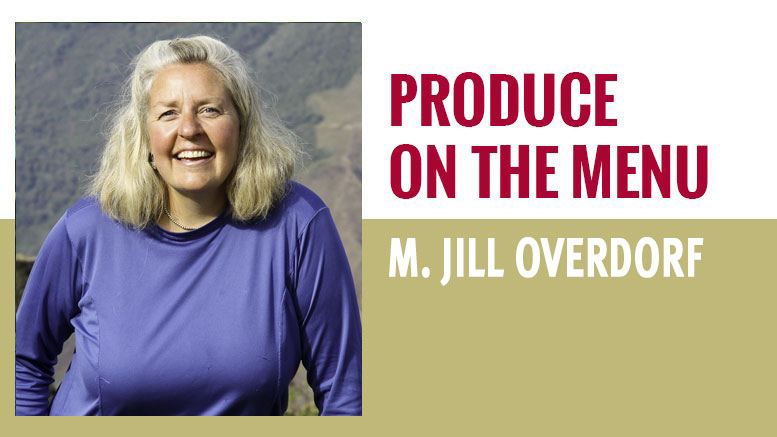
M. Jill Overdorf is founder and president of The Produce Ambassador, which provides strategic insight, brand development, and innovative solutions for the foodservice, produce, hospitality and culinary sectors.
2 of 17 article in Produce Business July 2026
Have a story to share?
Take a place at Produce Business