
Evolving but Stable: A Look at US Onion Imports
December 1, 2025 | 8 min to read
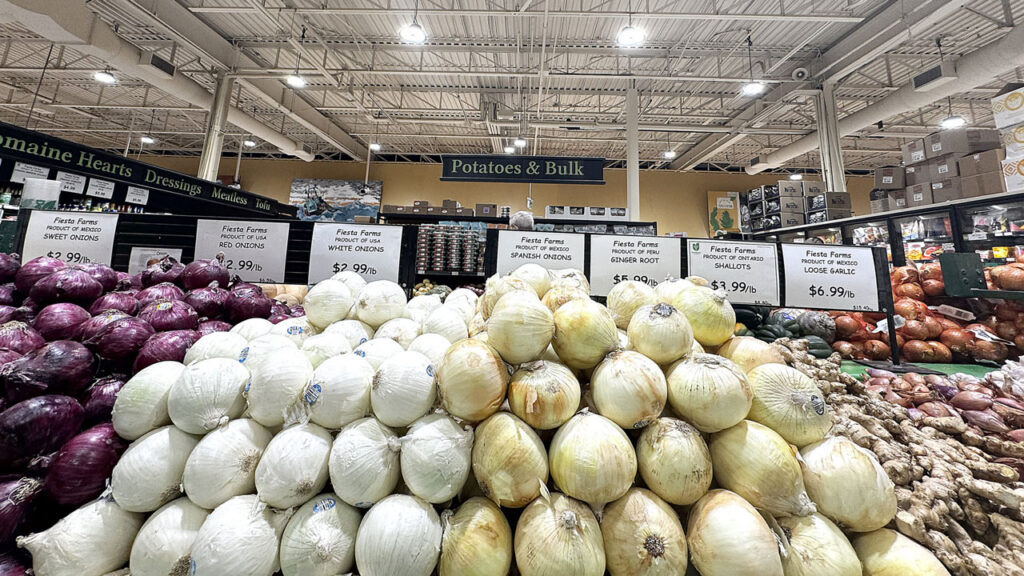
Peru is the predominant source for onion imports, but Mexico and Chile help keep supplies steady.
America’s onion imports are evolving due to economic changes, regulations and consumer trends. Yet, overseas market supply has been strong and steady.
According to Volza’s Onion Import data of United States, from November 2023 to October 2024, there were 3,789 onion importers in the U.S., importing from 4,071 suppliers globally.
Produce Business recently reported that Peruvian onion production has climbed to 591,000 tons by 2025, enabling a reliable, year-round U.S. supply.
“Peru and Mexico are the primary sources [of onion imports], with some supply from Chile,” says Peter Pelosi, vegetable transportation manager at A&J Produce Corp., Bronx, NY. “Because [fall is] the Southern Hemisphere’s growing season, quality and supply are strong during our winter months. We’ve seen steady growth, roughly 5% year over year, as consumer demand for sweet onions expands.”
He adds fewer countries are attempting exports to the U.S. and Canada because of strong domestic production and strict import standards. Also, growing demand for sweet onions has spurred more domestic production of these varieties.
THE CURRENT CLIMATE
Timing is a major factor when it comes to this segment.
“In general, our Peruvian sweet onions are available from Labor Day right through to Vidalia season,” says Blake Dasher, chief executive, G&R Farms Produce, Glennville, GA. “That timing allows us to maintain a seamless year-round supply of sweet onions for our retail partners, bridging the gap until the Vidalia crop comes back into season in Georgia.”
Cliff Riner, vice president of ag production and grower relations at G&R Farms, notes the excellent quality of this year’s crop. “We’re seeing superb consistency across the board — onions that deliver the sweetness, crisp texture, and beautiful appearance our customers expect. It’s a crop we’re very proud of and expect to thrive through the season.”
According to Steven Shuman, G&R Farms’ general manager and vice president of sales, the company is projecting an increase of about 3% to 5% over last year.
Olivia Kelso, food safety, marketing and sales, JJB Family Farms, Escondido, CA, is seeing a big demand for onions from Mexico this year. She notes that Mexican white onions are prevalent from February to May, while organic whites from Mexico are big from March through June. Peruvian yellow sweets typically hit the states at the end of October or early November.
White onions out of Mexico are more popular, since the quality has improved over the years, says Kelso. “Conventional onions markets are oversupplied and will remain that way for possibly the next 12 months.”
Potandon Produce, Idaho Falls, ID, works primarily with U.S. growers to offer yellow, red, white and sweet onion varieties, while also supplementing with select imports from Peru and Mexico. “This approach supports our commitment to a consistent, year-round onion supply for the Green Giant Brand,” says John Anderson, director of product supply.
“By balancing strong domestic production with trusted import partnerships, we’re able to work with the best partners to maintain high quality standards, reduce supply interruptions and deliver dependable onions in every season.”
ISSUES & CHALLENGES
In recent years, onion importers have faced a number of trials. “Challenges include tariffs,” says Pelosi at A&J. “Although none are on Peru, there is 25% on Mexico and 0-15% on Guatemala.”
“The opportunity is a consistent supply of sweet onions during the winter months, which keeps retail shelves full and consumers engaged. Peru will have to fill any gap in supply created by tariffs.”
Pelosi adds that, with demand for Peruvian onions increasing, prices could rise.
“Retailers benefit by locking in early pricing and securing shipments in advance,” Pelosi notes. “The challenge is managing higher freight costs and tariffs, while ensuring product quality after long transit. The opportunity is steady, promotable product that maintains the sweet onion category year-round.”
“Retailers benefit by locking in early pricing and securing shipments in advance.”
— Peter Pelosi, A&J Produce Corp., Bronx, NY
Kelso at JJB Family Farms says the company is faced with inaccurate information with arrival times, last-minute supply changes, fluctuating weather and world market conditions.
“A long-term challenge is that the onion is a high cash required crop,” Kelso says. “Growers depending on bank funding, whether overseas or local, will struggle over the next 12 to 24 months due to an excess of onion supplies.”
VARIETY IS KEY
Offering a steady and diverse supply of onions with proper promotional support helps ramp up the category’s sales and profits.
G&R Farms grows several Peruvian sweet onion varieties, says Riner. The bulk of the Peruvian sweets are Century, but it also grows Sweet Magnolia, Macon, Plethora and Campo Lindo. “Each has been carefully selected for flavor, size, adaptability and performance,” he explains. “The unique advantages include the mild flavor profile, high water content and low pungency. This makes them great to eat raw or cooked.”
The company offers a range of packaging options, including 2-pound mesh bags for retail shoppers, 40-pound bulk boxes and pallet-sized bins. It also works with customers on custom pack sizes.
As far as preference, Kelso notes that sweet onions out of Peru are a short day sweet onion that many retailers believe are the sweetest. There are U.S. intermediate onions that may meet standards, but all customers have different preferences.
“We encourage decision makers to eat the onion and let the flavor talk,” she says. “With social media and other intel out there, they will find out [what’s popular]. Each seller has the task of measuring price elasticity and consumer satisfaction. We hope they buy our whites today, and we buy theirs tomorrow, but every year is different. What we need to do is read the market and listen to the people who say, ‘I don’t know, let’s find out what this year brings us.’ They are the wise ones.”
Pelosi at A&J says the predominant onion varieties in winter include Texas 1015s (round sweet onions) and flat sweet varieties, such as Bermuda and Spanish onions.
“The region where our Peruvian sweet onions are grown provides excellent conditions for sweet onion production,” he adds. “The climate is marked by mild, steady temperatures and sandy, loamy soils similar to those in Georgia. Rainfall is extremely low during our growing window, which is ideal for cultivating sweet onions because it reduces disease pressure and helps ensure clean, high-quality bulbs. This year’s growing conditions didn’t deliver any big surprises, resulting in an exceptional crop.”
G&R Farms’ vice president of operations, Jon Dorminey, recently visited the company’s Peruvian operations, meeting with its full-time production manager and other team members. “Favorable conditions, like those in Georgia, have led to an outstanding 2025-26 product, with great shelf-life,” says Riner.
According to Shuman at G&R, pricing this season has remained stable. “While we’ve seen only slight increases, those are not expected to impact consumer-level pricing. That stability is something we know both retailers and shoppers value.”
There has been a big influx in organic onion imports, and this is in line with increased consumer demand. According to the Organic Produce Network, with $249 million in total sales, organic onions achieved a notable dollar growth of 6.5% in 2024, equal to $15.2 million above 2023.
G&R Farms offers organic Peruvian sweet onions, and this year, its organic program has grown significantly, with about a 20% increase in organic shipments compared to last season.
“Out of our total Peru volume, organics represent a meaningful share and continue to show steady demand growth year-over-year,” says Shuman. “The increase is a testament to consumer preferences. This year, Millennials and Gen-Z are buying more organic produce, prioritizing a healthy mind, body and lifestyle.”
FOCUS ON FLAVOR
When marketing and promoting imported onions, it’s key to focus on flavor.
“Peruvian onions offer several key advantages,” says Shuman. “Their mild, sweet flavor closely mirrors what consumers love about Vidalias. They come to market during the U.S. off-season, which means consumers can count on a seamless year-round supply. Lastly, the consistent growing conditions in Peru, combined with our precision farming practices, make for a reliable product in both quality and flavor.”
Pelosi at A&J notes that November through January is the key promotional window, as this is when sweet onions are abundant and align with holiday and winter cooking.
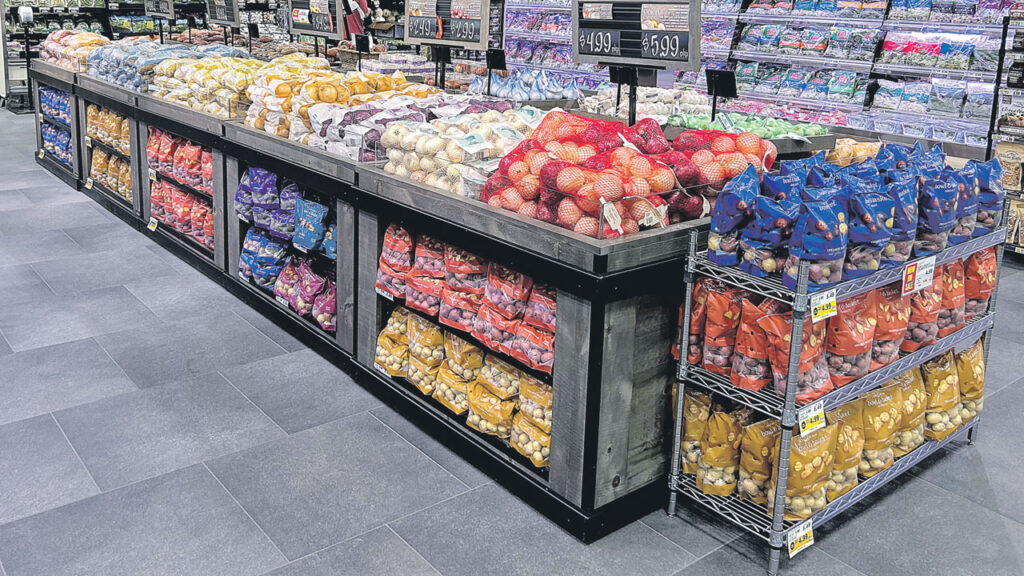
“It’s important to keep an open mind and have action plans to promote the product after sellers see it,” advises Derrell Kelso, manager at JJB Family Farms. “We need to keep the end user in mind, communicate and match supply with promotions.”
JJB Family Farms is currently working on a Peruvian organic sweet program that will start in November 2025, extending the season to when the company transitions into Georgia sweets.
“Due to the holidays, the variety that overshadows during the winter months is a yellow or sweet onion,” Olivia Kelso says. “Families create more stews and soups to which the yellow onion complements and holds the flavors of the broths. They eat these and other veggies that create each dish. Red onions are not a big import, as the U.S. market has done a great job of supplying the states [with this variety]. Also, the white onion market continues to be strong.”
Derrell Kelso adds that it’s important to support U.S.-grown onions unless the country is out of product or the quality is failing to meet standards.
“USA-grown is what consumers prefer if it is available,” he says. “Be careful when sacrificing customer satisfaction over margins or relations; what is best for the consumer is always what should be best for everyone.”
“Onions are a staple, but shoppers respond when the category looks fresh, clean and easy to shop.”
— John Anderson, Potandon Produce, Idaho Falls, ID
When promoting and marketing imported onions, experts agree that consistency and visibility are key.
“Onions are a staple, but shoppers respond when the category looks fresh, clean and easy to shop,” says Anderson at Potandon Produce. “Full, well-maintained displays and clear variety separation — yellow, red, white and sweet — help customers make quick decisions. Pairing onions with potatoes or meal ingredients also drives incremental sales. Updated packaging with clear color cues adds convenience and brand confidence at shelf level.”
9 of 16 article in Produce Business November 2025
Have a story to share?
Take a place at Produce Business