
Wholesalers Rise to the Challenge
October 23, 2026 | 14 min to read
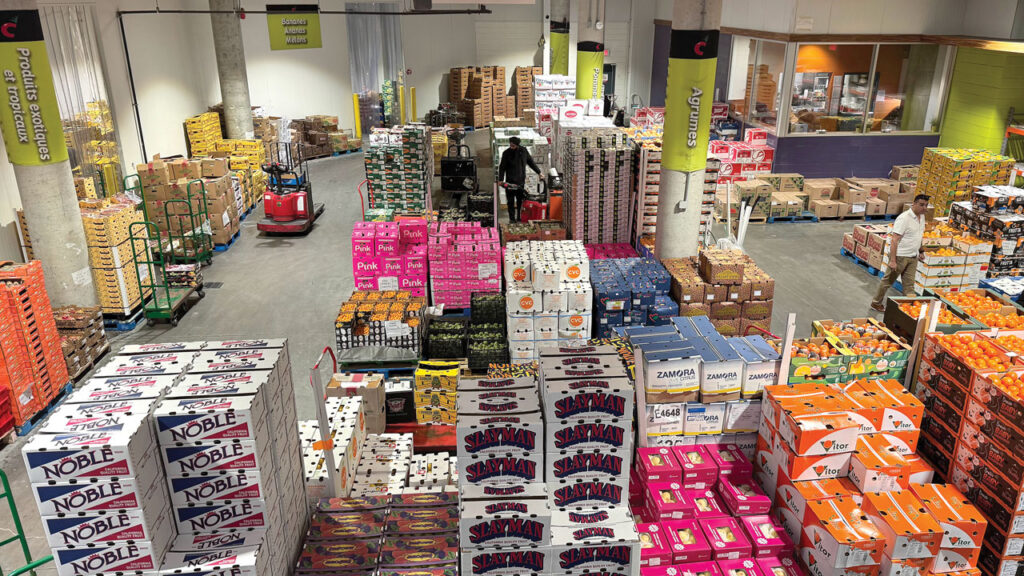
Customer expectations continue to grow, and wholesalers continue to meet them.
Wholesalers have long served as a crucial link between suppliers and customers, but here’s the reality: They must adapt to changing customer expectations.
Customers today expect more speed, flexibility, transparency, and proactive communication from wholesale partners, says Tom Brugato, president of Pacific Coast Fresh Company (PCFCo) in Portland, OR. “It’s no longer enough to simply have the right product at the right price; they want reliable execution, timely information, and solutions when the market or supply chain doesn’t go according to plan.”
Consumers are more sophisticated, and consequently retailers are more demanding, explains Bruce Klein, marketing manager for Maurice A. Auerbach in Secaucus, NJ. “Our customers demand good quality product, delivered on time, and accurate to what they ordered.”
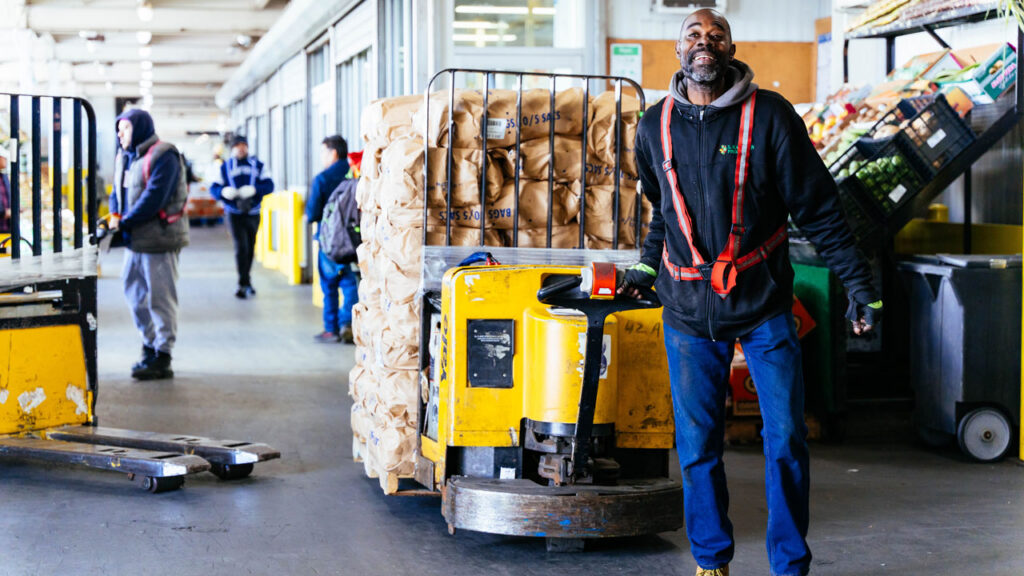
Customers expect reliable service, consistent quality and efficient operations, adds Anthony Andreani, director of walk sales at Katzman Produce in Bronx, NY. “They don’t want to worry about logistics or deal with off-quality product, so it’s increasingly important for wholesalers to make the process as seamless and dependable as possible.”
TAXING TIMES
To best serve customers, wholesalers must meet a host of challenges. “The produce industry is full of challenges, from supply-side availability and seasonal varieties to logistics and labor to weather conditions,” says Dominic Riggio, president of Riggio Distribution Co. in Detroit, MI. “We go to work every day expecting challenges and working through them for our suppliers and customers.”
Challenges facing distributors include logistics, food safety, labor, customer retention and weather volatility, notes Ted Hendryx, PCFCo’s chief operating officer. “Instability and inflation in the economy also causes many consumers to make different choices with their food dollars, which directly impacts our customers and supply demands.”
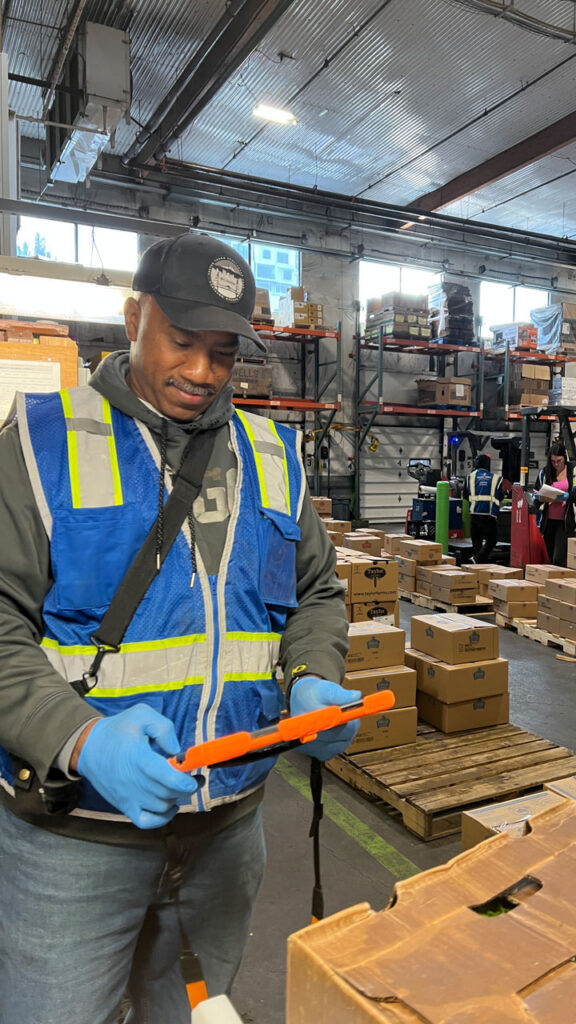
Billy Itule, chief executive at Willie Itule Produce in Phoenix, AZ, says labor is an evergreen challenge. “We view this as a three-prong issue: staffing our warehouse and hiring drivers; finding the next generation of produce buyers and food safety professionals; and keeping our eyes on implementing new technology in our business (AI) with the human talent necessary to maintain an outstanding hands-on customer experience.”
Tighter margins due to rising farming, transportation and labor costs are mentioned by Rick Feighery, president of Procacci Brothers Sales Corp. in Philadelphia, PA. “We continue to provide incredible service and value items, but it’s increasingly difficult with the strains in those areas. Our suppliers feel it, and our retail partners feel it.”
Feighery also notes the uncertainty of fluctuating trade policy affects the produce business both directly and indirectly.
Challenges facing Nickey Gregory Company in Forest Park, GA, include labor, customer buyouts and consolidation, product recalls, and high freight rates, according to Andrew Scott, vice president of sales and business development.
At the same time, challenges present opportunity. “They make a strong wholesaler more valuable, not less,” says PCFCo’s Brugato. “Our role is increasingly about being a trusted supply-chain partner who understands the customer’s business, anticipates needs, communicates early, and finds solutions.”
INDISPENSABLE EXPERTISE
With the fast change of pace, knowledge is more important than ever, and wholesalers’ grower and supplier relationships gives them valuable details to pass along to customers. “We have insight into changing conditions at the source and stay ahead of those changes to deliver consistency for our customers,” says Andy Smith, Katzman Produce director of procurement. “Our experience, strong relationships, and ability to react quickly give us the flexibility to navigate challenges as they arise.”
Chris Sarantis, senior vice president at Canadawide in Montréal, Quebec, sees customers expanding the timeline in terms of when they want information. “It used to be two to three weeks out, but now they’re asking us three months in advance about the grape programs we’ll start,” he says. “The technological information about weather patterns and El Niño is making retailers that much more informed, so they’re trying to get programs locked in well in advance.”
Maintaining connection remains key. “We continue to see a shift away from face-to-face sales,” says Hutch Morton, senior vice president at J.E. Russell Produce in Toronto, Ontario. “This means we need to be connected to our customers in a myriad of digital touchpoints. We need to have a staff who can meet every customer where they are.”
“We continue to see a shift away from face-to-face sales. This means we need to be connected to our customers in a myriad of digital touchpoints. We need to have a staff who can meet every customer where they are.”
— Hutch Morton, J.E. Russell Produce, Toronto, Ontario
Joel Fierman, president of Fierman Produce in Bronx, NY, relates that their customer philosophy hasn’t changed over decades. “We provide excellent service and quality at a great price,” he says. “You can’t make everybody happy all the time, but we try our best.”
Fierman adds they share information through quality control protocols, and have increased observation of produce on arrival to better serve shippers and customers. “We do our own QC checks and use digital photography to communicate with the shipper. This also reduces the amount of money expended for USDA.”
A growth area for wholesale support includes consistent communication and education regarding food safety, suggests Mark Cote, produce merchandiser for Redner’s Warehouse Markets in Reading, PA, with 45 stores. “We would like to see wholesalers share more information about product handling, temperature controls, traceability, recalls, and potential quality concerns,” he says. “Providing updated food safety guidelines and alerts when issues arise would help our teams respond faster and more effectively.”
LEVERAGING LOGISTICS
Customers also expect more service in logistics. “Logistics is one of the costliest pieces of what we do,” says Procacci’s Feighery. “We’re always looking at what more we can do to reduce cost and be more efficient while still serving the customer.”
Customers want a more end-to-end experience with distributors, which goes beyond simply delivering great produce, asserts Bill Loupée, chief operating officer at Ben B. Schwartz & Sons in Detroit, MI.
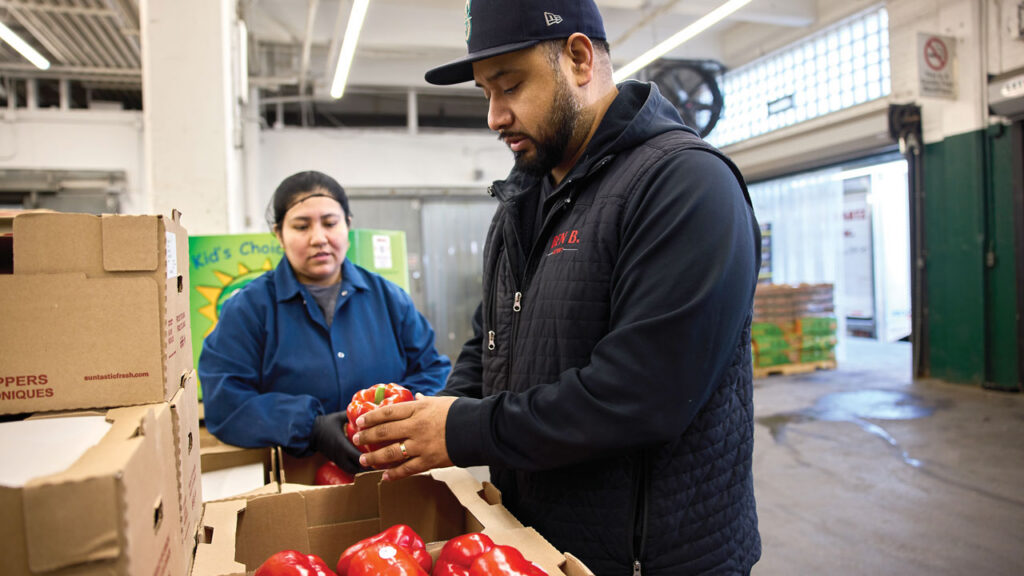
“They’re looking to consolidate layers of work they would have to source otherwise, which includes value-add services such as bagging, white-labelling, repacking, and pre-cut commodities,” he says. “We’ve been expanding our services to meet these needs to stay competitive.”
Wholesalers focus on improving logistics through better communication and more reliable order fulfillment. “With changing customer demands and tighter inventory controls, we expect wholesalers to provide accurate deliveries, consistent quality, and dependable delivery schedules,” says Cote. “Technology is becoming more important, including real-time order tracking, inventory visibility, and better forecasting. These improvements help us reduce out-of-stocks, control shrink, and keep our produce departments fresh.”
Logistics on the import side present additional hurdles. “We have flights coming in and boats docking and sometimes just getting the product off the pier is the most difficult part of the supply chain,” says Josh Auerbach, sales and procurement for Maurice A. Auerbach. “Coordination is crucial to be sure we get product in a timely way.”
Fluctuation and uncertainty in trade policies, tariffs and fuel prices wreak havoc on wholesalers.
“There are certain programs we may not be able to continue due to the increased logistics costs and cost burden of tariffs,” says John Vena, president of John Vena Inc. in Philadelphia, PA. “Just as important is the weakness of the dollar against the currencies in the countries from which we import many items. Right now, that represents a cost increase of 15% compared to previous seasons.”
DEPENDABLE DELIVERY
More and faster delivery is another customer expectation, and Gabriela D’Arrigo, vice president of marketing and communications at D’Arrigo New York in Bronx, NY, says requests for delivery from customers “have grown exponentially.”
“Retailers are working longer hours without personnel to run their own trucks. They need us to fill that gap,” she explains. “It’s on us to provide the transportation and extra refrigeration and storage space for customers. It’s a huge piece I only see growing.”
“Retailers are working longer hours without personnel to run their own trucks. They need us to fill that gap. It’s on us to provide the transportation and extra refrigeration and storage space for customers. It’s a huge piece I only see growing.”
— Gabriela D’Arrigo, D’Arrigo New York, Bronx, NY
For four-store retailer/wholesaler Joe Randazzo’s Fruit and Vegetable Market in Detroit, MI, offering free delivery has been huge for customers.
“With gas surcharges and delivery fees rising industry-wide, we want to give our customers peace of mind that they will not be hit with those extra fees,” says Sammy Randazzo, senior produce buyer. “Orders can be placed until midnight the day before expected delivery. We take orders in any way our customers feel comfortable, including email, text, phone call, or on our new wholesale app.”
Like others in produce, PCFCo faces challenges related to transportation capacity, refrigerated carrier availability, fuel costs, and service reliability, according to Kenny Ngo, senior director of operations.
“On the inbound side, higher fuel prices continue to increase freight costs, while securing reliable, refrigerated carriers has become more difficult,” he says. “On the outbound side, customer expectations continue to evolve with smaller drop sizes, tighter delivery windows, changing operating hours, and increased demand for flexibility. To meet these challenges, we have renewed our focus on route optimization, delivery density, and truck utilization.”
Late deliveries, long loading times waiting for product, and driver turnover, as well as driver retention, are a few obstacles in the logistics space, agrees Nickey Gregory’s Scott. “We deliver most of our orders on our own fleet of trucks, ensuring that the cold chain stays intact.”
Complex logistics is an area where technology improves efficiency, says Itule, explaining they use software to help optimize routes. “With customer expectations tightening and fuel costs perpetually on the rise, being especially effective at planning stops helps us time deliveries to customer needs and design fuel-efficient routes to mitigate costs.”
Procacci also uses logistical routing software for greater efficiency with deliveries, according to Feighery. “Everybody wants quick, cost-effective delivery,” he says. “Our delivery radius continues to expand, as does our company-owned fleet from Philadelphia. This gives us increased control over both delivery times and cost.”
TACKING ON TECHNOLOGY
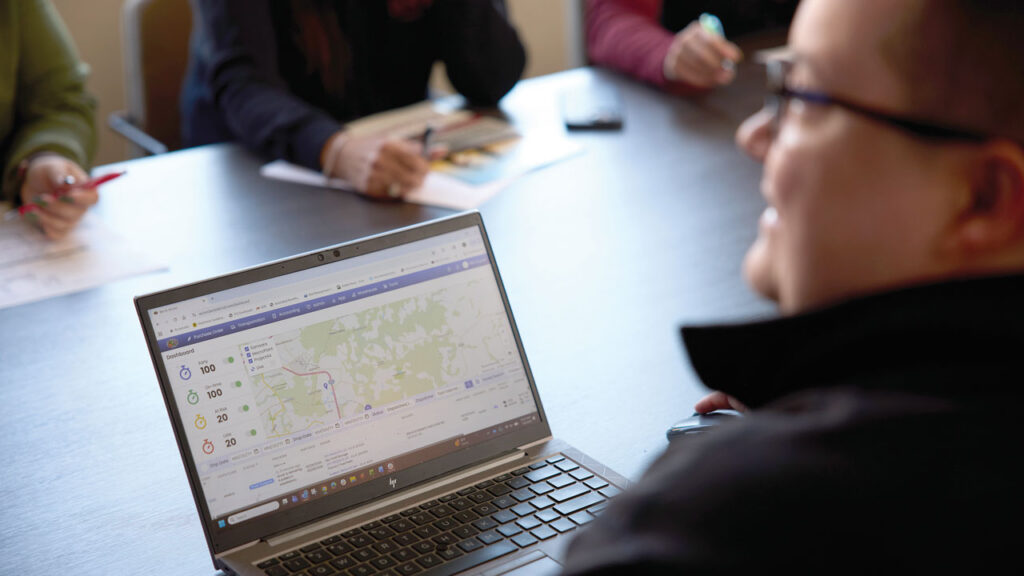
Technology provides wholesalers with solutions. “Technology is integral to every one of our departments,” says Bonnie Fuson, vice president customer experience and foodservice sales at PCFCo. “Through integration of software, leverage of AI, and good adoption of our CRM, we continue to give more time back to our teams and provide them with better data to service customers and grow sales.”
Scan guns, tracking, inventory management and routing programs are becoming standard, while AI promises new efficiencies. “As the dust settles around AI offerings, we are reviewing existing data and scrutinizing it more closely to unearth better solutions to serve customers and lower costs,” says PCFCo’s Hendryx.
J.E. Russell uses AI tools in its reporting, which supports its business intelligence and planning, explains Morton. “We leverage more advanced tools in our fleet tracking and building out our ERP with enhanced capabilities. We are evaluating QC and e-commerce platforms too.”
JVI recently implemented an analytics tool to provide more insight into sales, buying and operations. The tool works as an add-on to its current ERP, so it has been a low-impact way to upgrade IT, says Dan Vena, JVI director of sales. “We also added a system to track and store product receiving data for each load. This gives our team insight into information, such as product condition on arrival, that will help us better serve our customers.”
Wholesalers look to customization to improve operations, and Auerbach has integrated software specifically for monitoring and tracking food safety tasks. “Using tablets for a digital trail helps ensure things are done properly according to SOPs and also recorded properly,” says Josh Auerbach. “And we’re using real-time temperature trackers to maintain cold chain and food safety.”
Ben B. Schwartz & Sons has a custom ERP platform, Ben B. Access. “We felt off-the-shelf products were limiting, and wanted an agile system that could grow with us and quickly adapt to customer needs,” says Loupée. “It helps us capture and analyze data so we can continually adjust inventory, optimize routes, track product and more.”
• • •
Food Safety Expectations
Wholesaler food safety protocols strengthen customer programs.
This summer’s cyclospora outbreak reemphasized food safety through the entire fresh produce supply chain.
“Every highly publicized outbreak reinforces expectations for transparency, supplier oversight and rapid response,” says Dave Doble, senior director of quality and food safety at Pacific Coast Fresh Company (PCFCo) in Portland, OR. “While food safety has always been a core requirement, today’s environment demands more robust verification, documentation and traceability than ever before.”
Wholesalers play an important role in supporting customer food safety goals. “They provide products that meet established safety standards and regulatory requirements,” says Mark Cote, produce merchandiser at Redner’s Warehouse Markets in Reading, PA, with 45 stores. “They help build confidence by maintaining strong food safety programs, proper handling procedures, temperature controls, and traceability throughout the supply chain. Their communication and documentation also help us verify that products are being handled correctly before they reach our stores.”
Gabriela D’Arrigo, vice president of marketing and communications at D’Arrigo New York in Bronx, NY, explains the unique food safety aspects of wholesale distribution. “We want to keep as many hands off as possible, but also need to manage the product,” she says. “It’s like a giant game of Tetris. We must expertly manage timing and shelf life.”
DOWN THE CHAIN
Wholesalers ensure food safety protocols on the supply side. “We work with growers and shippers with best-in-class food safety programs,” says Hutch Morton, senior vice president at J.E. Russell Produce in Toronto, Ontario. “The work starts well before we ever receive a product in our warehouses, with site and field visits. Clear lines of communication with external partners and internal teams go a very long way in managing a food safety program.”
The expectation at Joe Randazzo’s Fruit and Vegetable Market in Detroit, MI, with four stores, is transparency from vendors. “Making sure we, as a retailer, know which growing region our product is coming from, and making sure quality control at the grower level isn’t overlooked, have been the main focus of our buying strategy,” says Sammy Randazzo, senior produce buyer.
As a grower, Procacci Brothers in Philadelphia, PA, has food safety ingrained in its thought process. “In our wholesale business, we rely on our growers’ due diligence,” says Rick Feighery, president. “We have clear and accurate traceability, which we’ve had for a very long time. Everything we buy is from pre-approved vendors, and it’s all transparent to the customers.”
ADDRESSING OBSTACLES
The nature of the supply chain presents difficulties. “Speed is a major issue in food safety,” says Chris Sarantis, senior vice president at Canadawide in Montréal, Quebec. “When a problem is identified, it can take a long time to address the situation as it evolves and changes. We must get the information quickly, react to it as quickly as possible, and give the most accurate information.”
Data is at the core of food safety, explains Bill Loupée, chief operating officer at Ben B. Schwartz & Sons in Detroit, MI. “If an outbreak occurs, stakeholders need access to records that capture everything from the end customer through distribution, including the grower, harvest information, and specific growing regions or lots,” he says. “Our ERP helps us capture, organize, and analyze this data so we can act quickly if or when we need to.”
At Willie Itule Produce in Phoenix, AZ, warehouse operations are fully traceable — inbound and outbound, according to Billy Itule, chief executive. “We also have redundancies built in to ensure that, should an issue arise, the fresh produce and goods we’re moving are protected and maintain the rigorous standards of the cold supply chain.”
LOOKING FORWARD
Dan Acosta, director of operations at Katzman Produce in Bronx, NY, says they work hard to stay ahead of changes and make sure teams are prepared before new requirements take effect.
John Vena Inc. in Philadelphia, PA, trains employees in food safety starting their first day, regardless of their position. The company also holds additional training in quarters three and four to ensure staff is up-to-date on food safety procedures, says Nora Olson, food safety and quality assurance manager. “We complete environmental monitoring year-round to ensure our processes are working.”
3 of 11 article in Produce Business October 2026
Have a story to share?
Take a place at Produce Business