
The Role of AI in Managing Produce Safety
March 21, 2026 | 4 min to read
At a recent conference, an attendee asked my panel if we thought that there would come a day when we wouldn’t need to rely on people to manage food safety. My knee-jerk response was “no.” And it’s still no, but with some time to think about it, I can share caveats.
Certainly, machine learning, predictive analytics, and what is generally referred to as “AI” will help manage some of the more mundane and manual food safety tasks. It may even give produce safety professionals a head start on building plans and programs, policies and SOPs.
The automation of processes continues to evolve: We’ve gone from mercury thermometers to digital ones, to systems that continuously record data and send alarms and alerts when out of range. With more digital data, we can look for correlations and see if we can predict and guard against failures.
In the future, to what extent can we lean on AI to develop (and manage!) our food safety programs? Should AI be making food safety decisions?
But, keeping with a thermometer example, how do we know what the “right” temperature is? Today, we can ask one of the AI tools for an appropriate temperature, which can quickly provide guidance based on regulations, science, or whatever we ask it for. But just how much of a deviation is too much, such that it may compromise safety? Is the data there for AI to weigh in? In the future, to what extent can we lean on AI to develop (and manage!) our food safety programs? Should AI be making food safety decisions?
THE FINE ART OF THE QUESTION
There are a few reasons why I don’t believe we’re yet at the stage of turning the keys of food safety over to non-humans. First, garbage in, garbage out. I don’t believe that the scientific community has gathered enough quality data that would permit reliable conclusions for all things produce safety. For sure, there’s a lot of data, including misinformation, experiments that were done without proper controls (even if published in a peer-reviewed journal), etc. Until there’s better curating of scientific data, I would not trust a machine to sort through the noise and be able to discern a signal that yields reliable, actionable food safety information.
Second is the art of asking the question. A poorly worded question could yield a misguided AI answer. Not only does a human need to use brainpower to ensure that the details are included in a question (e.g., what is the throughput of a wash water system when asking for an appropriate concentration of antimicrobial), it needs to gut-check the answer. “Because AI told me so” may not hold up in the event of an outbreak investigation.
WHERE WE NEED AI
Although I’m skeptical that AI will take over the world of food safety, I do hope that it provides some relief. There is a dearth of qualified produce safety professionals, and it would be great to reserve their time for tasks that only they (and not machines) can do.
Produce safety should not be about compliance and checking boxes. Ensuring that wash water is at 10 ppm free chlorine does not take much thought. Knowing why 10 ppm was selected, defending that level to customers and regulators, and knowing what to do when things go wrong is a better fit for humans than machines. Today, many produce safety professionals spend more time on documentation than on reviewing science to continually optimize their produce safety systems.
I’m optimistic the produce safety system of the future will be able to make better sense of the massive amounts of data that are collected. Discipline is needed (on the part of humans) to ask good questions when collecting data, and to be thorough in collecting metadata (the data about the data — e.g., the who, what, when, where, why and how — some of which can be automatically collected). Given the variables in produce production systems — the myriad types of weather data (wind, UV, dew point, temperature, etc.), data about a location (proximity to animals, waterways, communities, etc.), inputs (intentional and unintentional), and more, I’m especially interested in seeing what sense AI can make of these factors.
We can see simple things that increase risk (e.g., spraying manure-contaminated water on plant tissue). Many recent outbreaks seem to stem from a combination of factors that would not individually cause concern. These are the relationships I hope can be discerned.
A SAFER FUTURE
Qualified people will continue to need to make decisions on food safety. Lives are at stake and a person needs to take ownership of that. But the analysis and trending of food safety data can surely help steer the produce safety professional in the right direction and provide forewarning of pending issues.
As the world becomes more complex, AI can help produce safety professionals improve the safety of our food supply.
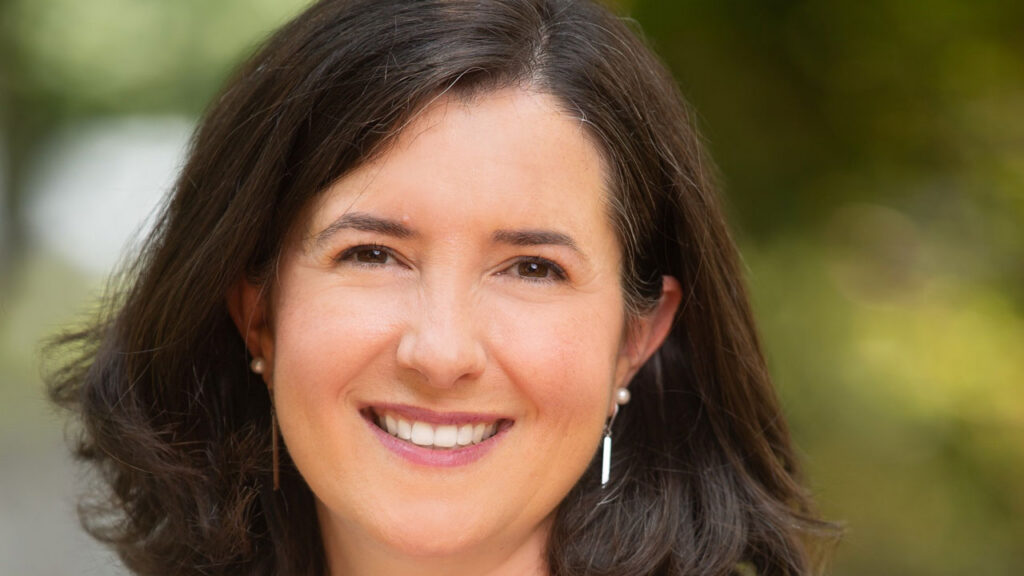
Jennifer McEntire is founder and president, Food Safety Strategy LLC, a food safety consulting firm.
19 of 20 article in Produce Business April 2026
Have a story to share?
Take a place at Produce Business