
Community is Infrastructure, Not Networking
August 31, 2026 | 5 min to read
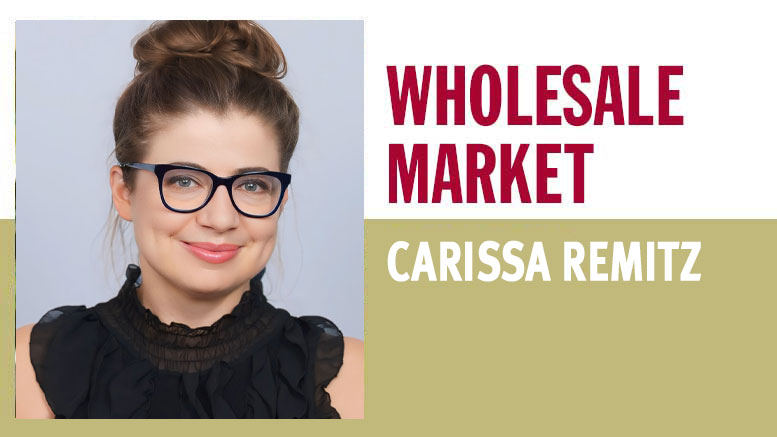
More than four years ago, I co-founded Together Hospitality Chicago, a restaurant resource group that’s grown to be a true community of hospitality leaders. Of everything I’ve done in my 25-plus-year career, it’s what I’m most proud of — building a space for people to share, to learn, and to be vulnerable. Use the word “networking” to describe it, and you couldn’t be more wrong.
Networking is what happens at trade shows, and it ends when the trade show does. Infrastructure is different. It is built deliberately, maintained continuously, and paid for long before it pays back. Most companies in our industry do the first and call it the second.
Too often, relationship building gets filed under “soft skills.” Really, it’s the most durable marketing strategy we have for turning customers into long-term partners.
TRUST FORMS BEFORE TRANSACTIONS
Everyone in produce says relationships come first. A sales call can open the door, and in my experience, the trust that turns a customer into a partner is built elsewhere — in a room where nobody is selling anything.
That’s what our Together Hospitality roundtables look like — chefs, operators, and hospitality leaders talking honestly about the things that keep them up at night. Leadership. Burnout. Turnover. Growth.
On paper, none of that is a produce distributor’s problem to solve. In practice, it’s the foundation of everything: Our customers’ industry surviving its hardest problems is the precondition for our business existing. So, month over month, year over year, I invest in the room where those problems get worked on, with no sales pitch attached.
Here’s what more than four years of leading this group has taught me: When trust forms off the clock, it survives on the clock. Those relationships don’t evaporate the moment someone shows up with a lower price. You can’t buy that, and you can’t build it the week you need it, which is exactly what makes it infrastructure.
PEOPLE BUY FROM PEOPLE THEY LEARN FROM
The second thing communities do is share knowledge, and knowledge is what customers are actually buying. Our local and sustainability team translates between two vocabularies: the grower’s language of volume, timing, and what’s coming out of the ground this week, and the chef’s language of seasonality, story and menu. That translation is the product.
We built a service out of it. Our Midwest markets bring a farmers market experience directly into our customers’ spaces — a curated selection of local and seasonal products, staff to run it, and farm profiles that tell the stories behind the food.
Farmers get valuable time back. Our customers get an experience their guests remember. It’s connection, delivered.
Our farm tours run the same logic in the other direction. For years we’ve brought chefs and clients to the field, to stand in the rows with the growers who supply them. A chef who has walked Garwood Orchards with the folks who’ve worked that land for decades understands something no spec sheet can teach.
RESILIENT SYSTEMS ARE THE COMPETITIVE ADVANTAGE
The third thing communities create is resilience, and right now that matters most. Our industry is consolidating fast. Purchasing is centralizing. Distribution networks are “optimizing.” Farms are disappearing.
When pressure hits, isolated companies have one lever left: price. We stay price competitive without giving up our values, because local is what our customers want to see, even as consolidation pulls the industry away from it.
Living those values means building direct relationships with local growers. We connect harvests to institutional buyers: schools, hospitals, universities. Growing at that scale is one challenge; delivering at it is another, and that is the problem distribution exists to solve.
The same is true farm by farm. Take Scheeringa Farms in Highland, IN, where Jenny Scheeringa and her sisters run the third generation of a farm their grandfather started.
Scheeringa will tell you plainly that theirs is the last farm left in town. They’ve built a business on several channels: greenhouses, a beloved farm stand, seasonal events that draw families from across the region and wholesale.
We’re proud to be a part of that last one, carrying their harvest into commercial kitchens. This is what real resilience looks like — not one relationship doing everything, but a community of relationships each doing their part. That’s why the last farm in town is still the last farm in town, instead of the one that used to be there.
JOIN SOMETHING
Most of the infrastructure our industry needs already exists, and it’s looking for people willing to show up. Serve on the board of your local farmers market or another food-related nonprofit. Join sector-wide efforts like the U.S. Food Waste Pact, where we collaborate on problems none of us can solve alone. Those are some of the most valuable rooms in this industry, and every one of them has an empty chair.
After 25 years, in and alongside this industry, here’s what I know to be true: Marketing’s job is not just generating leads. It’s also building places where relationships can grow..
A lead list starts depreciating the second you finalize it. Infrastructure compounds. At a moment when so much of our industry is consolidating, community is the one competitive advantage that can’t be acquired.

Carissa Remitz is the director of public relations and marketing at Midwest Foods, a women-, family-, and locally owned produce distributor serving the Midwest, and co-founder and chapter director of Together Hospitality Chicago. She has spent more than 25 years in hospitality marketing and communications.
3 of 15 article in Produce Business August 2026
Have a story to share?
Take a place at Produce Business