
The State Of Controlled Environmental Agriculture
May 26, 2026 | 10 min to read
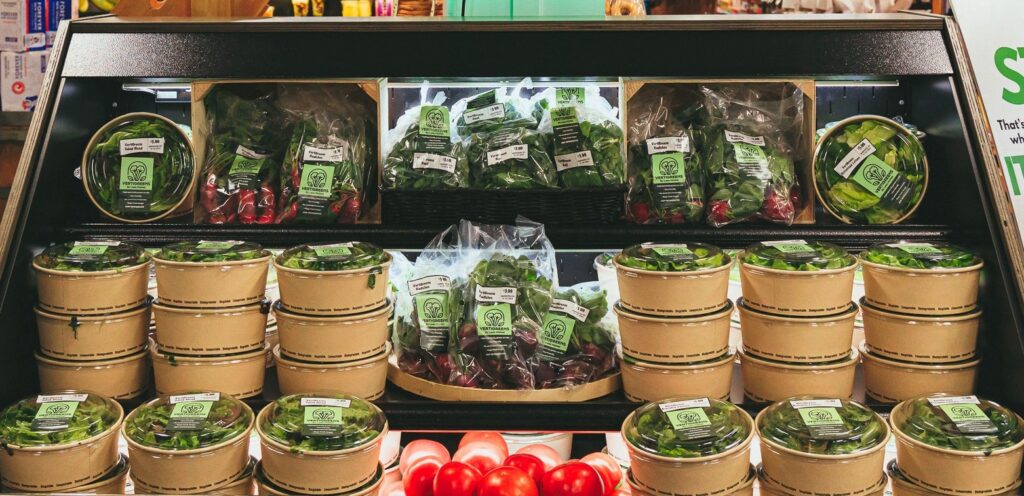
There are many opportunities for retail and foodservice in CEA.
Weather can always disrupt fresh produce cultivation and supply chains. This is especially true in much of the United States, where snow, ice, and cold mean no local field harvests half the year and the potential for trucking delays. However, at Lees Market in Westport, MA, a family-owned and operated supermarket that includes three Clements’ Marketplaces in Rhode Island and Massachusetts, customers can buy fresh salad, veggies and herbs year-round.
How fresh? The distance from farm to shelf is measured in feet, not miles.
In 2023, the retailer invested in creating its own onsite hydroponic farm, Vertigreens. The 2.5-acre equivalent controlled environment agriculture (CEA) hydroponic farm is housed in a revamped, state-of-the-art, 40-foot shipping container.
“Our customers have always had a tremendous interest in locally grown produce,” says Matthew Ponte, marketing and communications for Lees Market and Clements’ Marketplaces. “We have partnered with many local farms for decades to meet their needs. Our Vertigreens farm allowed us to take it one step further and offer fantastic, hyper-local produce all year.”
The seeds for Vertigreens were planted when Lees Market produce manager, J.D. Squires, experimented with home hydroponic grow cases inside the store that went over well with customers.
The team started discussing how to scale the concept and discovered Freight Farms, a Boston, MA-based manufacturer of vertical farming systems. Packaging was also an unforeseen challenge, as the retailer wanted to avoid contributing to harmful plastic waste. The solution is eco-friendly packaging made from bamboo fiber.
“Our core lineup is a salad mix (five types of lettuce plus arugula) and a romaine blend (red and green romaine),” says Ponte. “These have been a massive hit.”
TODAY’S CEA LANDSCAPE
CEA, also called “protected agriculture,” encompasses greenhouses, vertical agriculture, hydroponics, aquaponics, and other controlled production methods. From 2009 to 2019, the number of CEA operations in the U.S. increased by more than 100%, from 1,476 in 2009 to 2,994 in 2019, according to the report Trends, Insights, and Future Prospects for Production in Controlled Environment Agriculture and Agrivoltaics Systems, released January 2024, by the USDA’s Economic Research Service (ERS).
Production volumes increased by 56% during the same time, from 502 million pounds to 786 million pounds. Mexico and Canada also continue to expand their CEA-grown production and vegetable exports to the U.S., according to the report. Mexico accounted for 81% of total greenhouse-grown U.S. vegetable imports, excluding potatoes, from 2018 to 2020.
Canada’s CEA farmgate value doubled between 2013 and 2023 to $2.5 billion in 2023, with the U.S. reaping 99.5% of the industry’s exports, based on Statistics Canada (CATSNET) data as of August 2024.
Windset Farms is a good example of this growth. “What started as a 4-acre bell pepper greenhouse in 1996 has since expanded to grow and market 2,500 acres of greenhouse vegetable production in Canada, the U.S. and Mexico,” says Ryan Cherry, director of sales for the Delta, British Columbia-headquartered greenhouse grower.
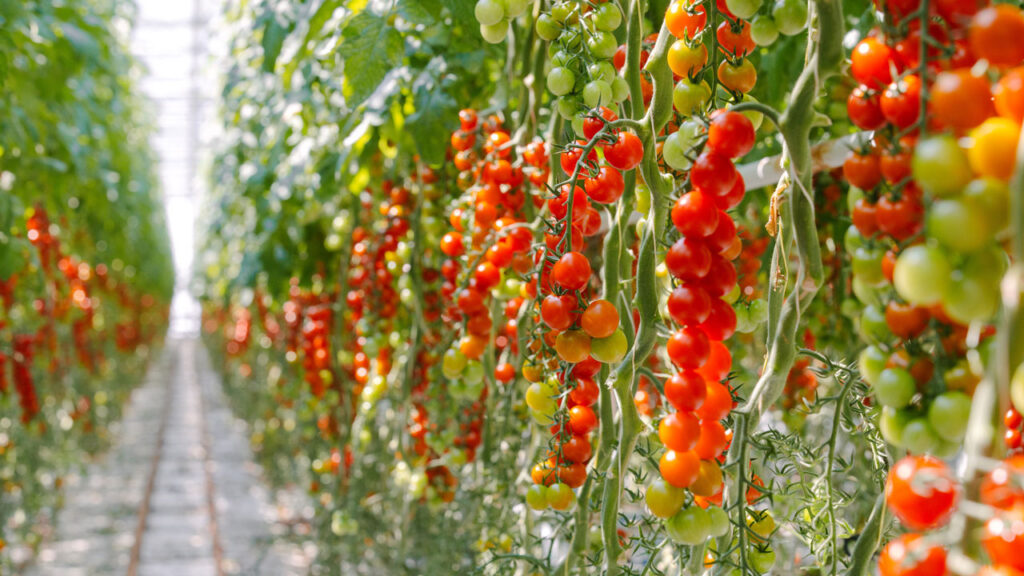
In the last few years, some companies in the CEA industry have experienced profitability struggles, consolidation, and notable bankruptcy filings.
The growth in CEA in the U.S., North America, and globally, says Martin Ruebelt, vice president and chief scientific officer for NatureSweet, the San Antonio, TX-headquartered largest vertically integrated CEA company in North America, “is driven by rising consumer demand for high-quality, sustainable, year-round produce.”
There is a lot of room for CEA production to grow. Consider that the volume of specialty crop production with CEA systems is small, estimated at less than 2%, compared to outdoor field production, according to the USDA ERS January 2024 report.
A GROWING VARIETY
Tomatoes, peppers, and cucumbers have been grown in greenhouses for over 50 years. According to the USDA ERS report, this trio represented 60 to 70% of CEA-grown crops from 2009 to 2019, with major grocery chains, like Walmart, Costco, and Target, partnering with CEA producers to supply these three.
Today, says Tom Stenzel, executive director of the Alexandria, VA-headquartered Controlled Environment Agriculture Alliance (CEAA), “indoor-grown tomatoes have taken over the retail marketplace.”
Vince Mastromauro, director of produce operations for Sunset Foods, a five-store chain based in Highland Park, IL, has experienced this CEA revolution in the tomato category. “Sometimes now we don’t carry any field-grown. TOVs, beefsteak, cherry on the vine, grape tomatoes, and snacking tomatoes have blown up this category positively.”
Unique varietals are increasing in demand, adds Windset’s Cherry. “You no longer have just a grape or tomato on the vine, but a whole array of varieties to suit your culinary needs and preferences.”
The grower has introduced several new tomato products including its Shake & Snack Tomatoes, in an 8-ounce sustainably inspired ladybug-shaped clamshell with a pop-open lid; Amore-brand sweet tomatoes on the vine; and Yum Yum brand cherry tomatoes.
“People will eat more produce if it’s interesting, and we’re doing our part with different colors and flavor profiles,” says Jim DiMenna, president of Red Sun Farms, in Kingsville, Ontario, which recently introduced its 1.5-pound resealable container of Sweetpops tomatoes, and its 1-pound pouch bag of Tatayoyo mini sweet peppers. Both are for snacking.
“People will eat more produce if it’s interesting, and we’re doing our part with different colors and flavor profiles.”
— Jim DiMenna, Red Sun Farms, Kingsville, Ontario
CEA-grown leafy greens are on the rise in the marketplace, according to Stenzel. “Indoor-grown salads are now up to 5% nationally and exceeding 15% of the retail market in the Northeast.”
Little Leaf Farms, headquartered in Devens, MA, has seven facilities and 50 acres to supply its leafy greens and salad kits to over 8,500 grocery stores throughout the Northeast and Mid-Atlantic states.
“We’re seeing growth in CEA-grown single lettuce SKUs and salad kits featuring CEA-grown lettuce,” says Paul Sellew, founder and chief executive officer.
Gotham Greens, headquartered in Brooklyn, NY, with 40 acres of hydroponic greenhouses across 13 locations in nine states, primarily grows leafy greens and herbs, including popular varieties like butter, romaine, spring mix and basil.
“While we certainly see the overall market share of indoor/CEA grown leafy greens growing, we don’t expect indoor-grown leafy greens to take over the majority of the category anytime soon, but rather serve as a complement to conventional field-grown salad,” says Viraj Puri, co-founder and chief executive officer.
Basil is the chief crop at Beats Per Minute (BPM), a Kansas City, MO-based veteran-owned vertical farming company. Like Lees Market, owners purchased a high-tech 40-foot container farm from Freight Farms that can produce the equivalent of 3.5 acres. The compact space makes it accessible to work for disabled staff, says owner and sales manager, David Payne.
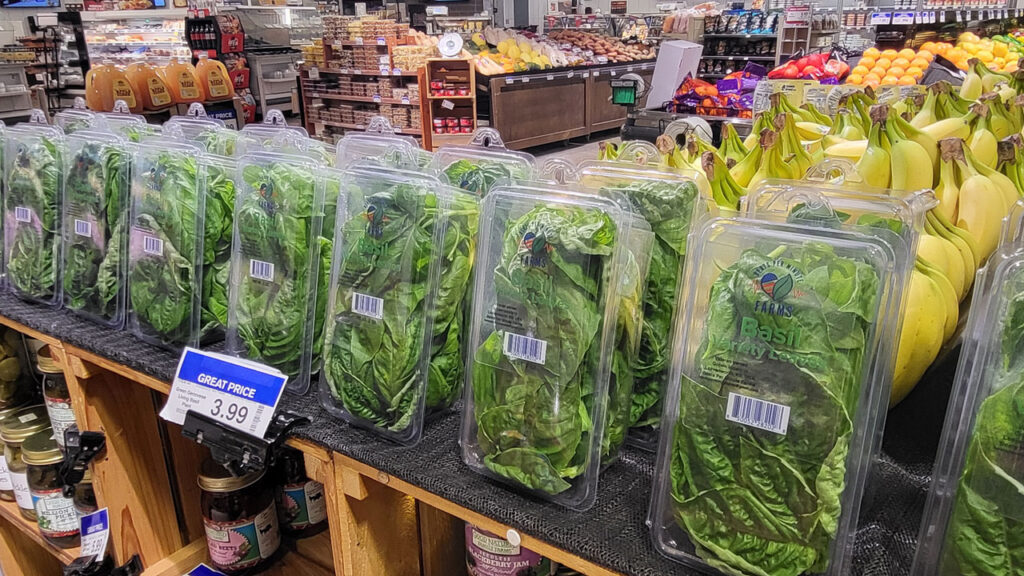
“Balls Food Stores was the first retailer to visit our farm,” says Payne. “They wanted a living herb program rooted in basil, and that’s what we delivered.”
Today, BPM supplies its basil to 51 supermarkets in the Kansas City area, including all Balls’ banners like Price Chopper, Hen House, Payless Foods and Sun Fresh, as well as to Cosentino’s Markets. The herb is custom packaged in a bouquet-wrap plastic. BPM also provides display stands for its retail customers for prominence and ease of merchandising.
City Roots Farm, in Columbia, SC, grows 11 varieties of microgreens in its 2023-constructed carbon-neutral facility, which includes a nearly 2-acre greenhouse, 2 acres of solar panels, geothermal heating systems, and a distribution facility. Varieties include cilantro, radish, arugula, kale, mustard and sunflower. The grower’s location puts them within a drive of Florida to the south or New York to the north. The microgreens have a 14-day shelf life.
“Microgreens are a high-dollar, high-profit item that works well in our facility,” says Eric McClam, co-founder and chief executive officer. “Whole Foods and Sprouts were some of our first retail buyers. Most retailers take three to five SKUs, with more during the holidays, and line price them.”
Fruit, including strawberries and melons, is now available via CEA production.
Jeff Cady, vice president of produce and floral for Schenectady, NY-headquartered Northeast Shared Services, which represents 152 Tops Friendly Markets and 132 Price Chopper/Market 32 stores, worked with an Ohio-based grower to bring in organic greenhouse-grown strawberries during the winter.
“It was a win for us. Good flavor, local in the winter, and organically grown,” says Cady.
MARKETING & MERCHANDISING
Retailers are increasingly adding and expanding their CEA offerings, according to Sonia Klinger, marketing manager for Del Fresco Pure, a Kingsville, Ontario-headquartered greenhouse pioneer. “Retailers often highlight their CEA produce through labeling or promotional displays to distinguish these products.”
At Lees Market and Clements Marketplace, there are designated Vertigreens display cases with light-up logo signage that mirrors the sign on the actual farm, says Ponte. “All products also have unique labeling and informative signage to describe the program to customers. We also shot some videos of the inside of the farm and production process that we have looping on a TV near the display, so customers can see how it all works.”
This educational component is essential to selling CEA products at retail.
The “hyper-local” message is a big part of that, according to Rick Vanzura, chief executive officer of Freight Farms, which has farmer-customers in all 50 states and 41 countries collectively growing over 500 crops, with over 60 commercially viable. “But being hyper-clean, hyper-precise, and always available are also important value propositions.”
“Consumers have demonstrated a willingness to pay a premium for CEA-grown produce, recognizing the value of being clean and fresh and adding value by being customizable and available year-round.”
— Rick Vanzura, Freight Farms, Boston, MA
“The premium amount varies by channel, with premiums being higher direct-to-customer than, for instance, through grocery. The trick is communicating all that value in a compelling, concise way,” Vanzura adds.
LOOKING AHEAD
With climate change and supply issues only growing, indoor agriculture will play a critical role in the industry, according to the CEAA’s Stenzel. “One trend to look for is traditional field growers adding an indoor segment to their production. This is not an ‘us-against-them’ fight between indoors and outdoors. Rather, we’re first produce companies, seeking to deliver the highest quality produce through whatever production methods work best.”
• • •
CEA Thrives on the Menu
Hydroponic greenhouse-grown vine-ripened tomatoes were first served on salads, hamburgers, and chicken sandwiches at Wendy’s in 2018.
A year later, according to a news release from the Dublin, OH-headquartered quick-serve restaurant (QSR) chain, with nearly 6,000 U.S. locations and over 400 in Canada, every tomato served was grown in a North American hydroponic greenhouse.
Dependable twice-a-week 52-week-a-year delivery, consistency in size, look, and taste every time, and the producer’s strict food safety standards by growing in a controlled environment, were the main reasons the chain switched sourcing sourcing from outdoor to indoor-grown tomatoes.
The company has worked to do the same with lettuce in the U.S. and Canada for the past few years.
“Foodservice operators, from fast-casual restaurants like Just Salad to high-end, white tablecloth restaurants, are increasingly turning to indoor-grown produce for similar reasons as retailers, i.e., high quality and consistency year-round,” says Viraj Puri, co-founder and chief executive officer of Gotham Greens, a hydroponic greenhouse grower headquartered in Brooklyn, NY. “Salads continue to be popular menu items, but our leafy greens are regularly featured in burgers, sandwiches, wraps, pizzas and more.”
Just Salad, a 90-plus-unit fast-casual chain headquartered in New York, NY, sources its salad greens from Gotham Greens, including butterhead, crispy green leaf and gourmet spring mix.
Last year, Sweetgreen, a fast-casual 926-unit restaurant chain based in Los Angeles, CA, partnered with Little Leaf Farms, a Devens, MA-based greenhouse grower of baby leaf lettuce, to test the grower’s lettuce in the chain’s popular salads in select markets.
“With a shared commitment to supply real food to local communities,” says Paul Sellew, Little Leaf founder and chief executive, “we saw this as an excellent opportunity to feature our fresh, crispy greens in Sweetgreen’s tasty menu items to appeal to mutual fans and new Little Leaf Farms consumers alike.”
Have a story to share?
Take a place at Produce Business