
The EU Must Prioritize Fresh Produce
December 18, 2025 | 4 min to read
Freshfel Europe participated in the 11th annual EU Conference on EAFRD Financial Instruments, held in Milan and organized by fi-compass, the European Commission’s DG AGRI, and the European Investment Bank (EIB).
The event, titled “Financing the transition to resilient EU agri-food systems and sustainable farming,” brought together policymakers, financial institutions, and agri-food stakeholders to explore innovative financial tools supporting the green and digital transition of European agriculture. It was an opportunity for Freshfel Europe to call for adjustments to the EU budget and financial instruments in favor of fresh fruits and vegetables.
Representing the European fruits and vegetables (F&V) sector at the Milan conference, Freshfel Europe highlighted the pivotal role of fresh produce in achieving a sustainable, low-carbon, and healthy European food system.
The event was a timely opportunity to remind EU decision-makers to rebalance the shrinking Common Agricultural Policy (CAP) budget and facilitate access for the fresh produce sector to tailor new financial instruments channeled through the EIB.
Fresh fruits and vegetables are at the cornerstone of a sustainable food system. With their lowest emissions and environmental footprint within agriculture, the sector also has a unique carbon sequestration capacity, contributing directly to the EU’s carbon neutrality goals.
Fruits and vegetables also deliver undisputed health benefits, forming the foundation of sustainable diets that can help curb the rise of obesity and non-communicable diseases in Europe. These essential health and environmental assets position the fresh produce sector as the perfect partners to address societal concerns.
The fruits and vegetables sector is a significant driving force in climate-smart production, and yet the sector only receives 3% of CAP funds. A radical budget shift is crucial. Today, 80% of the EU CAP budget is destined to products of animal origin, which contribute heavily (more than 50%) to agricultural carbon emissions.
Those inefficiencies were already flagged by the European Court of Auditors in 2021, but not much has been done since then to effectively reverse this situation.
A shift to a more plant-based diet is part of the response to mitigate high carbon emissions linked to diet, primarily animal-based and ultra-processed food. Today, the consumption of natural, raw, and fresh fruits and vegetables stands at 350 grams per capita/day, well below all targets. At least half of the plate should be filled with fruits and vegetables.
Could we one day see 50% of the EU’s CAP budget dedicated to supporting supply chains that deliver healthy, tasty, and high-quality fresh fruits and vegetables to consumers? This is not a provocative stance, but a necessary reflection based on reality and an uncomfortable truth for many!
The fruits and vegetables sector stands at the core of the solution and needs to be better positioned as the perfect partner for the desired transition to carbon neutrality. Better aligning EU policies and budget with the objectives to shift toward a more plant-based diet is no longer an option, but should be an obligation for policymakers.
Today, there is a huge discrepancy between production levels and the corresponding needs of consumption, according to dietary guidelines. EU policies and budget should be instrumental in reconciling that significant imbalance, which leads ultra-processed food to dominate the diets of Europeans.
The fresh sector has specific business challenges, ranging from generation shift to growing climate hazards, new pests and diseases, geopolitical market, R&I, and adaptation of production methods to fully deliver on the most sustainable production and supply chain.
Budget and financial instruments should be adapted and reflect the specificity of an intricate fresh produce business model. Unlike other concentrated agri-food models in grains, meat or dairy, the fruits and vegetables sector is operating with a vibrant composition of many small holders with a great diversity of products with specific needs influenced by the seasonality, by production with shorter or longer cycle, indoor or outdoor production, tight margins impacting investment, and supply chain collaboration.
The financial instruments need to have clear objectives, be flexible for immediate response, provide confidence in the usage, and secure equal access to prevent distortion of competition among member states. It should also fill the existing gaps, namely regarding insurance for climatic hazards, which will continue to be on the rise.
Freshfel Europe called on the European Commission and EIB to prioritize fruits and vegetables within EU financial instruments and recognize their strategic value in achieving climate neutrality and healthy diet goals. Freshfel Europe will continue its pledge for better support of the fresh produce sector, given its essential role for society, for the planet and for the economy. It is no longer an option; it is an obligation for policymakers.

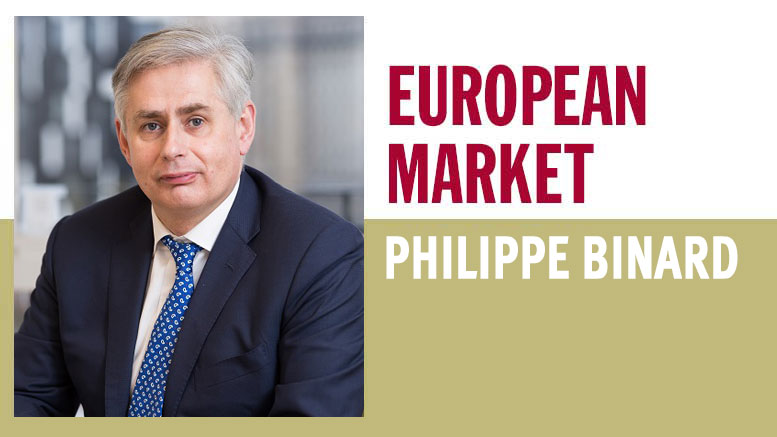
Philippe Binard is Freshfel Europe’s general delegate. Freshfel Europe is the European Fresh Produce Association, representing the interests of the fresh fruits and vegetables supply chain in Europe and beyond.
4 of 16 article in Produce Business December 2025
Have a story to share?
Take a place at Produce Business