
Seeds of Innovation Excite Consumers
January 6, 2026 | 9 min to read
Fresh produce variety proliferation adds value and addresses grower issues.
Forging ahead with new varieties yields benefits, from grower to consumer. By focusing on innovation that enhances quality, yield and efficiency, growers are introducing new varieties that not only ease cost pressures, but also satisfy and intrigue consumers.
Hannaford Supermarkets in Scarborough, ME, with 188 stores, seeks ways to encourage customers to add more produce to their baskets. “Offering new and differentiated varieties is a great way to achieve that goal,” says Ben Rhein, category director of produce and floral. “Customers love finding something new when visiting our stores.”
“Additionally, many new varieties offer longer shelf life, higher quality and a more enjoyable eating experience for customers.”
Variety development is the purest form of product innovation, according to Zak Laffite, president of Wonderful Citrus in Delano, CA. “This type of product innovation addresses flavor and consumer needs, as well as agronomic challenges.”
Despite the critical importance of ongoing innovation, Sarah Evanega, vice president of business development for Okanagan Specialty Fruits (OSF) in Summerland, British Columbia, Canada, says produce is not keeping pace with competitors in the snacking sector.
“Innovations in the snack sector have been driven by shifting consumer demands for convenience, unique flavors and healthier options, all of which indicate opportunities for produce to capture a larger share of the lucrative snack market through innovation.”
“At Sprouts, we have a strong appetite for innovation and see tremendous opportunity to partner with breeders and growers who are equally focused on raising the bar.”
— Meghan Diaz, Sprouts Farmers Market
The future of produce will be shaped by those willing to invest in innovation, agrees Meghan Diaz, senior director of produce for Sprouts Farmers Market, with over 450 stores. “Variety development represents one of the most exciting frontiers in produce.”
LONG PROCESS
Bayer in St. Louis, MO, brings new varieties to market to address challenges from a grower perspective, according to J.D. Rossouw, senior vice president and head of global breeding. “We address the consumer space with shifts in sensory or nutritional requirements.”
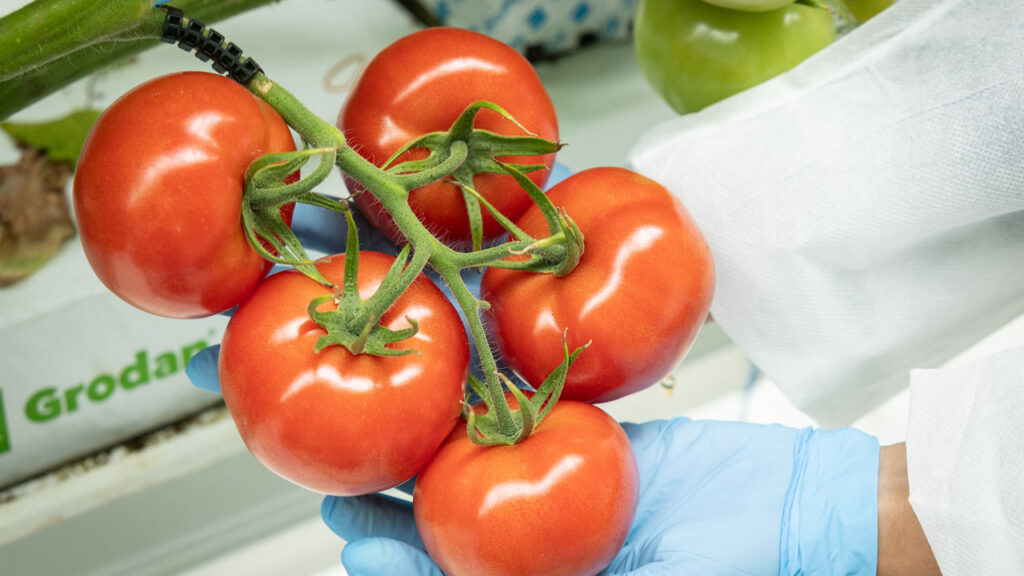
But variety development is a long-term investment, says Rossouw, explaining that for some crops, such as onions, it could be up to 15 years; for others, such as tomato, it could be six or seven years.
The entire process in citrus can take up to 15 years, according to Laffite. “Wonderful will start with a plot trial with one to five trees to see how it behaves,” he says. “Then we move to a small-scale trial and a subsequent large-scale planting.”
A variety goes through hundreds of trials before it is commercialized, with thousands of data points of measurement and comparisons, explains Rick Falconer, managing director at Rijk Zwaan USA in Salinas, CA. “It’s quite the investment in time and cost. For example, if a breeder has 100 test crosses through these phases, only one or two make it to the retail store.”
The first phase typically identifies the targeted need, according to Rossouw. The middle phase includes actual genetic development and trials.
In the case of apples, Kate Evans, horticulture professor at Washington State University in Wenatchee, WA, takes pollen from, for example, Cripps Pink and dusts the pollen onto the flower of the Honeycrisp. “Every seed will be a combination of the two parents, but every seed will be different,” she says. “We evaluate the seedlings to select the best and then graft to make copies.”
Syngenta Vegetable Seeds in Woodland, CA, develops the right parental lines to cross and creates multiple hybrids to test in trials. “The types that are good enough are advanced into multi-location field testing and then moved into a pre-commercial stage and tested in local geographies,” says Bruno Foncelle, head of Americas vegetable seeds development R&D. “Once we get final approvals internally and externally, they’re moved into commercial production and made available for growers.”
The final phase includes commercializing and marketing, and for some products, naming is a crucial step. “Consumers buy apples by name,” says Evans. “So once I’ve selected our candidate, we go through naming and branding for the marketplace.”
SELECTION CONSIDERATIONS
“It’s part of Stemilt’s strategy to innovate in the name of delighting consumers,” says Rob Blakey, director of research and development, Stemilt, Wenatchee, WA,
Variety development needs to check all the boxes. “It must add something to the mix we don’t already have, and it needs to work well throughout the whole supply chain,” says Blakey. “A variety could have great taste, but if it doesn’t work for the grower and packer, it won’t be sustainable in the long run.”
Considerations range from basic assessment techniques, such as tasting the product in the field, to advanced measurements that get to the molecular level, explains Falconer. “For each crop, we have a core team with different responsibilities.”
Selection depends on the target for the new variety. “I focus fully on the consumer and eating quality,” says Evans. “With apples, we don’t have to focus on yield because typically they overproduce. Low humidity in Washington means no major disease issues.”
OSF pursues innovation to achieve significant health outcomes, specifically by enhancing the convenience and accessibility of apples to encourage greater consumption, according to Evanega.
“This led to the development of our nonbrowning Arctic apple,” she says. “We are pursuing innovations aimed at improving sustainability, such as developing apples resistant to insect pests and diseases. Additionally, we are modifying the genetic architecture of the apple tree to reduce planting costs and facilitate mechanization.”
In many cases, breeding for agronomic and consumer traits are parallel path, explains Laffite. “For example, breeders in Florida prioritize tolerance and resistance to citrus greening. In other areas, it’s about creating flavor. For our mandarin portfolio, the focus is on easy and clean peeling, flavor and sweetness. Our most recent development, Wonderful Seedless lemons, delivers the ultimate convenience by removing seeds for the consumer.”
Also important to consider is what Rossouw terms the portfolio management phase. “At some point, a new variety makes a current variety irrelevant,” he says. “A great example in the tomato industry centers around the devastating Tomato Brown Rugose Fruit Virus. It’s forcing us to replace varieties with no resistance or intermediate resistance. So, we’re phasing in new varieties with resistance to this specific virus.”
BENEFITS FOR ALL
Variety development yields benefits for the entire value chain. “Having new varieties and flavors is important to create excitement at retail,” says Washington’s Evans. “Developments in robustness and shelf-life helps all supply chain partners.”
If a new variety delivers productivity and differentiation for the grower and addresses agronomic issues, there are economic benefits for the grower,” says Wonderful’s Laffite. “Usually, there is quality and shelf-life improvement, and that benefits the entire supply chain. And retailers are always asking for new and exciting things to introduce.”
“Retailers are always asking for new and exciting things to introduce.”
— Zak Laffite, Wonderful Citrus, Delano, CA
OSF’s proprietary nonbrowning trait is an example of how a single trait can benefit all supply chain partners, explains Evanega. “Growers experience less bruising of the fruit,” she says. “Intermediate players, such as suppliers, foodservice personnel, chefs, and others, experience less shrink. Consumers enjoy a convenient product that generates about one-third less food waste than whole apple.”
IDEAL Melons are another example. “They’re a long shelf life (LSL) melon while maintaining great flavor and eating experience,” says Foncelle. “Our SolidRib Romaine is another example. Its firm ribs make it more durable in shipping, benefiting shippers, retailers, and consumers with a consistent, quality product that can withstand movement throughout the supply chain.”
Blakey mentions breeding varieties for pest and disease tolerance in response to strong regulatory pressure in Europe for pesticide reduction. “Stemilt’s Happi Pear is a good example,” he says. “It is pest and disease-tolerant, which allows for softer and economical approaches to farming. It also has great flavor — a win for all parties involved.”
SUCCESS STORIES
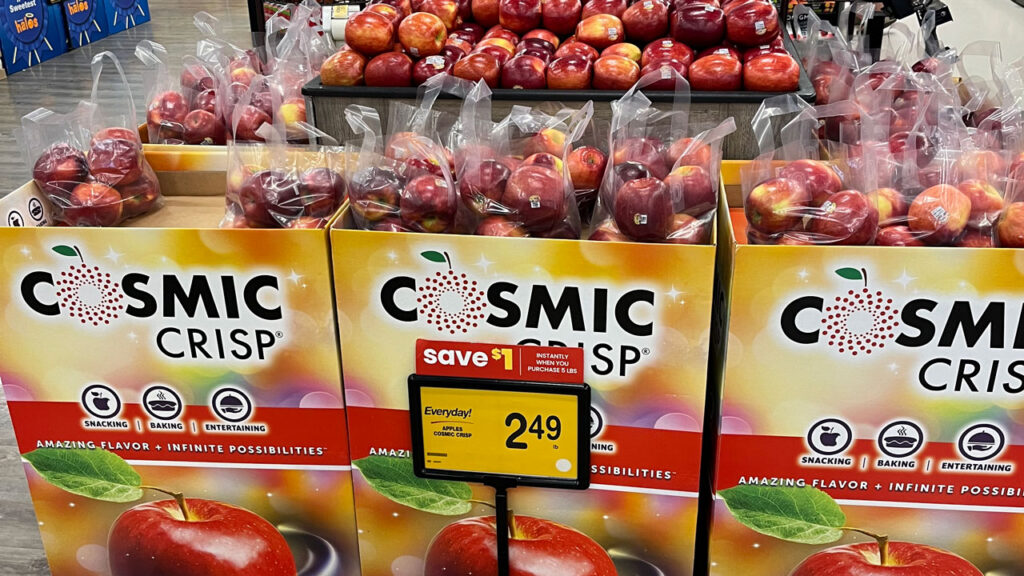
Hannaford’s Rhein describes success across multiple segments in produce, including specialty berries and grapes. “For apples specifically, we’ve seen more customers drawn to new varieties, such as Honeycrisp and Cosmic Crisp, over classic options.”
Cosmic Crisp was developed by Washington State University and breeder Evans, and is now fifth in volume from the state of Washington. Stemilt’s Blakey notes Cosmic Crisp yields well and thrives in the state of Washington. “On the production side, it packs well and can be stored for a long time while actually improving in flavor with storage.”
Sprout’s Diaz points to the example of the Autumn Crisp green grape. “It’s now part of our standard assortment, and the response has been overwhelmingly positive,” she says. “Customers consistently highlight its crunch, flavor, and reliability — raising expectations, not just within our grape category, but for the green grape category industrywide.”
Salanova lettuce produces two to three times more leaves that are smaller and bite-sized. “The result is increased yields and shelf-life, and added diversity in color and flavor,” Falconer says. “Another example, Rijk Zwaan has introduced new varieties with resistance to red lettuce aphid, so lettuce can be grown organically without pesticides.”
Angello Seedless Peppers, hailed as the two-bite pepper, offer a crunchy, sweet experience perfect for snacking, says Foncelle. “It’s very tasty and is a step above others in the market according to recent taste panels. We average a point or more on brix compared to market competitors.”
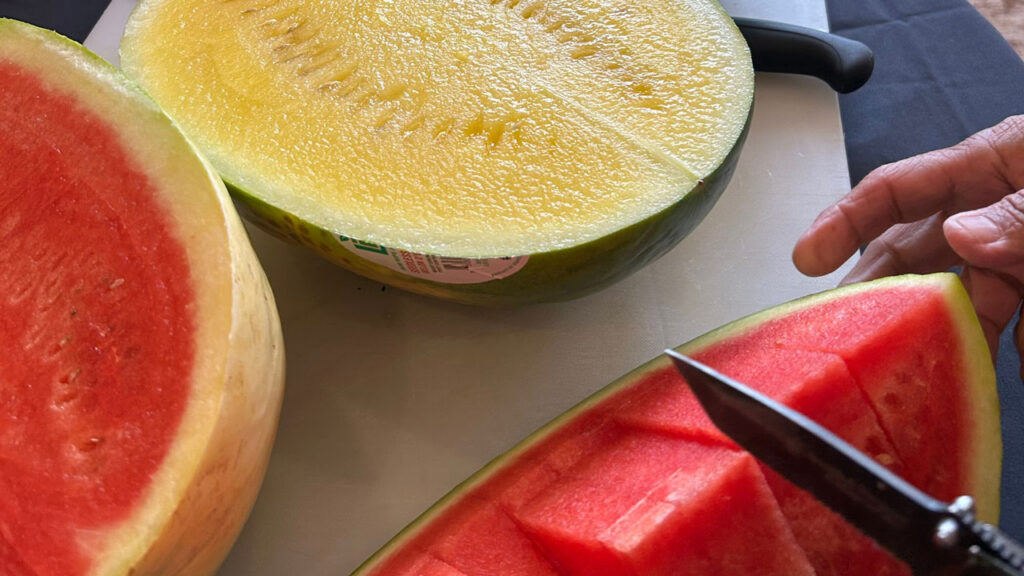
Firm, flesh watermelons are Syngenta Vegetable Seeds’ response to grower feedback requesting dual-purpose watermelons, Foncelle says. “Typically, watermelons are either grouped into packaged or whole-fruit markets, but these varieties can be used for either.”
Success also comes from filling gaps. “From a mandarin perspective, quality can be inconsistent during different times in the season,” says Laffite. “We’ve identified those windows as opportunities for varieties offering a different seasonality, with three varieties to help us differentiate ourselves.”
Future developments promise success. Evans shares Washington is in the final stages of the Sunflare variety that is a cross between Honeycrisp and Cripps Pink. “It’s a bi-colored apple — yellow and pink/red. We’ll be expecting small volumes of fruit, probably in 2028.”
Rossouw says Bayer is working in collaboration with a South Korean company to significantly elevate the level of vitamin D in a tomato. “This could be commercialized in the next few years,” he adds. “The concept is, for example, eating three cherry cocktails to get your daily dose of vitamin D.”
Wonderful is trialing different lime varieties due to a physiological condition brought on by heat/drought that affects the tree health. “We’re looking at varieties that deal better with stress to better address the production and climate issues,” says Laffite.
2 of 16 article in Produce Business November 2025
Have a story to share?
Take a place at Produce Business