
Promote Potato and Onion Diversity for Top Sales
December 15, 2025 | 8 min to read
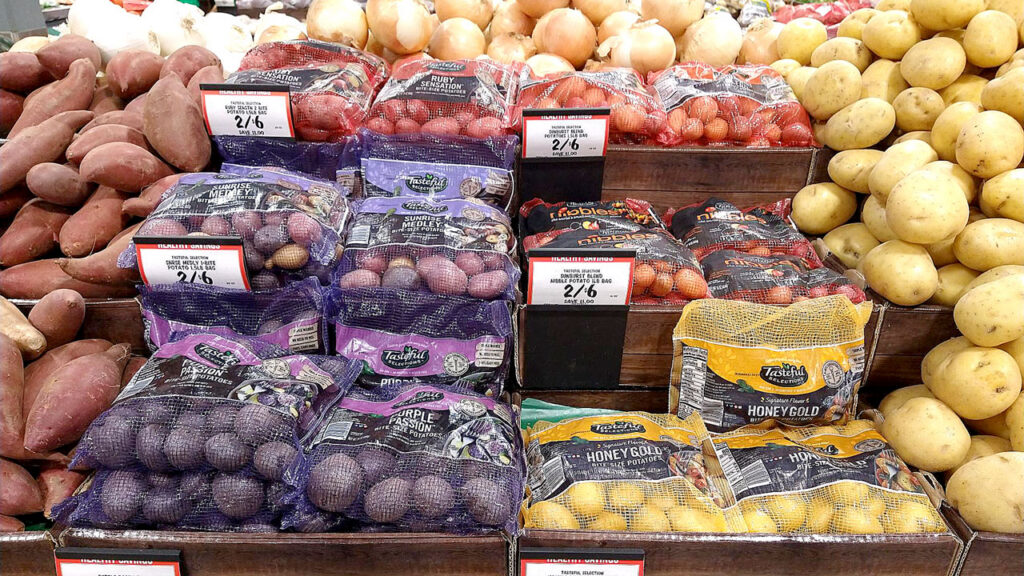
Innovative new choices perk up the category.
Step into today’s produce departments and you’ll marvel at the vital potatoes and onions category. Assorted multicolor varieties enlivened by vibrant packaging beckon you with diverse choices.
For decades, both potato and onion offerings, excelling with superior nutrition plus outstanding value, rang up winning purchases in grocery stores. Vintage cookbooks, ethnic websites, social media platforms, and talented food influencers now combine the familiar and new creations to produce a captivating market category to propel sales.
Many consumers seek affordability and value from this staple category, but today, purchases are often driven by convenience. Air frying, microwaving, plus value-added products attract. Also, there are greater choices among varieties, and creative mixes, and smaller sizes in packaging are widespread.
EARLY CROP TRENDS
Regions differ somewhat, but product availability looks good. Mike Carter, chief executive officer of Bushmans’ Inc., Rosholt, WI, reports it was a warm, humid season, “but the potato crop is timely, good quality, and a great mix of sizes.”
He notes the market has shifted toward convenience and smaller packages, although he fulfills all sizes. “Russets are still king, but there are different varieties of russets.”
The company supports retailer sales in the category with quick turns, point-of-sale (POS) materials and recipes.
Marketer for Minnesota and North Dakota potatoes, Kevin Olson, owner, Ben Holmes Potato Co., Becker, MN, says yields are up, and “quality is great, with nice yellows and reds.”
Along with smaller packages, Olson points to small, even tiny, potatoes as gaining momentum. He observes that some exhibitors market them aggressively at shows. “Exposure in the markets, and chefs, have made a difference.”
This trend is toward C size (1.5-inch diameter) yellow, red, or both in a steamable tray. It has become so great, Olson says some growers “are using varieties that produce only small yellows and reds.”
Eric Beck, director of marketing, Wada Farms, Idaho Falls, ID, reports this year’s quality is “top-notch.” He adds the company can offer “pretty much anything a retailer or foodservice distributor is looking for.”
As the specialty market continues to grow, he says Wada Farms has an array of products to fit the bill. It includes 1.5-pound mesh bags, individually foil-wrapped microwaveable russet potatoes, and tray packs.
“The market share continues to gain as consumers gravitate toward smaller pack sizes,” Beck says. “Time-starved consumers want ready-to-go offerings because they are very convenient for meal prep.”
He also notes organic demand “continues to see some linear growth as people continue to be educated on what organic can offer in their diets.”
MERCHANDISING STRATEGIES
Jessica Congdon, category marketing manager, Grimmway Produce, Bakersfield, CA, suggests strategies for usage occasions. “Offer a variety of sizes and formats of 1.5 to 3 pounds of bite-sized potatoes from Tasteful Selections for convenience-minded shoppers. Rotate regularly and mix in russet, gold, red, purple potatoes and lean into eye-catching packaging or POS tools to draw interest from 10 feet, 5 feet, and at the shelf. Include organic options to meet health-conscious demand.”
“Create displays that solve problems for shoppers. Pair potatoes and onions with broth, beans, stew meat for hearty winter meals.”
– Jessica Congdon, Grimmway Produce, Bakersfield, CA
Recognizing the seasonal opportunity, Congdon says, “The first quarter is a strong sales period for potatoes and onions — driven by shopper goals, culinary traditions and seasonal celebrations.”
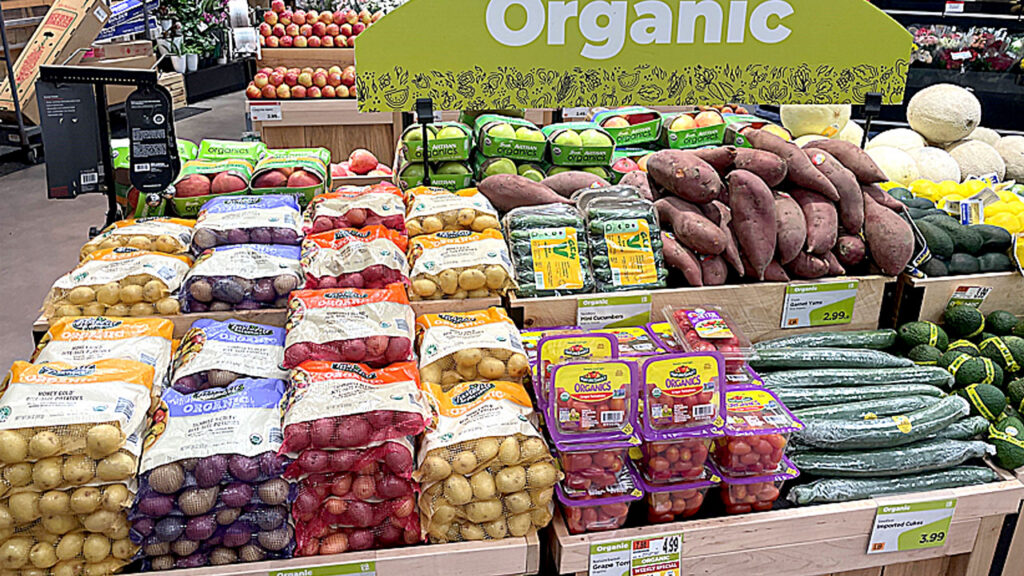
Cross-merchandising amplifies the bottom line, and she recommends creating displays that solve problems for shoppers. “Pair potatoes and onions with broth, beans, stew meat for hearty winter meals. Feature with sour cream, cheese, and toppings for ‘Potato Lover’s Month.’ Build a corned beef and cabbage destination set for St. Patrick’s Day, complete with red or gold potatoes and onions.”
INDUSTRY SUPPORT
Commodity boards, along with grower-packer-shipper-marketers, work with retailers on sales promotions, current and coming trends, supply availability, and category management.
The Idaho Potato Commission (IPC), Eagle, ID, works to ensure that Idaho potatoes remain a staple on menus and in households for their quality, versatility and health benefits. Vice president of retail and international, Ross Johnson, says they employ promotion directors to communicate the realities of each crop and the opportunities in each market.
“One of the great things about the potato category right now is the innovation in small and microwaveable potatoes.”
“We’ve seen many category managers struggle with understanding the proper way to go about growing the category, while keeping a focus on the products consumers love,” Johnson adds. “Now that Idaho is a one-stop shop for all varieties of potatoes, we are able to take Nielsen data and fully analyze the shifts in the marketplace. Recently, we’ve had big wins in helping retailers capitalize on shifts within the category by sharing our data.”
He adds that the “gourmet category does not cannibalize sales from the staple items. Gourmet potatoes are typically purchased in addition to the staple russet, red, or yellow they had already planned to purchase. We’ve seen some incredible growth in the category by making a strategic merchandising play.”
Mark Phillips, marketing specialist, Prince Edward Island Potato Board, Charlottetown, PEI, says the board represents 175 potato dealers who grow, on average, 2.5 billion pounds of potatoes.
“While it is still a small part of our overall production, creamers, in particular, have been a major growth market for us.”
He adds that they continue to adapt to trends. “For years, we relied on traditional varieties like Russet Burbank. While they are still grown, we have been researching and adapting to new varieties, like Mountain Gem, that better suit our growing season.”
The National Onion Association, Eaton, CO, in its role of representing growers in the industry, promotes programs to educate consumers about onions and ultimately increase demand. René Hardwick, director of public and industry relations, says onions have been a staple in people’s diets for generations, and consumption has inched up year over year.
“We attribute this to chefs finding creative ways to include onions in their meals, and, of course, a younger generation’s increasing interest in cooking nutritious and delicious foods.”
Regarding varieties, Hardwick notes that yellows lead. “Yellow onions are the dependable frontrunners — not simply because they show up across global cuisines, but because they are built for endurance. As a storage variety, they tolerate drying and cool storage far better than their higher-moisture cousins.”
She adds that white onions carry more moisture and a milder punch, which means they tend to store for a shorter time and are often chosen for fresh applications. “Red onions bring a pop of color and a bold flavor that stands out in salads and salsas, while white onions add a cleaner, sharper taste to fresh dishes. Red onions’ crimson hue makes them a favorite in restaurants where visual appeal and flavor impact matter.”
She says sweet onions will likely keep their spotlight. “They’ve carved out a loyal following, especially in regions where people crave their mild, mellow flavor. Vidalia, Walla Walla, and Texas 1015 have brand recognition.”
POTATOES AND ONIONS TOGETHER
Hardwick says potatoes and onions are a natural pair in the kitchen, but she cautions that moisture and gases can compromise freshness unless properly managed. “When the display is well ventilated and turned over regularly, showcasing onions and potatoes together can spark meal ideas and boost overall produce sales.”
“When the display is well ventilated and turned over regularly, showcasing onions and potatoes together can spark meal ideas and boost overall produce sales.”
– René Hardwick, National Onion Association, Eaton, CO
Retailers vary in whether these products are sold separately, paired, or simply near each other.
Zack Lowe, produce manager at the Western Avenue, Knoxville, TN, Food City store, reports that he sells potatoes and onions together. Russets are the most popular, but he indicates that reds and yellows in 5-pound bags sell well, too, and their soup medley features red and white potatoes.
The store’s “Short Cuts” feature assortments, and for shoppers’ questions about product uses, the store offers a “cheat sheet.” Lowe says it ties in with sale prices at holiday times.
The department recently advertised jumbo white, cipollinis, fall/winter yellow storage, radiant reds, shallots, Peri & Sons’ Sweetie Sweet, plus Vidalia. They also stock store-made diced fresh-cut onions.
TRENDS POINT TO SPECIALTIES
Earth Fresh, Burlington, Ontario, specializes conventional and organic potatoes. Andrew George, chief sales and procurement officer, says they are launching new variety innovations: Butter Russets, Butter Golds and Butter Reds. “The word ‘Butter’ evokes comfort, quality, and taste.”
Pointing to the packaging, the 5- and 10-pound light-blocking bags with mesh packs retain freshness and quality, and the high-graphic design elevates shelf appeal. Kwik Lok tags link to recipes. High-graphic bins allow quick setup and display.
“Clear, consistent messaging that educates consumers on potato types and best uses drives repeat purchases,” George says. “Since 2016, yellow-fleshed potato sales have more than doubled at retail, growing from 10% to 16% of total potato sales.”
Kelsey Weingart, brand manager, marketing, Peri & Sons Farms, Firebaugh, CA, says they offer a “comprehensive One n’ Done onion program that includes conventional and USDA (U.S. Department of Agriculture) organic red, white, and yellow onions, as well as sweet onions and gourmet varieties. Our specialty lines, like Sweetie Sweet and Sweetie Tearless, are designed to cater to different shopper preferences and seasonal opportunities.”
She adds that large, colorful displays featuring complementary products, such as peppers, garlic, avocados, or proteins, can inspire meal ideas and increase basket size.
DEMAND CONSISTENT
The 2024 consumption of potatoes at 117.2 pounds per person, although largely unchanged from last year’s 116.9 pounds, stands at the highest availability since 2018. This USDA data also notes that fresh table stock makes up 29% of the measure.
Per capita onion consumption in 2024 rose to 21.3 pounds, from the previous USDA report of 17.45 pounds.
13 of 16 article in Produce Business December 2025
Have a story to share?
Take a place at Produce Business