
Momentum Builds for Dates
January 19, 2026 | 3 min to read
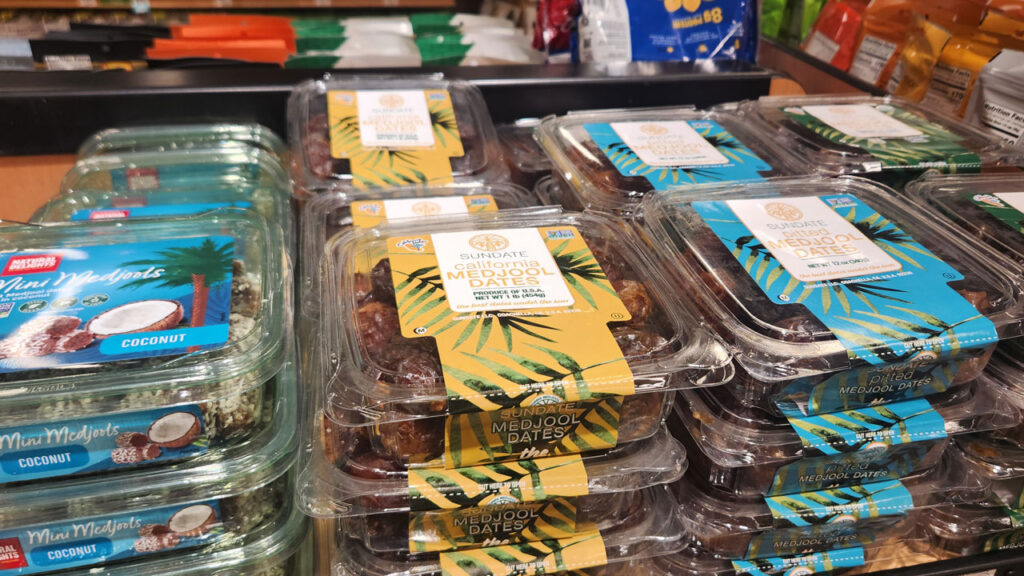
Demand, snacking and strategic merchandising are positioning dates as year-round opportunity.
Dates are getting more recognition than ever, with Cognitive Market Research anticipating a 3.7% annual growth rate in North America for the next several years.
Marc Goldman, produce director, Morton Williams Supermarket, Bronx, NY, says consumers are looking for more from produce departments, and, although traditional fruits and vegetables are important, more shoppers are seeking items that they feel are better for them, including dried fruit and nuts, particularly as an alternative to snacks they perceive as unhealthy.
Dates, as merchandised in the produce section, can get a boost from that interest.
Goldman, operating most of his produce departments in Manhattan, has an ethnically diverse customer base that includes a lot of shoppers who normally consume dates, but also supports customers who are interested in healthy eating, as well as new flavor sensations. He says the date merchandising at Morton Williams remains “pretty much the same all year.”
Robert Schueller, director of public relations, Melissa’s/World Variety Produce, Los Angeles, CA, says the company sees its greatest date sales in the Southeast, West Coast, Southwest and East Coast locations. Food retailers typically merchandise dates “next to other popular dried fruits, including prunes, figs, cranberries, raisins, among other fruits, like mango, banana, papaya, pineapple, and all nut products, shelled and unshelled,” he adds.
SEASONAL AND YEAR-ROUND
“There is high demand for nuts and dried fruit, like dates for cooking, especially from Thanksgiving to Hanukkah, Christmas and New Year’s,” says Schueller. “So, retailers do merchandise special seasonal merchandising bins with an assortment of nuts and dried fruits that are highly popular in the fourth quarter season.”
Melissa’s sees the majority of date orders falling in the October to December timeframe, as well as in February around Valentine’s Day, and in the April/May timeframe for Passover, Easter and Mother’s Day. At such times, enhancing the date presentation can address the additional demand and the opportunity that comes along with it.
David Baxter, vice president of sales and marketing, Natural Delights, Yuma, AZ, emphasizes that visibility is the most critical factor in both high- and low-demand markets. “In areas with strong demand, merchandising supports and reinforces existing purchasing behavior. In lower-demand markets, lack of visibility is often the main barrier, so placing dates in more prominent locations creates opportunities for discovery and trial.”
As noted, he says, date sales are strongest during the November and December holiday season, as well as through Ramadan, with both periods continuing to grow year over year.
“Islamic populations view dates as staple ingredients,” Scheuller points out, “but it’s a multi-cultural item that is attracted by Middle Eastern, Mediterranean and European consumers.”
SNACKING OPPORTUNITY
Amanda Sains-Harris, vice president of marketing, Joolies Dates, Coachella Valley, CA, points out that snacking is an important means to get a wider range of consumers interested in dates.
“We have our Date Pops, little date and walnut bites. The cinnamon bun and lemon pops just launched in Whole Foods nationwide. The distribution on these has increased.”
As the company expands into market supermarket chains in the United States, Sains-Harris characterizes Joolies’ growth as “our excitement, bringing more dates to the snacking category.”
She adds that demand is up significantly right now, so it’s time to bring excitement to the category.
PACKAGING & DISPLAYING
Snack-size packages can have advantages in establishing additional, conspicuous sales points, including at checkout. They can prompt consideration from consumers who might not be traditional date purchasers but who might try a new flavor sensation or something healthier to eat on the go.
“Using more disruptive merchandising, such as spot or satellite displays outside the traditional dried fruit and nut aisle, is particularly effective for capturing attention and introducing the category to new shoppers,” says Natural Delights’ Baxter. “Ideally, retailers should use a combination of approaches: maintaining consistent placement within the dried fruit set while also incorporating secondary displays to maximize visibility, trial, and overall category growth.”
9 of 14 article in Produce Business January 2026
Have a story to share?
Take a place at Produce Business