
Mexican Mangos Delight Consumers
February 24, 2026 | 8 min to read
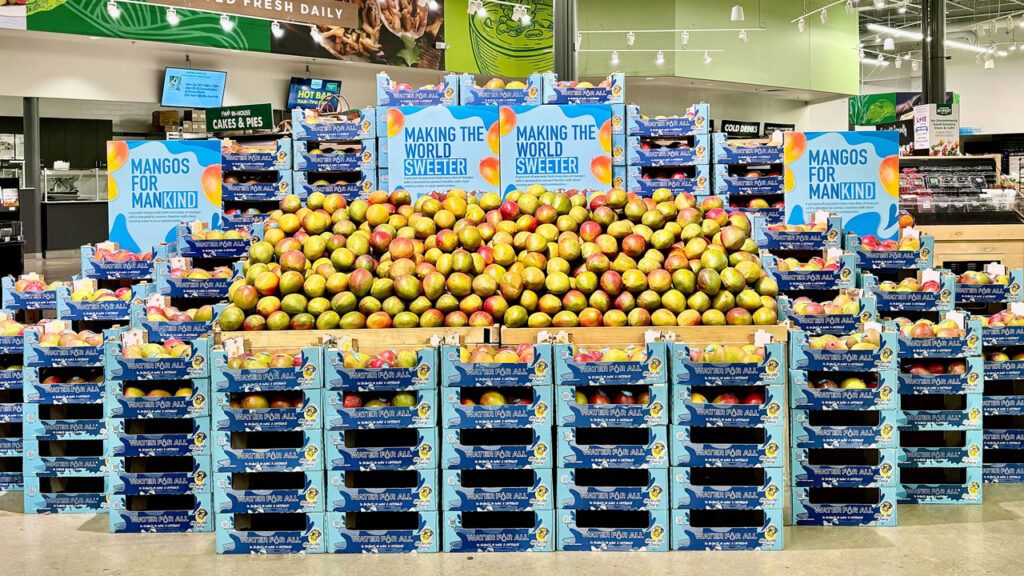
Demand drives variety, volume and growth in the United States market.
Producing multiple sizes, varieties, and presentations, Mexico accounts for the largest share of mangos available in U.S. stores, shipping more than 55 million cartons from key production regions in Jalisco, Nayarit, Colima, Oaxaca, Chiapas, Michoacán and Sinaloa.
Kent mangos (at 52%), followed by Tommy Atkins (29%), dominate, according to the National Mango Board (NMB), but recent seasons have seen Ataulfo — known in some sections of the industry as Honey — stake an increasing claim (at 16%) in the U.S. market.
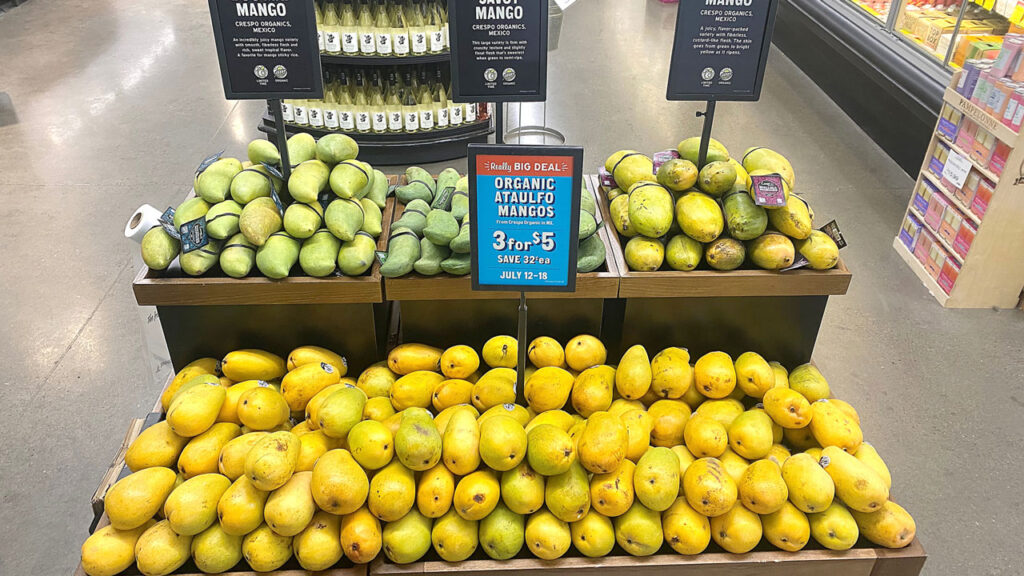
Nissa Pierson, who represents Mexican mango grower-exporter Crespo Organic from her base in Healdsburg, CA, and also writes the Under the Mango Tree industry blog, says there are good reasons for Ataulfo’s growing popularity, citing both the variety’s inherent qualities, and its abilities to adapt to a changing climate.
“Ataulfo has been around for a long time — it’s a super authentic Mexican mango that has all the flavor that customers are looking for, as well as the ability to combat climate change,” she explains. “It has been one of the most successful mangos out of Mexico, although we have a long way to go in making Ataulfo more mainstream.”
Although consumer demand for mangos is growing — for the moment, at least — supply from Mexico’s production regions is so abundant that it is overcoming any concerns about the impact of climate change.
“Mexico has a long mango season, from Nayarit in the south to Sinaloa in the north,” Pierson says. “Nayarit and Sinaloa overlap when they are at their peak, and volumes are so high that the market doesn’t feel the impact of climate change as profoundly — for the moment. Climate change is happening across all of Mexico’s mango regions, but when you’re moving that much fruit, the market stops paying attention. It’s the farmers who feel it, not the buyers.”
SEASONAL AVAILABILITY
Brooke Becker, senior vice president of sales at Oxnard, CA-headquartered Mission Produce, describes Mexico as a cornerstone of Mission’s global mango program, offering extended seasonal coverage and a broad mix of varieties that meet diverse market needs.
The company sources Mexican mangos through most of the year, following the harvest from the southern state of Chiapas in February to northern Sinaloa through September. This extended season, Becker says, allows Mission to provide a consistent lineup that includes Kent, Keitt, Tommy Atkins, Ataulfo and Palmer varieties.
“Each variety plays a distinct role in the category,” she explains, “from the rich flavor profile and strong shopper recognition of Honey (Ataulfo) mangos early in the season, to the reliable performance and versatility of round varieties like Tommy Atkins, Kent, and Keitt as the season progresses.”
According to Becker, the category has seen steady growth, with mangos now ranking as the ninth most-sold fruit in U.S. grocery stores. “Mexican mangos have played a significant role in that evolution, thanks to their long season, consistent quality, and alignment with key cultural and seasonal consumption moments.”
At Rio Rico, AZ-based importer-marketer Ciruli Brothers, the company’s director of marketing and strategic planning, Sandra Aguilar, says domestic sales have evolved from mangos being considered an exotic fruit to becoming a mainstream staple that consumers purchase repeatedly.
According to Aguilar, per capita consumption of mangos in the U.S. has tripled over the past 20 years, although in volume terms, the figure hovers closer to 4 pounds per capita per year. And, she says, there is plenty of opportunity to keep growing demand and driving consumption of this fruit.
Ciruli’s best-selling mango is premium Ataulfo, which it markets under the Champagne brand, followed by a split between Kent, Ataulfo, Tommy Atkins, Keitt and Haden. “Ataulfos are a superb variety, and we handle them with care to ensure retailers and consumers receive the best quality time and again.”
“During the fourth quarter of 2025, there was significant rainfall in the growing regions, so we expect a plentiful volume to kick off our season in February,” she adds. “With production across several states, we can offer multiple promotional opportunities for customers, especially with Champagne mangos, in 2026.”
Making up the largest share of the available mango supply in the U.S., Mexican mangos allow retailers to carry different SKUs at various price points for their customers, thanks to a long March-September season, and the availability of multiple varieties and sizes.
“Mexico offers superior-quality mangos and a sweeter experience for consumers,” Aguilar says. “Because of Mexico’s close proximity to the U.S., mangos can be picked riper and travel a shorter distance from tree to table, resulting in better flavor and more repeat purchases.”
Jonathan Valladares, category manager at Dora, FL-located JC Tropicals, notes Mexico supplies roughly 60-65% of total U.S. mango imports. “Today, the U.S. imports over $1 billion worth of mangos annually, with Mexico accounting for the majority of that volume and value.”
A key factor in the growth has been an extended seasonality across multiple growing regions in Mexico, providing nearly nine months of supply. He also cites changing demographics and tastes, with increased demand for tropical flavors.
Although JC carries all standard mango varieties, Valladares says a newer variety, Mallika, is gaining attention. “It’s a premium, fiberless mango with excellent sweetness and aroma, and it addresses some of the eating-quality concerns of more traditional varieties,” he explains. “While volumes are still limited, it’s starting to appear as a specialty option.”
PRICING PLAYS KEY ROLE
Another major player in the market is Coral Gables, FL-based Continental Fresh, a company that imports varieties like Tommy, Kent, Keitt, and Ataulfo between February and September every year, starting from Chiapas in the far south and ending with Sinaloa in the northwest.
According to Continental’s vice president of sales and development, Robert Cabili, pricing plays a key role in driving mango sales, as competitive pricing and promotions help spike demand. “When mangos are featured at prices near $1 each, sales volumes jump markedly.”
“When mangos are featured at prices near $1 each, sales volumes jump markedly. However, mangos are becoming a staple item, so demand is constant.”
— Robert Cabili, Continental Fresh, Coral Gables, FL
“However, mangos are becoming a staple item, so demand is constant,” he adds. “Retailers now plan big mango promotions year-round and through key holidays.”
“Mexican mangos benefit from strong familiarity among shoppers and consistent eating quality, which supports repeat purchases across retail and foodservice channels.”
— Brooke Becker, Mission Produce, Oxnard, CA
Rather than focusing on price alone, Becker says Mission views performance as being closely tied to quality, ripeness and promotion timing. “Mexican mangos benefit from strong familiarity among shoppers and consistent eating quality, which supports repeat purchases across retail and foodservice channels.”
MERCHANDISING FRONT AND CENTER
According to Becker, ripeness-led merchandising continues to be one of the most effective ways to grow mango sales, with an estimated 67% of mango shoppers eating their fruit within two days of purchase. This factor, she says, makes ripe mangos — particularly stages 3 and 4 — ideal for front-of-store displays and secondary placements.
“Ripeness is also the top factor shoppers consider when selecting a quality mango, and peak ripeness delivers peak flavor, which is the No. 1 purchase driver for the category,” Becker says. Mission supports ripe merchandising with customer-specific ripe mango programs, using state-of-the-art ripening technology.
Another important area for Mission in driving the mango category forward is packaging innovation. To meet demand for value-pack opportunities, the company has developed its Honey Mango Clamshell and Retail Ready Mango Bag, which Becker says are lifting volume and dollar sales without cannibalizing bulk purchases.
At Ciruli, Aguilar identifies a direct correlation between display size and sales. For example, she says a 4-by-4-foot display will attract less attention than a larger 8- or 10-foot display in the produce section. “We have always advocated for increased shelf space to drive sales.
“Although there are various promotional periods during the season, May through August are excellent months for promotions because multiple varieties are available at the same time, and volume is plentiful.”
Cabili at Continental suggests retailers can maximize mango sales by creating large displays and placing mangos in store-front or endcaps in produce aisles. He says placement with complementary items, like avocados, pineapples, citrus and other tropical fruits has also shown to be impactful. Cabili also recommends adding clear variety info and ripening tips, as well as cutting instructions and recipe cards, to educate shoppers on selecting and using mangos.
Highlighting sustainability projects, like Continental’s own Fresh Water For All mango program — an initiative which supports clean water and sanitation in Latin American communities — is another effective way of both inspiring consumers and driving mango sales, Cabili adds.
PERFECT COMBINATIONS
As a highly versatile product, mangos pair naturally with a wide range of fresh and center-store items, according to Becker, who cites popular cross-merchandising opportunities, such as avocados, limes, onions, peppers, and cilantro for fresh salsas, as well as berries and tropical fruits for smoothies and fruit bowls.
Seasonal events, like Cinco de Mayo, which Mission sees as the biggest mango consumption event of the year, open the door for strategic cross-promotions to help reinforce mangos as both a flavorful and functional ingredient, encouraging shoppers to buy with a recipe or occasion in mind, Becker adds.
However, while promotions are undoubtedly effective, Valladares at JC believes the real game changer for Mexican mangos has been the existence of a long window. It has allowed mangos to move from a seasonal item to a staple found in homes across the country.
“Mexican mangos sell extremely well in the U.S.,” Valladares adds. “One major advantage is proximity — shorter transit times mean lower freight costs and fresher fruit. Because the fruit doesn’t have to travel as far, it can be harvested closer to optimal ripeness, which improves eating quality. Pricing always matters, but freshness and consistency give Mexican mangos a strong edge.”
11 of 13 article in Produce Business February 2026
Have a story to share?
Take a place at Produce Business