
A Different Kind of Earth Month
May 11, 2026 | 4 min to read
Every April, the sustainability emails arrive.
Food miles. Carbon footprints. Farm names on menus. And somewhere in your inbox, a familiar subject line appears: Are you doing something like this?
It’s a fair question. Two-thirds of diners say table-service restaurants should offer locally sourced food, and from K-12 cafeterias to hospital systems to hotel groups, RFPs are saying the same thing. Earth Month amplifies it. RFPs codify it. The recent launch of a local sourcing program by an $81 billion broadline distributor, tagging 10,000 locally sourced products in an ordering app, confirms what everyone already knew: local is no longer a niche claim. It’s table stakes.
But to produce distributors, it can feel less like Earth Day and more like Groundhog Day. Same requests, same challenges, same mixed signals. Definitions shift from one customer to the next, and programs built from scratch each time lose momentum before they fully take hold.
Much of the industry is still operating in what could be called local sourcing 1.0, defining “local” almost entirely by proximity: a radius on a map, a catalog filter, or a line on a sustainability report.
That approach raised the floor by making regional food visible, but it does not guarantee the outcomes buyers actually care about. A farm 50 miles away is not automatically building soil health, paying fair wages, or circulating dollars locally. Meanwhile, a farm one state over that has invested in regenerative practices or water conservation does not fit the bill. Geography became a proxy for sustainability values it cannot reliably deliver.
At Midwest Foods, we’ve had a local sourcing program for nearly 20 years, long enough to have worked through the operational complexity that stops many programs before they find their footing. We continue exploring ways to sustain farms, preserve regional economies, and keep the place-based character of food alive. Experience has taught us the difference between sourcing that checks a box and sourcing that builds something, and how to make the operational and financial case for the latter.
Picture the hotel procurement director with two lines on the same contract: increase local sourcing percentage; reduce vendor complexity and food costs. Not just a contradiction — a retention risk. He can source the product, check the box, and file the report. But the costs erode the program before it finds its footing, and every April he’s back in the same conversation.
A restaurant chef who built her reputation on hyperlocal sourcing in Chicago opened a second location in Los Angeles, assuming California would be straightforward. Farms were plentiful and the stories compelling, but reliable delivery was impossible. Growers weren’t interested in becoming logistics companies; they wanted to focus on growing. The operational lift fell short.
What both of them needed was a produce distributor fluent in the chef’s vocabulary of sourcing philosophy and seasonality, and equally fluent in the grower’s vocabulary of volume, timing, and what’s coming out of the ground that week — a single source partner with the infrastructure to make local sourcing work within the constraints they were already operating under.
Produce is the hardest category to keep local year-round: seasonal, perishable, regionally variable. This is where produce distributors thrive, between regions, between farms of all scales, between a grower’s capabilities and a chef’s vision.
Most wholesalers already source locally. Proximity is practical. But when sourcing local with impact in mind, the results compound: the small grower two counties over gains market access, the regional farm investing in soil health gains stable demand, and beginning farmers find a pathway into commercial channels they couldn’t reach on their own.
That is the shift from local sourcing 1.0 to what a more mature version of the concept might look like. Instead of asking only whether a farm is nearby, a 2.0 question asks: What does this sourcing actually accomplish? How was the food grown? Where do the dollars go when the invoice gets paid? And perhaps most importantly, is the sourcing model designed to last longer than an Earth Month promotion?
Answering those questions adds nuance to the rigid geographic definition that has dominated the conversation. Every farm exists in someone’s local community. The diversity of what different regions produce, Midwestern winter squash, Florida citrus, California strawberries, is part of what makes our global industry vibrant. Strong local food economies rely on that interdependence.
Once the industry agrees on what local sourcing is trying to accomplish, the fundamental question becomes: who pays for it?
Local sourcing 1.0 has tried to address this independently across the supply chain. A 2.0 model would solve it more systemically, distributors reducing vendor complexity and working with growers on pricing, while buyers are resourced to invest in what it actually takes to fulfill commitments. The two-thirds of diners asking for local food have to participate, too.
The industry doesn’t need more Earth Month gestures. At a moment of rapid consolidation, centralized purchasing, optimized distribution networks, farms disappearing, differentiation matters. This is an opportunity to move from reacting to a 1.0 market signal to leading the 2.0 conversation, and to build sourcing systems that convert an annual headache into a lasting competitive advantage.

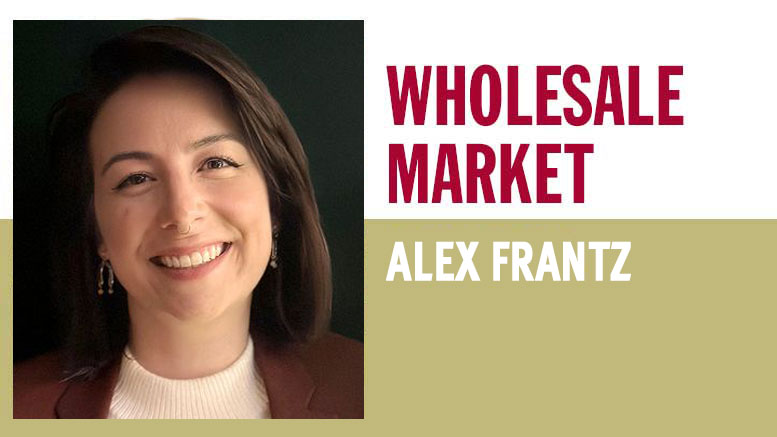
Alex Frantz leads Midwest Foods’ local sourcing and sustainability programs, connecting farms with chefs and institutions to build a values-driven food system. She oversees supply chain development, waste reduction, and responsible sourcing initiatives, and serves in leadership roles with Green City Market and multiple regional and national sustainability councils.
1 of 20 article in Produce Business April 2026
Have a story to share?
Take a place at Produce Business