
Fresh Produce Scores Big in Beverages
February 9, 2026 | 9 min to read
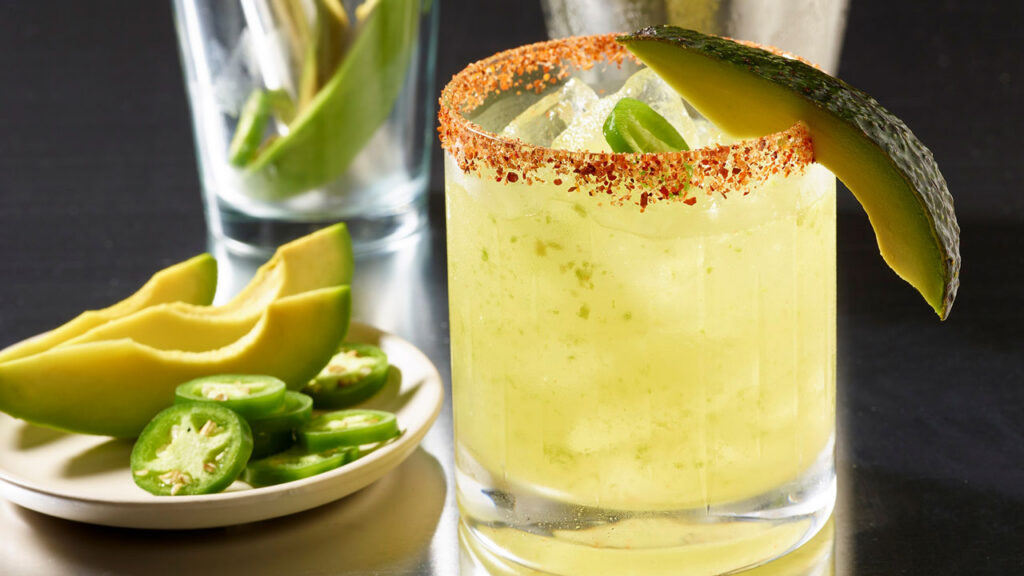
Fruits and vegetables are transforming foodservice drinks.
When fans arrived at the 2025 U.S. Open, they weren’t just there for the serves and volleys, they were also sipping on a tradition. For the past 16 years, Baldor Specialty Foods in Bronx, NY, has supplied the honeydew melon balls that garnish the tournament’s signature Honey Deuce cocktail.
This year, according to a company post on Facebook, the team hand-scooped 2.3 million melon balls from 7,700 cases of King O’The West honeydews supplied by Turlock Fruit, in Turlock, CA, up from 1.9 million the previous year. The now iconic drink is made with tart lemonade, vodka, and raspberry liqueur poured over ice with the signature melon garnish resembling tennis balls.
This honeydew example illustrates a shift in foodservice: fresh produce is moving from the plate to the glass, driving innovation in cocktails, mocktails, smoothies and wellness beverages. Examples span from tropical mango cubes in margaritas to dehydrated citrus wheels in spritzes. Fruits and vegetables are becoming essential tools for operators looking to differentiate menus and increase beverage margins.
“We have a wide variety of fruits and veggies — from your very mainstream strawberry, bananas, and blueberries, to more tropical-like mango, passion fruit and dragon fruit,” says Kristi Bullock, senior director of menu innovation for Tropical Smoothie Café, a 1,500-plus unit fast-casual restaurant chain headquartered in Atlanta, GA.
“We also love 100% fruit purees, which are great in smoothies and convenient for operations. If we feature a fruit or vegetable in merchandising or advertising, it must be a 100% fruit or vegetable ingredient.”
— Kristi Bullock, Tropical Smoothie Café, Atlanta, GA
“In the summer, during peak watermelon season, we bring in whole fresh watermelons, and our café members do a great job prepping these for smoothie use. Fresh mint also comes in and is prepped to make our beloved evergreen Watermelon Mojito Smoothie.”
The good news for produce suppliers is that the bottom-line impact of fresh produce in beverages can add up to more than a drop in the bucket.
“We estimate it’s about 6% to 8% of our typical foodservice order,” says Robert Schueller, director of public relations for Melissa’s/World Variety Produce, based in Vernon, CA. “Our core customers are white tablecloth restaurants that all typically offer large beverage menus along with, or separate from, the meal.”
TRENDS POWERING BEVERAGES
Customization, global flavors, and functional ingredients are three big trends that mark where fresh produce in foodservice beverages is headed, says Kevin Hamilton, vice president of global marketing and communications for the U.S. Highbush Blueberry Council (USHBC), in Folsom, CA.
A recent study by the USHBC found that only 35% of operators consider blueberries for beverages. Another USHBC study found 54% of patrons surveyed say they would like to see more cocktails featuring blueberries on the menu.
CUSTOMIZATION RULES THE MENU
Operators are tapping beverages as a key platform for personalization, using fresh produce to let consumers customize drinks to their taste, health and mood.
“We’re seeing patrons ask for everything from a spinach-and-avocado green smoothie to a sparkling mocktail with muddled berries and fresh herbs,” says Tropical Smoothie’s Bullock. “Guests want control, and operators who offer it see repeat business.”
Customization also drives beverage innovation with texture. Trend-forward drinks incorporate diced mango, popping boba, jelly cubes, or microgreens to create multisensory experiences, according to the Midyear Trends report released July 1, 2025, by Datassential, a global food and beverage intelligence company based in Chicago, IL.
For instance, Mango Pineapple Lemonade Poppers at Del Taco, a 600-location QRS chain based in Lake Forest, CA, combines diced fruit with popping pearls for a playful twist on a classic refresher. The Summer-Berry Refresher at Starbucks, a Seattle, WA-headquartered QSR chain with over 40,000 units globally, layer raspberry-flavored pearls with fresh diced fruit, offering a visually striking and interactive beverage experience.
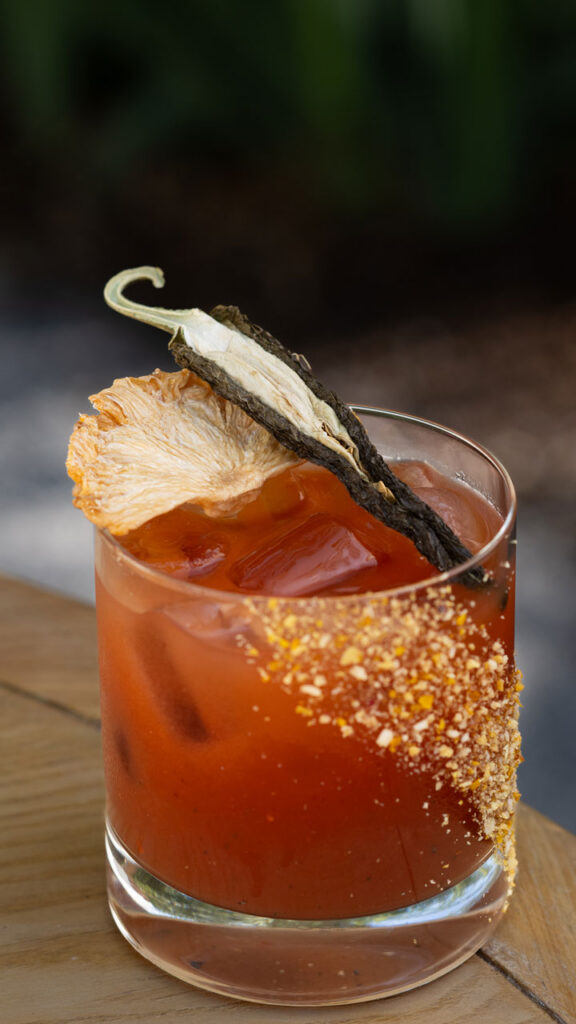
Even traditional garnishes are evolving. “It’s no longer just a lime wedge,” says Tony Pereyra, mixologist representing the National Mango Board (NMB). “Operators are using edible flowers, finger limes, and microgreens to give drinks both flavor and flair. Consumers notice, and it elevates the perception of the beverage menu.”
GLOBAL FLAVOR FUSION
As consumers grow more adventurous, foodservice beverages are increasingly blending international flavors.
“Mixologists are experimenting with global combinations,” says the USHBC’s Hamilton. “You might see a mango-mint iced tea with Thai basil, or a blueberry-tamarind agua fresca. Patrons crave these layered, cross-cultural flavor experiences.”
A good example is the drink offerings at Zapien’s Salsa Grill & Taqueria in Pico Rivera, CA, which has been named the “Best Mexican Restaurant” by the Los Angeles Hotlist several times.
“During Hatch season, I really enjoy using Hatch peppers to spice up drinks,” says Marco Zapien, executive chef and owner. “We have done Watermelon/Hatch Pepper Margarita, as well as a Pink Pineapple/Mango Colada, Blood Orange and Passionfruit Margarita, Mango Michelada, Mixed Berry and Hatch Pepper Sangria, and Cucumber Lime Margarita, to name a few.”
Seasonality and regional sourcing add another layer of authenticity. Watermelon, for instance, is featured in hot-weather beverages nationwide. Hotels and restaurants serve frozen Watermelon Palomas, watermelon-infused Tyku Sake spritzes, and watermelon chamoy cocktails, according to Megan McKenna, senior director of foodservice for the Winter Springs, FL-based National Watermelon Promotion Board (NWPB).
“Distribution data shows that 37% of menu applications for watermelon are beverages. Drinks are often the first point of entry for consumers, and fresh watermelon adds natural sweetness, color and hydration.”
Fresh mango is also versatile. Operators at Fat Rosie’s Mexican Cantina, based in Frankfort, IL, with six units, and Texas Roadhouse, a Louisville, KY, casual chain with over 800 restaurants, use diced mango in Mangonadas, mojitos, and agua frescas, pairing it with spices, herbs, and citrus to offer an array of flavor profiles, says the NMB’s Pereyra.
“Fresh mango lets operators innovate without adding artificial flavors. It’s a way to create an Instagram-worthy beverage that still supports healthy menus.”
FUNCTIONAL INGREDIENTS AND WELLNESS-FORWARD BEVERAGE
Drinks are no longer just about refreshment, they’re a platform for wellness. Consumers increasingly associate fresh produce with brain health, gut support, hydration and energy. Functional ingredients, such as avocado, ginger, turmeric and berries, are now regulars on beverage menus.
“We see Gen Z and Millennial guests especially drawn to drinks with functional benefits,” says Terry Splane, vice president of marketing for the California Avocado Commission, in Irvine, CA. “Avocado adds creaminess and heart-healthy monounsaturated fats, while helping enhance absorption of fat-soluble vitamins. It’s a nutrient booster in every sense.”
It’s been estimated that as many as 65-70% of legal-drinking-age Gen Zers had not consumed alcohol in a recent six-month period, according to Deena Ensworth, senior content manager for Markon Cooperative, in Salinas, CA. “This sober-curious trend, as well as a strong interest in wellness, has increased the popularity of mocktails tremendously.”
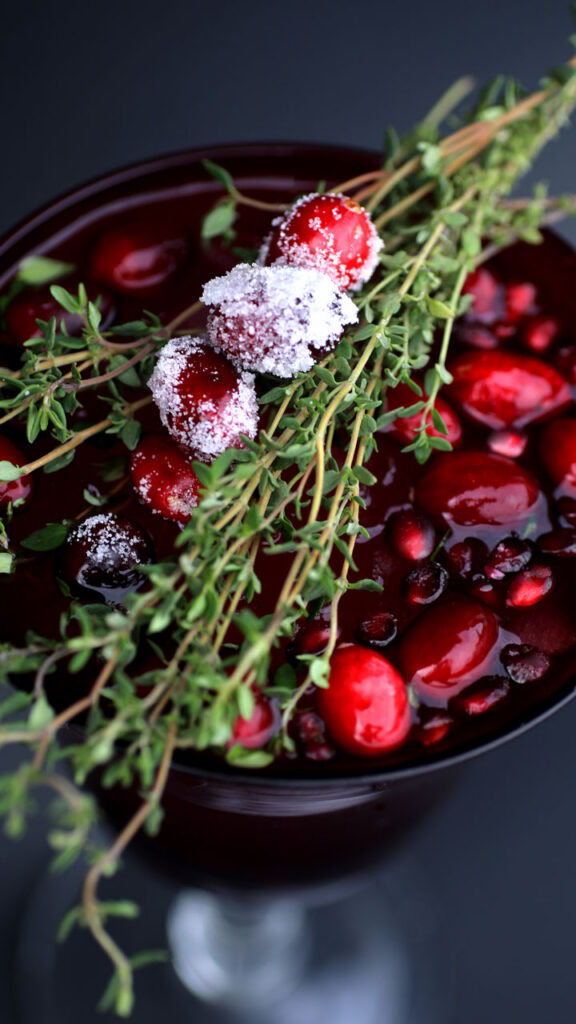
Operators can now offer zero-proof bars and mocktails that rival traditional cocktails, adds Stacey Kinkaid, vice president of product innovation at US Foods, headquartered in Rosemont, IL. “Adding fresh fruits, vegetables, and herbs makes these beverages more than just alternatives; they’re the star of the menu.”
“Operators who embrace this trend can boost margins, elevate the guest experience, and stay ahead in a competitive landscape.”
— Stacey Kinkaid, US Foods, Rosemont, IL
Even small touches can have significant impacts.
“Dehydrated blood orange or lime wheels in sparkling water, or skewered fruit ‘olives’ in martinis and sangrias, add flavor and appeal with minimal waste,” says Cole Firman, in business development at Coosemans LA Shipping, in Vernon, CA. “Coffee and tea programs are also incorporating dehydrated citrus for aromatic pops, enhancing everything from cold brews to iced teas.”
The company carries the new Essential Mixologist line of dried fruits and vegetables, including purple and white dragon fruit, blood oranges, jalapeños, starfruit and sugar cane.
SOURCING STRATEGIES
For operators, sourcing fresh produce for beverages is a critical consideration. While it can often be included in the regular foodservice order, specialized formats can save labor, reduce waste and ensure consistency.
“For smoothies or blended drinks, frozen fruits, like blueberries or mango purées, are ideal,” says the USHBC’s Hamilton. “They’re harvested at peak freshness, store efficiently, and offer consistent flavor.”
Fresh-cut packs and pre-portioned items are also popular.
“Hotels and catering groups often use pre-cut pineapple, mango, or citrus for cocktails and mocktails,” says the NWPB’s McKenna. “It’s labor-saving and ensures every drink looks as good as it tastes.”
Operators should also consider par levels and cross-utilization. The NMB’s Pereyra emphasizes, “Use the same fruits in culinary applications when possible. Mango in a beverage can also be used in desserts, salads, or as a garnish. It maximizes value and minimizes waste.”
Sourcing exotic or seasonal fruits requires strong vendor relationships.
“Consistency is key,” says Tropical Smoothie’s Bullock. “We rely on distributors to provide a reliable supply of tropical fruits, dragon fruit, and specialty berries. We also need manageable shelf life and formats that fit operational needs, whether it’s whole, pre-cut, or frozen.”
Beyond this, commodity organizations like the USHBC are working to offer more guidance beyond recipes, showing operators what the best format is for their menus, and following through with guidance throughout the season, says Hamilton. In other words, “taking more of a partnership approach.”
FUTURE OF FRESH PRODUCE IN BEVERAGES
The trajectory is clear: Fresh produce will continue to be a cornerstone of beverage innovation.
“It’s not a flash in the pan, it’s a trend that will only get bigger,” says Jim Rieck, director of sales for the Glendale, WI-headquartered The Maglio Companies, which sells its line of Healthy Roots cold-pressed to foodservice operators.
“When customers go out, and they’re paying $10 to $22 for a cocktail, they want more than just liquid in a glass. And, if that customer is an influencer and posts your drink, that’s exponential advertising for free.”
Plus, produce isn’t just a garnish anymore, it’s a key flavor driver, says US Foods’ Kinkaid. “Operators who embrace this trend can boost margins, elevate the guest experience, and stay ahead in a competitive landscape.”
NMB’s Pereyra agrees. “Fresh fruits like mango, yuzu, or berries give operators a canvas for innovation. The key is consistency, quality, and creativity. Those who do it well will see guests coming back for more.”
As consumer preferences evolve toward wellness, customization and adventurous flavors, produce-based beverages offer a high-impact opportunity for operators. From honeydew melon balls at the U.S. Open to mango cubes in a summer mocktail, the trend is clear: the freshest ingredients make the strongest impression on the menu, on the palate, and on the bottom line.
3 of 17 article in Produce Business January 2026
Have a story to share?
Take a place at Produce Business