
Sustainability as Leadership in Produce
January 27, 2026 | 4 min to read
I’m calling it now: Food waste reduction, responsible sourcing, and data-driven transparency will define the next era of wholesale produce.
If your immediate reaction is skeptical, I get it. Sustainability has been promised, diluted, rebranded and sidelined. In a tight-margin industry where price often dictates decisions, sustainability is frequently treated as “nice to have.” Clients want it, but demand fluctuates. One year, sustainability is a strategic priority; the next year, cost reduction trumps everything else.
But expectations are rising. Clients are asking harder questions about environmental and social performance. New regulations are shaping market access in areas like packaging, EPR, human rights and emissions reporting. Climate change is creating real supply-chain volatility.
Today’s pressures are reinforcing the business case for sustainability. That urgency shaped the 2025 IFPA Global Show announcement of a Global Sustainability Framework, a unified blueprint for practical, scalable action across five sustainability pillars: Food Loss/Waste, Sustainable Packaging, Regenerative Agriculture, Social Responsibility and Climate Change.
At Midwest Foods, sustainability is a strategic priority because it reflects who we are and how we operate. As a women-, family-, and locally owned company, our business was built on the belief that relationships, not transactions, come first. Innovative solutions, chef-driven products, and operational excellence are how we honor those relationships. Clients increasingly want to know not just what we deliver, but how we deliver it.
Our sustainability strategy blends what we can operationalize efficiently and profitably with what will drive the greatest long-term impact. Roughly one-third of food grown for human consumption in the United States never reaches a plate. Once in landfill, decomposing food produces methane, a greenhouse gas more potent than carbon dioxide.
Wholesalers sit at a critical point in the supply chain where loss prevention and landfill diversion can be leveraged. Following the EPA’s Wasted Food Scale, we focus first on preventing waste through inventory precision, handling improvements, forecasting and operational discipline.
When surplus does occur, we prioritize feeding people. Partners like the Chicago Food Sovereignty Coalition ensure donations reach community members across Chicago. In 2024, we diverted 71% of the waste generated at our warehouses through recycling, composting, donations and anaerobic digestion, keeping 3,569 tons of waste out of the landfill.
Sustainability is becoming part of the baseline for doing business.
Our Kenosha food-waste system illustrates how sustainability and efficiency reinforce each other. Creating a dedicated waste stream for scraps from pre-cut production reduced cost, improved worker safety, and diverted unavoidable waste from landfill. Our Edible Cuts pre-cut program helps chef partners reduce prep waste, increase yield, and manage time and labor more efficiently, especially in operations without composting infrastructure.
Sustainable packaging innovation has been another opportunity for meaningful client impact. We transitioned the majority of break items to biodegradable mesh that decomposes in six months under landfill conditions. Edible Cuts grab-and-go packaging trials expanded across sandwiches, salads, wraps and parfaits, balancing product preservation with plastic reduction and cost considerations.
This year, Midwest Foods became only the second distributor in the nation to join the U.S. Food Waste Pact — aligning our internal systems with client goals and contributing to sector-wide solutions. Through Pact working groups, we collaborate on data standardization and pilot opportunities that strengthen our own systems and support client objectives.
Responsible sourcing is fundamental. We focus on supply-chain development and product availability, building grower relationships, curating seasonal variety, and simplifying procurement, so busy chefs can engage with local, organic, and regenerative options without added complexity.
Local purchasing strengthens regional food economies, shortens transportation distances, and supports supply-chain resilience. Organic and regenerative practices support healthier soils, protect waterways, and reduce synthetic inputs, improving long-term ecosystem health.
For growers, these markets can provide stable demand and better margins. For clients in education, healthcare, and hospitality, they offer differentiated value where quality, transparency, and values-driven purchasing increasingly influence decisions.
Sustainability is becoming part of the baseline for doing business. Requirements now appear in RFPs as routinely as food safety standards. Nearly every major client publishes an annual sustainability report and expects suppliers to provide credible data on Scope 3 emissions, waste reduction, packaging and responsible sourcing. We are seeing a clear uptick in requests for third-party social responsibility assessments, like EcoVadis and Sedex, an indicator that clients want verifiable insights into labor practices, human rights protections, and ethical sourcing, not just environmental metrics.
Sustainability in produce now spans the full spectrum of environmental and social performance, and the market is increasingly demanding proof, not promises.
Sustainability supports supply-chain resilience, reduces long-term risk, and prepares our industry for the regulatory and environmental realities already reshaping global markets.

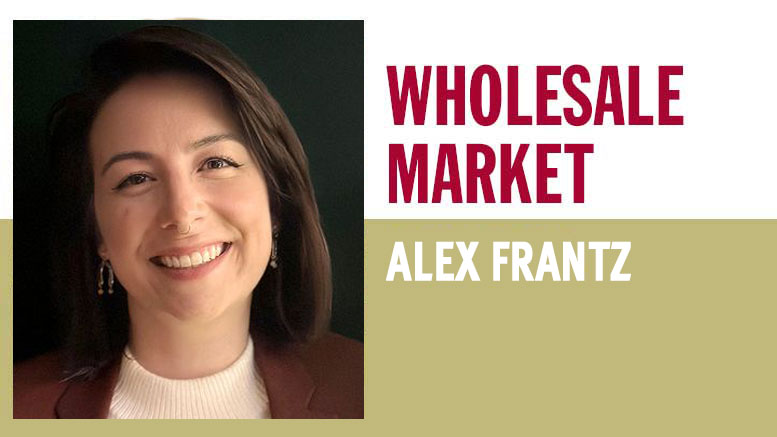
Alex Frantz leads Midwest Foods’ local sourcing and sustainability programs, connecting farms with chefs and institutions to build a values-driven food system. She oversees supply chain development, waste reduction, and responsible sourcing initiatives, and serves in leadership roles with Green City Market and multiple regional and national sustainability councils.
6 of 17 article in Produce Business January 2026
Have a story to share?
Take a place at Produce Business