
Exports, Imports Take Center Stage at Global Trade Symposium Afternoon Sessions
December 2, 2025 | 5 min to read

At the Dec. 2 afternoon sessions of the New York Produce Show’s Global Trade Symposium, participants got a view of outreach from two perspectives: import and export.
Marketing, merchandising and promoting produce from the United States and Canada internationally is a complex undertaking that has to be approached with resources, commitment, the building and maintenance of relationships, and the identification of where commodities are wanted most and can be supplied profitably.
In a panel discussion, moderated by Manuel Michel of the Colombia Avocado Board and including Kim Breshears of Potatoes USA, Anne Warden of the American Pecan Council, Jennifer Olmstead of California Walnuts, Danielle Coco of the Southern United States Trade Association, CarrieAnn Arias of USA Pears, Monica Moreno Arellano, Grupo PM, and Kevin Hamilton of the North American Blueberry Commission, commitment became a critical consideration.
Hamilton says two goals are foremost: growing demand and the imperative to “connect buyers and sellers.”
Along those lines, Morena Arellano says, communication is important, but it goes two ways. A key to success is developing a deep familiarity with an export market, and not just in terms of numbers but a real understanding of both consumers and business partners. “Listen to your targets,” she advises.
With understanding comes the ability to better target investment. Pecans, says Warden, have primarily been grown and consumed in their native North American marketplace, and, because of that, there are broad export opportunities. However, not every market that might embrace a new commodity is going to produce an effective return on investment. So, it’s important to carefully consider where profit is attainable for growers and packers.
“We’ve got to be smart with how we spend our dollars,” she says.
Breshears makes the point that international competition is competitive and requires constant attention as to where and how to approach exporting. China and India are producing more potatoes for export. “They’re messing things up for us,” she says.
As such, Potatoes USA, while seeing stability in existing export markets, isn’t being complacent, but looking for markets that are growing and have the right characteristics to make development in them cost effective, and how to make a case for the products it is promoting.
Arias emphasized the importance of building and maintaining relationships. “That in itself is very necessary,” she says.
She says it is important to spend some money maintaining relations in export markets even when the U.S. players can’t service them, so that moving product to them when available isn’t a matter of starting from scratch.
California walnuts are up against the abundant production in China, and that did cause some market share loss when a smaller crop occurred, says Olmstead. Still, California Walnuts keeps pushing, working with those sources for export support available, calling USDA Foreign Agricultural Service support “crucial” but also taking a position in international markets that emphasizes the quality the Golden State can provide.
In the last session, The Marketing of Imports, Vic Savanello of Katzman Distribution hosted a panel that included Michel, John Papp of Jac Vandenberg, Kim Chackal of Equifruit, and Rodrigo Torres of Altar Produce.
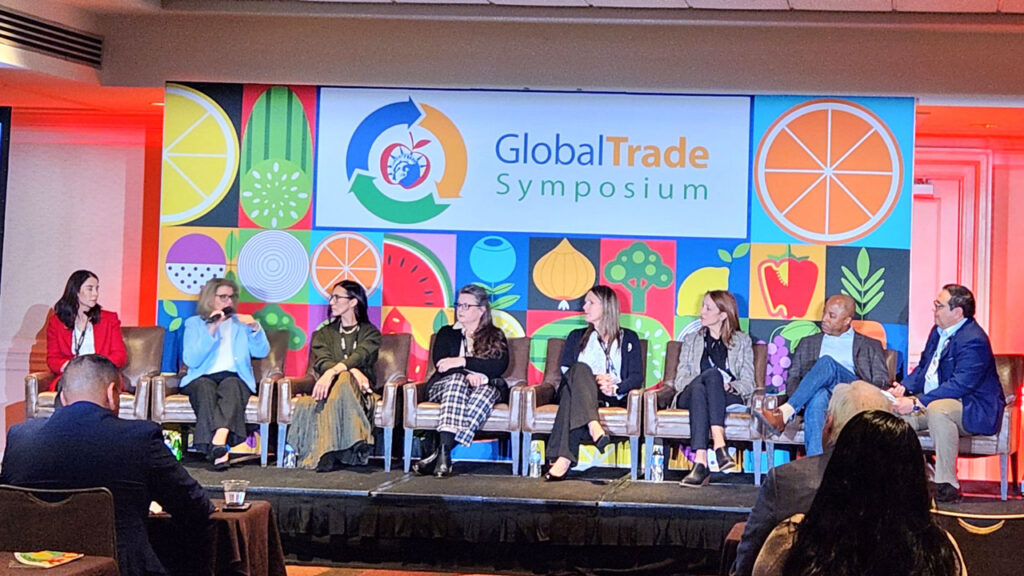
Savanello noted that a lot goes into gaining traction in the U.S. marketplace, from developing effective packaging, marketing and merchandising support that spotlights authenticity, and the advantages of the products from beyond regions beyond the U.S. border. Yet, storytelling is a way to connect a product and U.S. consumers.
For Chackal, getting Equifruit’s story across means grabbing the attention of consumers in a way that breaks through their usual habits, what she refers to as “disruptive marketing.” In doing so, Equifruit is presenting consumers with the option of embracing, or at a minimum buy into, the mission of a woman-owned fair-trade B-corp.
Torres says that Altar approaches the marketplace a little differently than other companies on the panel, which have been working to make inroads against strong, established competition.
“We are the largest grower and marketer of asparagus worldwide,” he says, but adds that the company must remain dynamic, avoid complacency, and make sure its message is getting heard where opportunity presents itself.
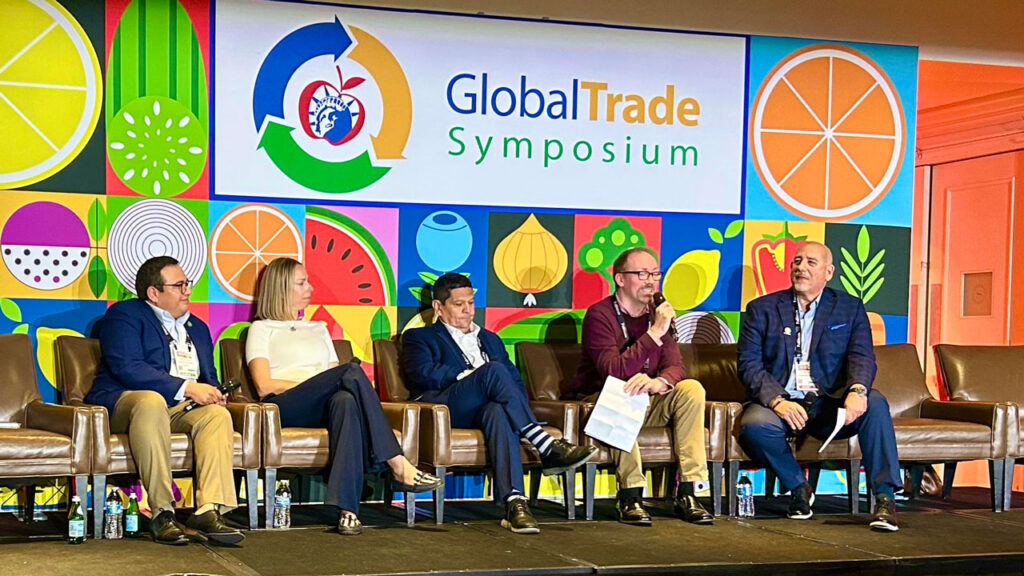
On the other side of the business, Altar recently launched a green onion operation that is trying to elbow its way into an established marketplace. “We need to understand that there are two important things: identity and authenticity,” he says.
The company emphasizes its status as a fourth-generation company with a history that plays out in what it is doing on the ground today to keep the business vital.
In a similar vein, the Colombia Avocado Board has developed a marketing campaign that’s focused on how the fruit it promotes is produced, taking in the country, the landscape, and the growers, as well as the passion and the care involved in bringing the product to the market. The board developed videos and social media pieces to bring the message to consumers, but also to buyers, working with them so that they can get a sense of the value Colombian avocados provide. “We felt it was important to be authentic and transparent,” says Michel.
Although Papp says its work with packaging, logos, and concise messaging are critical marketing elements, the company has a broader determination to maintain an identity, which is especially critical in reaching Gen Z and Millennial consumers who “want to find a friend in that brand, something they can relate to, share their values with.”
As a family company, Jac Vandenberg says it is important to them that the produce it imports is high quality and flavorful. The company integrates charitable work with children and sustainability into its marketing.
The program is part of the New York Produce Show and Conference and took place at the Sheraton New York Times Square Hotel. The one-day trade show and three co-located events are Dec. 2-4. Produce Business and the Eastern Produce Council organize the New York Produce Show.
Have a story to share?
Take a place at Produce Business